
DOJ goes to court against Saint Paul and Portland over masks and IDs for federal officers
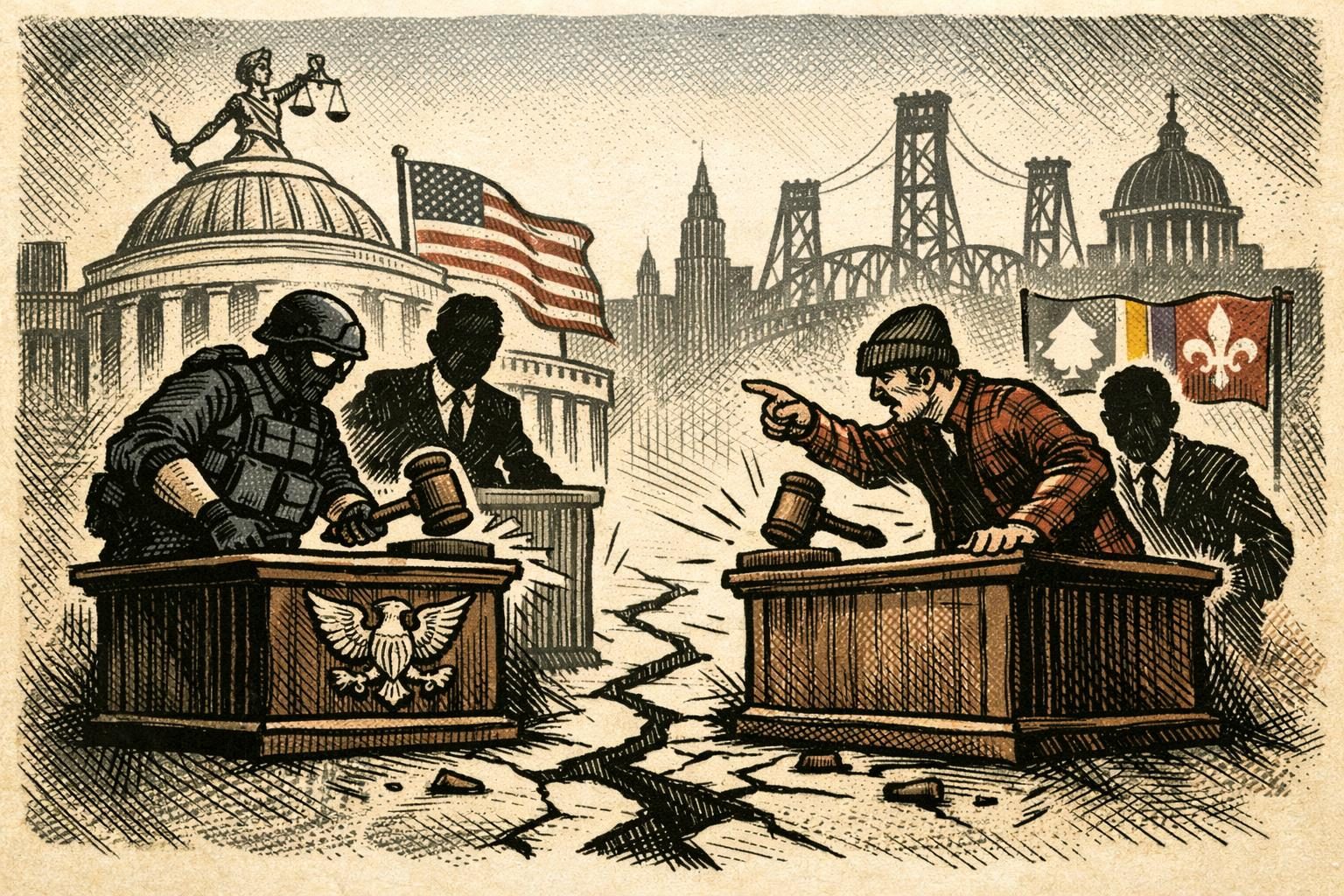
The Justice Department on October 15 filed complaints against Saint Paul, Minnesota, and Portland, Oregon, setting up a fresh legal fight over whether cities can impose rules on how federal officers dress, identify themselves, and conduct enforcement operations inside their borders. The lawsuits challenge local requirements that, in the department’s view, improperly reach into federal law-enforcement activity by limiting the use of masks and mandating identification procedures. That makes the dispute sound narrow on paper, but it lands squarely in one of the country’s most combustible political arguments: how much control cities should have over federal agents operating within them, especially in places already angry about immigration raids, crowd-control tactics, and other high-profile enforcement actions. The Justice Department is framing the ordinances as illegal attempts to regulate federal officers from below. City officials and their allies are likely to say the measures are basic guardrails meant to prevent anonymous enforcement and reduce the intimidation that can come from masked agents moving through neighborhoods with little visible accountability. Either way, the filing turns a local policy dispute into a test of federal power.
The department’s theory is straightforward enough. Federal officers, it argues, are carrying out federal responsibilities and therefore cannot be told by local governments what operational standards they must follow while doing that work. That position is consistent with the longstanding idea that the federal government does not take orders from cities when it comes to executing federal law. But the practical stakes go beyond abstract constitutional doctrine. In blue cities, federal officers have increasingly become symbols in broader political conflicts over immigration, policing, and public order, and the appearance of masked, unidentified agents has only intensified suspicion among residents who already distrust federal intervention. Local leaders say they are trying to prevent a situation in which residents cannot tell who is detaining whom, or why. The department, meanwhile, is casting those same local rules as a form of obstruction dressed up as transparency. It is the sort of conflict where each side claims the moral high ground and the other side claims the right to govern.
What makes the lawsuits especially notable is that they are not really about the mechanics of wearing a mask or presenting a badge. They are about who gets to define legitimacy when federal authority collides with local politics. Cities like Saint Paul and Portland are effectively saying that if federal officers are going to operate in public spaces, the public ought to have some way of seeing who they are and distinguishing them from everyone else. That argument is likely to resonate with residents who worry that anonymous enforcement creates a chilling effect and erodes trust in government. The department’s response is that the cities are trying to erect barriers that interfere with federal law enforcement, and that local officials do not get to set conditions for national operations simply because they object to them. Both positions have a built-in appeal to different audiences, which is why the case is already bigger than the specific ordinances at issue. It is a proxy fight over whether transparency is a safeguard or a trap, depending on which side is telling the story.
Politically, the timing and framing all but guarantee that the lawsuits will be read as another chapter in the larger struggle between the federal government and progressive city halls. Conservatives will likely treat the complaints as a necessary answer to sanctuary-style resistance and to local officials who, in their telling, are more interested in humiliating federal officers than in enforcing the law. Progressives will likely see the filings as a federal power grab, one more attempt to strip away local oversight whenever city governments try to set limits on aggressive policing tactics. The administration also risks reinforcing a pattern in which governance disputes are pushed into court instead of resolved through negotiation or policy changes. If the Justice Department wins, it will strengthen its hand in future conflicts with local governments that try to write rules affecting federal operations. If it loses, it will absorb another judicial setback while the underlying political fight keeps rolling. Either way, the case is likely to linger because it speaks to something larger than masks and IDs: the increasingly brittle relationship between federal authority and cities that no longer trust it.
Comments
Threaded replies, voting, and reports are live. New users still go through screening on their first approved comments.
Log in to comment
No comments yet. Be the first reasonably on-topic person here.