
DOJ’s weaponization unit revives the Garland memo fight
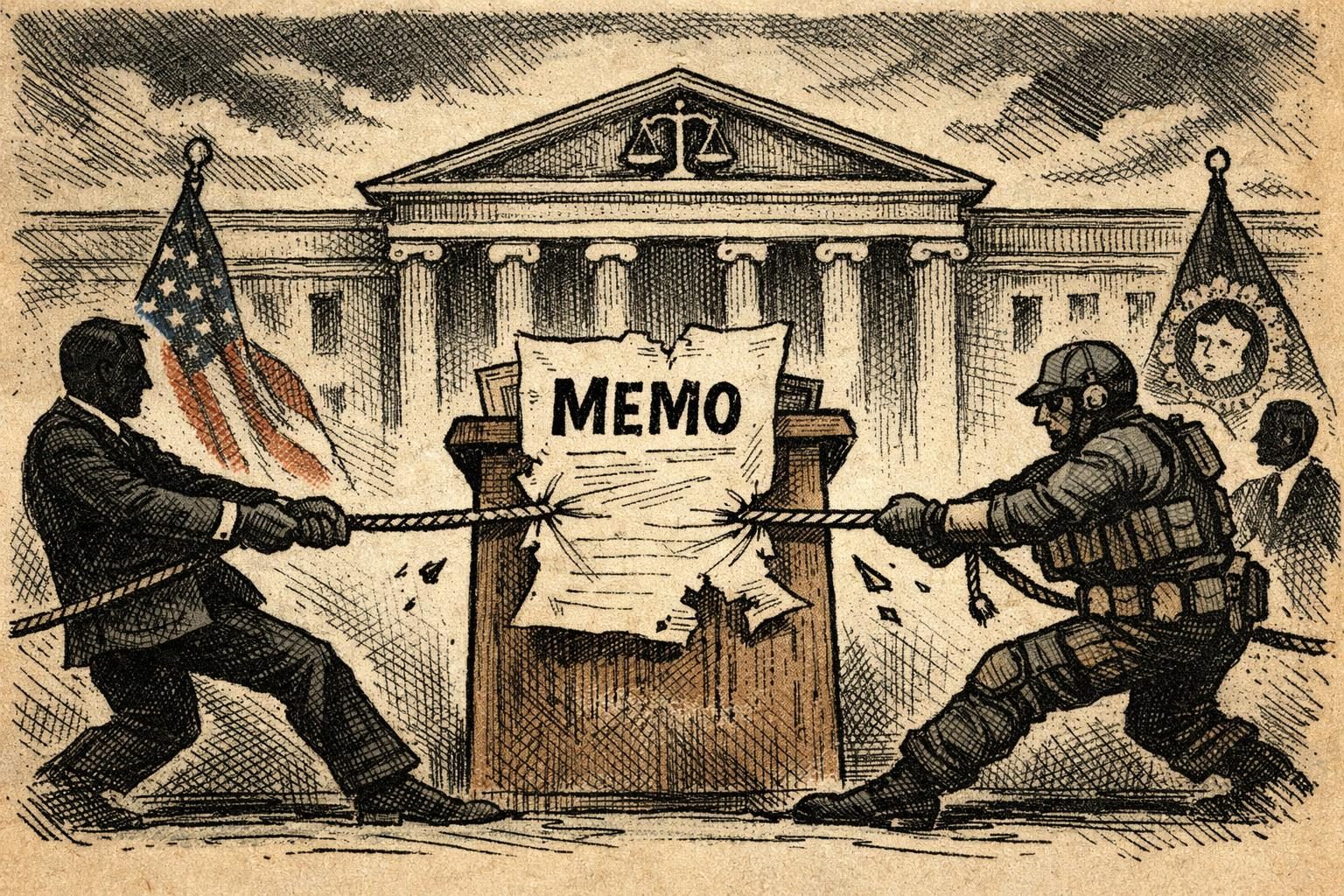
The Justice Department’s Weaponization Working Group has dug up an old fight and handed it fresh stationery. In a report released Oct. 15, 2026, the group attacked the Garland-era memo that had warned about threats directed at school officials and, in the working group’s telling, chilled parental speech and parental rights. The document does not appear to announce a new policy so much as relitigate a previous one with a different set of people in charge and a more combative label attached. That alone makes it politically useful. It lets the department present a prior internal dispute as evidence of a larger institutional failure while avoiding the harder task of describing what, if anything, has materially changed in how the agency operates now. In Washington, reclassifying a grievance as a reform effort is often the first step toward making it look serious.
The memo fight matters because it sits at the intersection of education politics, federal law enforcement, and the long-running argument over who gets to define threatening conduct. The Garland memo had been framed as a response to rising tensions around school boards and school officials, a period when threats and intimidation were drawing public attention and prompting federal concern. The Weaponization Working Group’s report reverses the frame, suggesting that what was presented as a public-safety response actually burdened parents who were raising objections in heated school debates. That shift is not just semantic. It is a direct challenge to the premise that the Justice Department was trying to protect school communities rather than police political speech. Supporters of the report are likely to say it corrects a bureaucratic overreach and recognizes that ordinary parents were swept up in an expansive federal posture. Critics are likely to say the report converts an internal policy review into a score-settling exercise, one designed less to clarify law enforcement than to discredit prior officials whose judgments now sit in the crosshairs.
That tension is what makes the release more than another dusty appendix to a prior administration’s paperwork. The Justice Department is using its own institutional voice to validate a narrative that the earlier leadership pathologized dissent and treated worried parents as something close to a threat category. That may be a persuasive argument to a political audience that already believes federal agencies have been drifting leftward and policing speech unevenly. It may also serve a broader strategic purpose for the current department: if you can redefine the previous administration’s warning memo as an act of suppression, then your own counter-review becomes a form of accountability rather than retaliation. The problem is that the line between those two things can be very thin when the same institution is both judge and defendant. A report like this can read less like a neutral assessment and more like a public record assembled for symbolic effect. It is official language in the service of an unofficial purpose, which is often how internal fights become external messaging.
There is also a governance cost to turning every internal review into a partisan mirror image of the last one. Agencies depend on some baseline confidence that their warnings, guidance, and investigations will be treated as legitimate even after administrations change. If every memo becomes evidence in a political trial, then future officials have an incentive to write defensively, investigate cautiously, and frame even urgent threats in language designed to survive the next turnover. That does not necessarily make government more accountable. It can make it more timid, more performative, and more self-protective at the exact moment when the public expects clarity. The report may please people who want a government-brand rebuttal to the parental-rights grievance, and it will almost certainly circulate quickly through conservative political channels as proof that the prior DOJ was hostile to parents. But it also reinforces the larger suspicion that federal institutions are now expected not just to govern differently from one administration to the next, but to rewrite the moral meaning of their predecessors’ work every time power changes hands. That is a durable tactic for political combat. It is a worse one for trust in the department itself.
Comments
Threaded replies, voting, and reports are live. New users still go through screening on their first approved comments.
Log in to comment
No comments yet. Be the first reasonably on-topic person here.