
FBI workers fired over Trump probe sue to get their jobs back
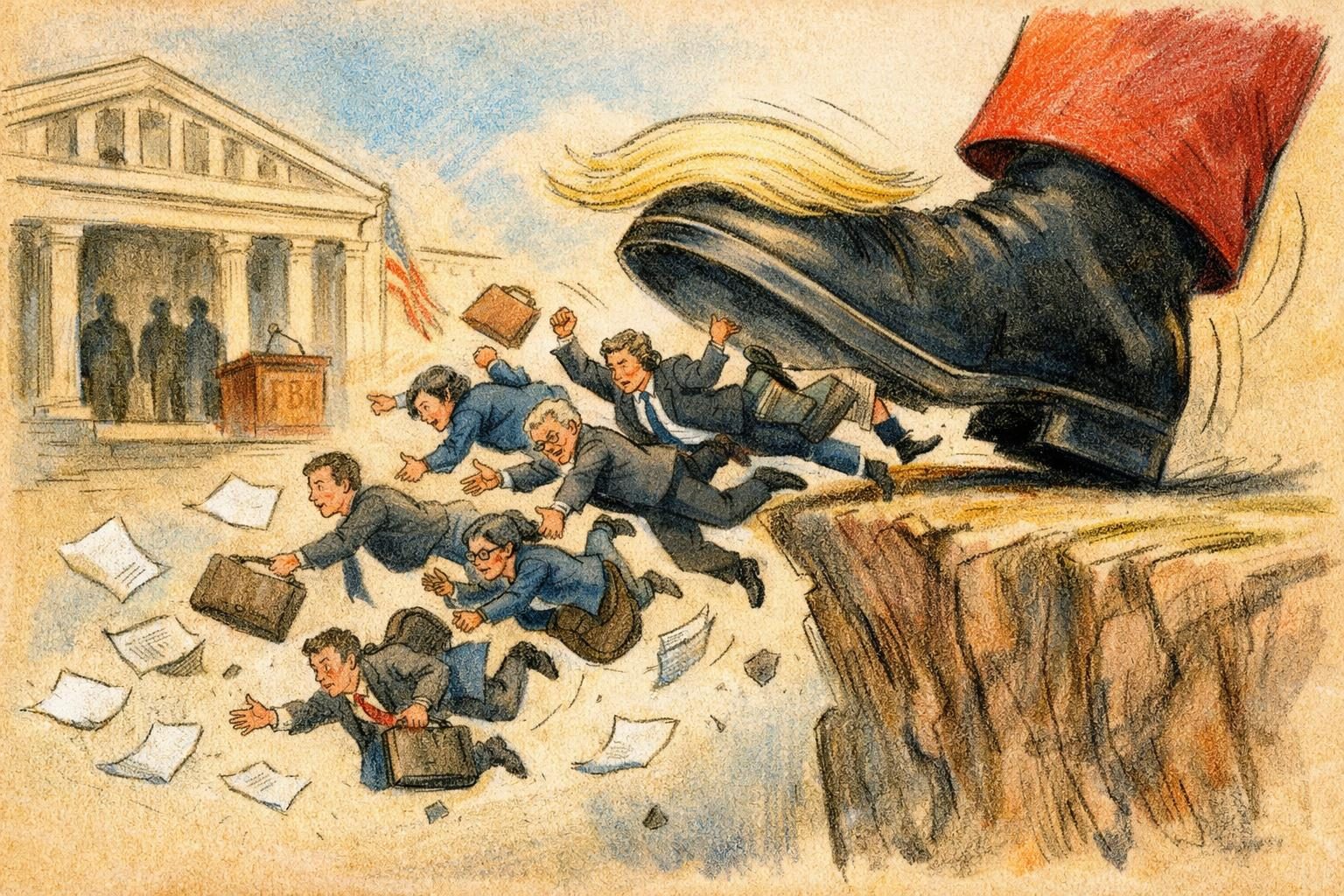
Nine FBI employees who were dismissed in February have gone to court seeking their jobs back, arguing that the bureau turned professional law enforcement into a political loyalty test when it fired them after work connected to investigations involving Donald Trump. The lawsuit, filed Thursday, says the group — made up of agents, analysts and staff operations specialists — was removed not because of misconduct or poor performance, but because of cases that placed them anywhere near inquiries the administration viewed as politically sensitive. Those cases included the federal investigation into Trump’s retention of classified documents and, in some instances, earlier work tied to efforts to overturn the 2020 election. The plaintiffs are asking a court to restore them to their posts and to declare the firings unlawful retaliation. Their claim is straightforward, but its implications are broad: they say the bureau punished them for doing the sort of apolitical work the FBI is supposed to protect, not politicize.
That allegation matters because personnel purges do not have to look dramatic to do lasting damage. A series of quiet firings, especially when they are linked in the minds of employees to politically charged cases, can reshape how an institution functions long before any formal policy change is announced. In an agency like the FBI, where credibility depends on the appearance and reality of independence, the fear that a case might put a career at risk can be almost as corrosive as an actual order to back off. Investigators do not need to be explicitly told to slow down or stop; if they conclude that some subjects are too dangerous to touch, the chilling effect does the work on its own. That is why the lawsuit is being watched not merely as an employment dispute, but as a potential test of whether federal law enforcement can still insulate itself from political blowback. If the plaintiffs can show that the firings were tied to the substance of the cases they worked on, it would raise hard questions about whether internal discipline is being used as a mechanism for retaliation rather than management.
The complaint also feeds into a larger and increasingly familiar conflict over whether federal institutions are being pressured to treat loyalty as a job requirement. Critics of the recent approach to the Justice Department and the FBI have long warned that employees who touch politically sensitive investigations can become collateral damage whenever the target of the inquiry has the ear of the White House or allied figures in government. Supporters of a harder line often argue that leadership must be able to discipline personnel who mishandle cases or undermine confidence in the bureau, and the administration is likely to present the firings in that light if and when it is forced to answer in court. But the plaintiffs are challenging that narrative head-on, saying the government cannot hide behind vague management language when the real motive was punishment for assigned work. The suit does not, at least on its face, resolve whether every plaintiff was treated the same way or whether each firing had the same factual basis. It does, however, put the government in the uncomfortable position of explaining why nine people with different roles were all cut loose after involvement in the same politically explosive matters.
The timing adds to the sensitivity. The dismissed employees say they were fired in February, and the court filing now turns what might have remained an internal personnel matter into a public legal fight over the handling of Trump-related probes inside the bureau. That broader backdrop still includes federal criminal and election-related investigations that have already become deeply entangled with partisan warfare, and the plaintiffs’ argument is that the FBI should have been a buffer against that pressure rather than a conduit for it. The Justice Department has previously announced election-crime charges in a separate matter involving 16 individuals, a reminder that the department’s work continues even as its own internal culture becomes a subject of scrutiny. What the lawsuit ultimately proves will depend on evidence, not rhetoric, and the government has not yet been forced to fully litigate the merits in open court. Still, the optics alone are difficult for any administration to escape: if the firings stand, they risk normalizing the idea that politically sensitive cases can be managed through personnel cleanout; if they are overturned, the episode becomes another costly warning that retaliation is a disastrous way to run a law-enforcement agency. In either case, the dispute underscores a larger truth about federal policing under political strain: when trust inside the institution starts to erode, the damage spreads far beyond the careers of the people who were shown the door.
Comments
Threaded replies, voting, and reports are live. New users still go through screening on their first approved comments.
Log in to comment
No comments yet. Be the first reasonably on-topic person here.