
FinCEN opens new Iran-linked charity crackdown
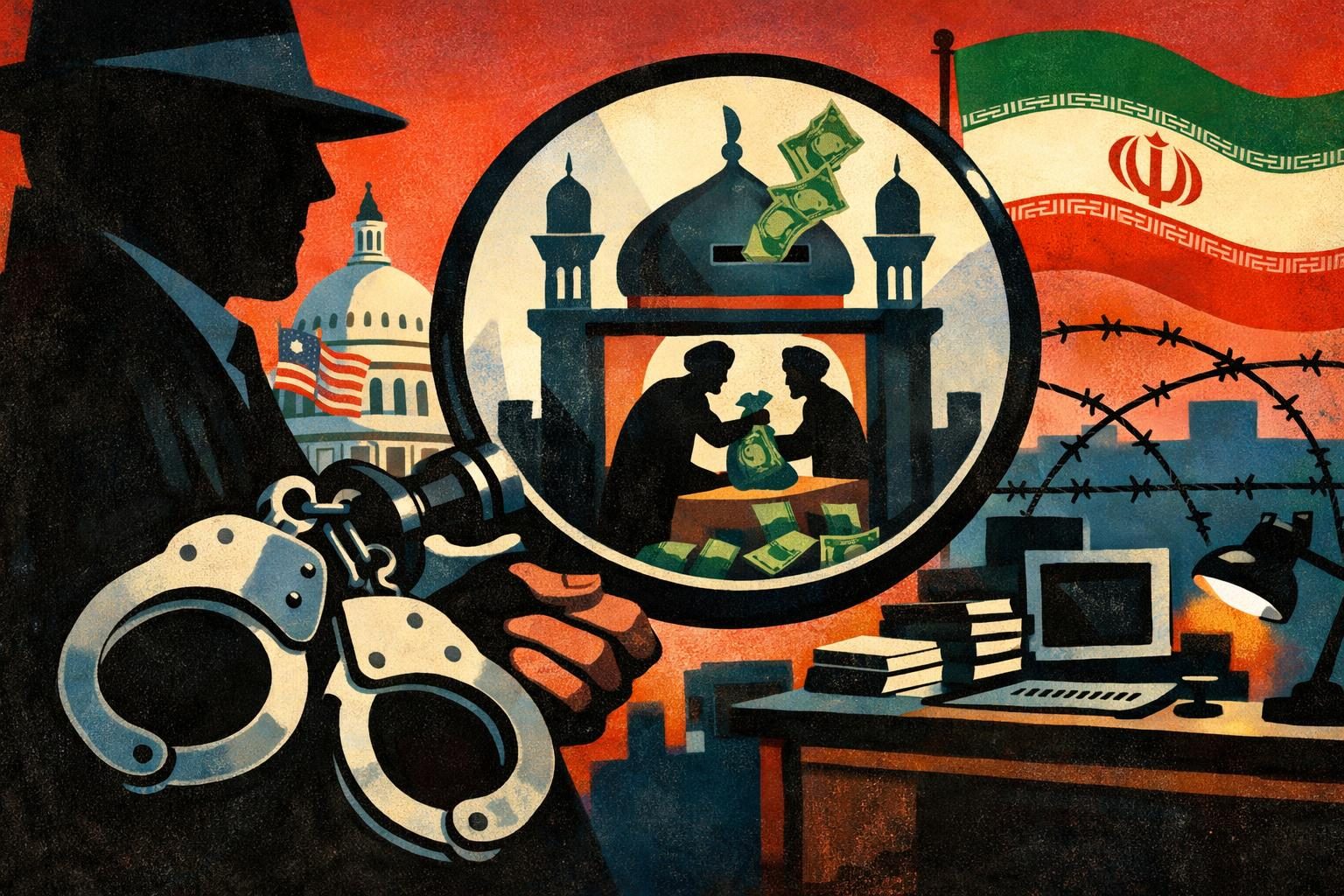
The Treasury Department’s Financial Crimes Enforcement Network has opened a new front in its sanctions and anti-money-laundering campaign with Operation Economic Outcast, an alert aimed at suspected Iranian regime abuse of religious charity networks. Released on October 15, the notice asks banks and other financial institutions to look for transaction patterns that could suggest the diversion of religious tithes and charitable donations into channels that serve state purposes. On its face, the guidance is technical and familiar, the kind of compliance notice that usually lives in the paperwork layer of federal enforcement. But the broader message is harder to miss: Treasury wants the financial system to function as a sensor grid for geopolitical risk. In practice, that means the government is asking private institutions to help identify activity that may be lawful in form but suspicious in context, a task that is easier to demand than to execute.
The operation fits squarely within the current administration’s wider reliance on sanctions, financial intelligence, and ledger-level scrutiny as tools of national security. Rather than waiting for a case to become a criminal prosecution or a sanctions breach to become public, the government is trying to get ahead of the problem by flagging patterns that banks can monitor in real time. That approach has a certain logic, especially when adversaries use layered or nonprofit structures to obscure transfers, mask beneficiaries, or move funds through sympathetic intermediaries. Yet it also shifts more of the burden onto compliance teams that are already expected to detect everything from fraud and corruption to sanctions evasion and terrorist finance. The result is an enforcement model that is broad by design, because breadth is part of the point: cast a wide enough net, and you increase the odds of catching something useful. The cost is that a lot of innocent or ordinary activity gets pulled into the same suspicion architecture.
That is where the civil-liberties tension comes in, and it is not a trivial one. Religious giving is often local, informal, and culturally specific, which makes it especially difficult to distinguish abuse from legitimate support without overreading the same financial markers over and over again. A pattern that looks odd from the outside may be perfectly normal within a religious community, while a genuinely abusive scheme may be carefully structured to resemble routine charity flow. FinCEN’s alert, like many similar warnings, does not claim that every charity network is compromised, nor does it need to. Its purpose is to prompt institutions to treat certain behaviors as potential indicators, not conclusive proof. But the practical effect can still be powerful, because once a bank’s systems flag a customer or a transfer, the response often involves additional questions, delayed transactions, internal escalation, or refusal to maintain the relationship at all. The state may not be ordering those outcomes directly in every case, but it is clearly shaping them.
The significance of Operation Economic Outcast is therefore not just the narrow subject of Iranian-linked abuse, but the method itself. Treasury is signaling that banks are expected to be early-warning sensors for suspected regime activity, and that financial intelligence is now a frontline instrument of national-security policy. Supporters are likely to see this as smart, targeted counter-proliferation and sanctions enforcement, a way to disrupt networks before money can be turned into operational capacity. Critics will see something more troubling: a system that increasingly outsources coercion to private compliance departments while wrapping that coercion in the language of risk management. Both readings have some truth to them. The government is right that modern illicit finance often moves through legitimate structures, including charities that can be manipulated for political or strategic purposes. It is also true that once suspicion becomes a standing operating principle, the line between vigilance and overreach can get very thin. That is the basic tension in this kind of financial policing: effective enough to matter, vague enough to catch more than it should, and bureaucratic enough to feel routine even when it is shaping how whole categories of money are treated.
Comments
Threaded replies, voting, and reports are live. New users still go through screening on their first approved comments.
Log in to comment
No comments yet. Be the first reasonably on-topic person here.