
Appeals court vacates Education Department attack on Fairfax schools
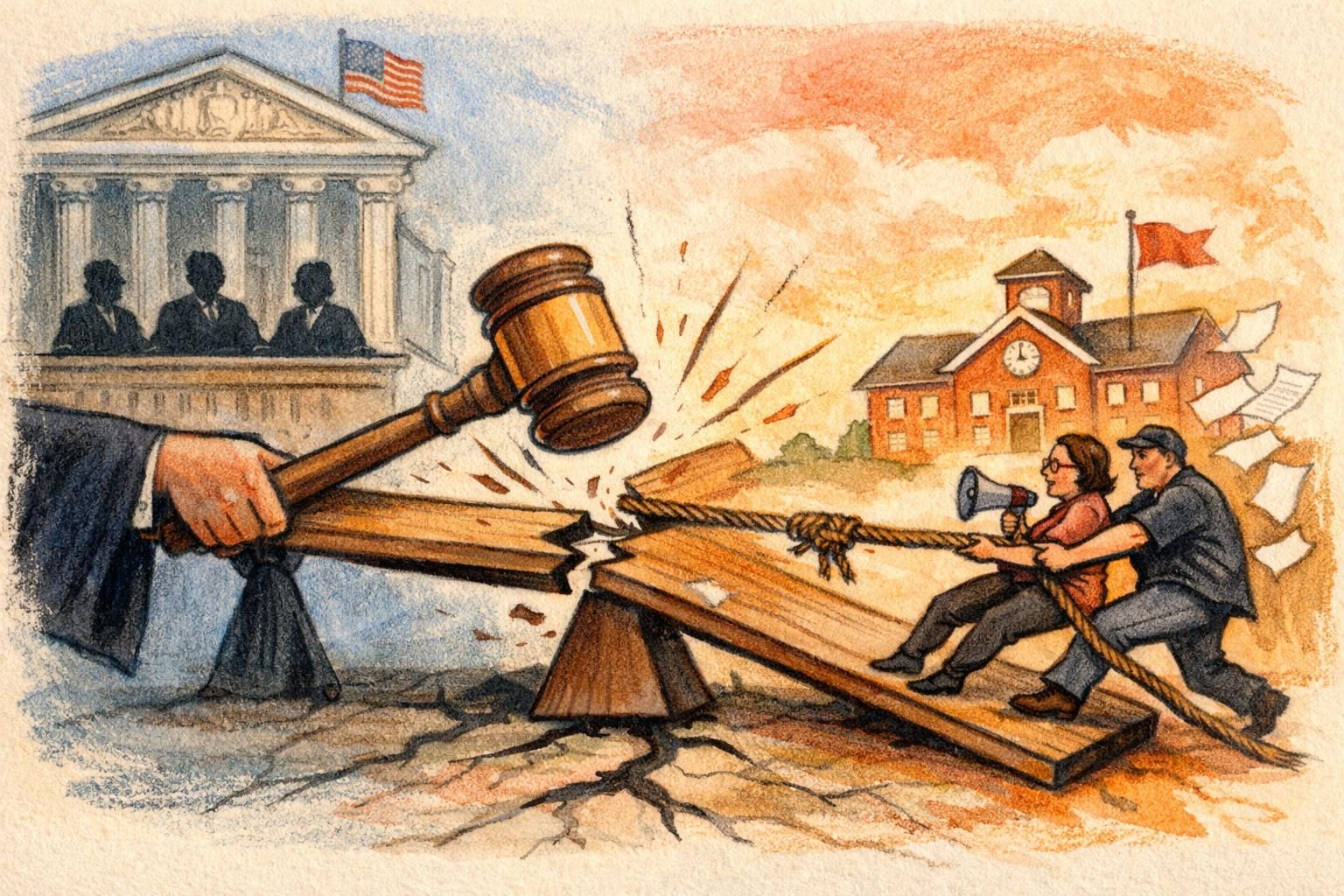
A federal appeals court has vacated and remanded the Education Department’s action against the Fairfax County School Board, delivering a meaningful procedural setback to the Trump administration’s push to redefine federal education enforcement around a narrower and more combative interpretation of Title IX. The ruling, issued Oct. 15, does not resolve the underlying dispute in a way that settles the larger policy fight, but it does force the government back to square one on a case it appeared eager to use as a model. That matters because Fairfax has become more than a local school-district dispute. It is now part of a broader test of how far the department can go in using civil-rights law to pressure school systems over gender-related policies and other culture-war flashpoints. The court’s decision signals that the administration’s posture is not automatically going to survive judicial review simply because it is framed as enforcement. For an administration that has repeatedly leaned into sweeping, headline-ready education actions, that is a notable complication.
The case sits at the center of a larger effort by Education Secretary Linda McMahon and the administration to roll back Biden-era rules and restore what officials describe as a more constrained and disciplined Title IX framework. The department has already moved aggressively to undo the previous administration’s approach, including formally rescinding what it called Biden’s illegal Title IX rewrite and reinstating the 2020 regulation. That move, like the Fairfax dispute, reflects a broader theory of governance: that the federal government should use civil-rights law to police schools more aggressively on issues tied to sex, gender identity, and student policies. Critics argue the strategy is built for maximum political friction and minimum institutional patience, turning education enforcement into a recurring battlefield rather than a stable regulatory system. Supporters of the administration, by contrast, say the department is correcting what they see as overreach by the prior administration and restoring legal clarity. The appellate court’s decision does not decide that debate, but it does indicate that the government must still persuade judges that its approach is lawful and properly grounded in the record. That is a less comfortable position than the one the department seemed to want.
A vacate-and-remand order is not a final defeat, and the administration can still try to prevail after further proceedings. But that technical distinction should not obscure the practical effect. The department did not get the clean judicial endorsement it may have hoped for, and the case will now return to a lower court for more work, more arguments, and more delay. In political terms, that is important because the administration has often treated education enforcement as an arena where aggressive action itself can shape public perception. Each investigation, directive, or confrontation with a school district is meant to project resolve and force institutions into compliance before a final judgment is reached. When a court sends such a case back, it slows that momentum and raises the possibility that the legal theory behind the action was too shaky to withstand scrutiny. Even if the administration eventually finds another route to the same result, the process becomes costlier and less immediate. That is the kind of friction that can matter a great deal in a fight where timing and symbolism are almost as important as the final legal outcome.
For Fairfax County and other districts watching closely, the ruling offers a measure of relief, even if it is only temporary. School systems caught up in the federal government’s escalating Title IX agenda have little reason to assume the dispute is over, but they do now have evidence that the courts are willing to slow the administration down. That is especially significant in a climate where the White House and the Education Department have shown little interest in softening their rhetoric or lowering the temperature of the conflict. The bigger picture remains unchanged: the administration is still trying to build a more punitive, more ideologically charged model of federal education enforcement, and it is still using school disputes to advance that agenda. But every vacate-and-remand order makes that project a little harder to execute, and it reminds the public that federal power in this area is still bounded by judges who do not have to accept the government’s framing at face value. Fairfax is not the end of the road for this policy fight, but it is a real stumble, and one that could encourage other districts to resist rather than settle. In a year when the administration clearly hoped to turn education law into a showcase for its culture-war priorities, that is not the outcome it wanted.
Comments
Threaded replies, voting, and reports are live. New users still go through screening on their first approved comments.
Log in to comment
No comments yet. Be the first reasonably on-topic person here.