
Fourth Circuit vacates Fairfax County School Board ruling
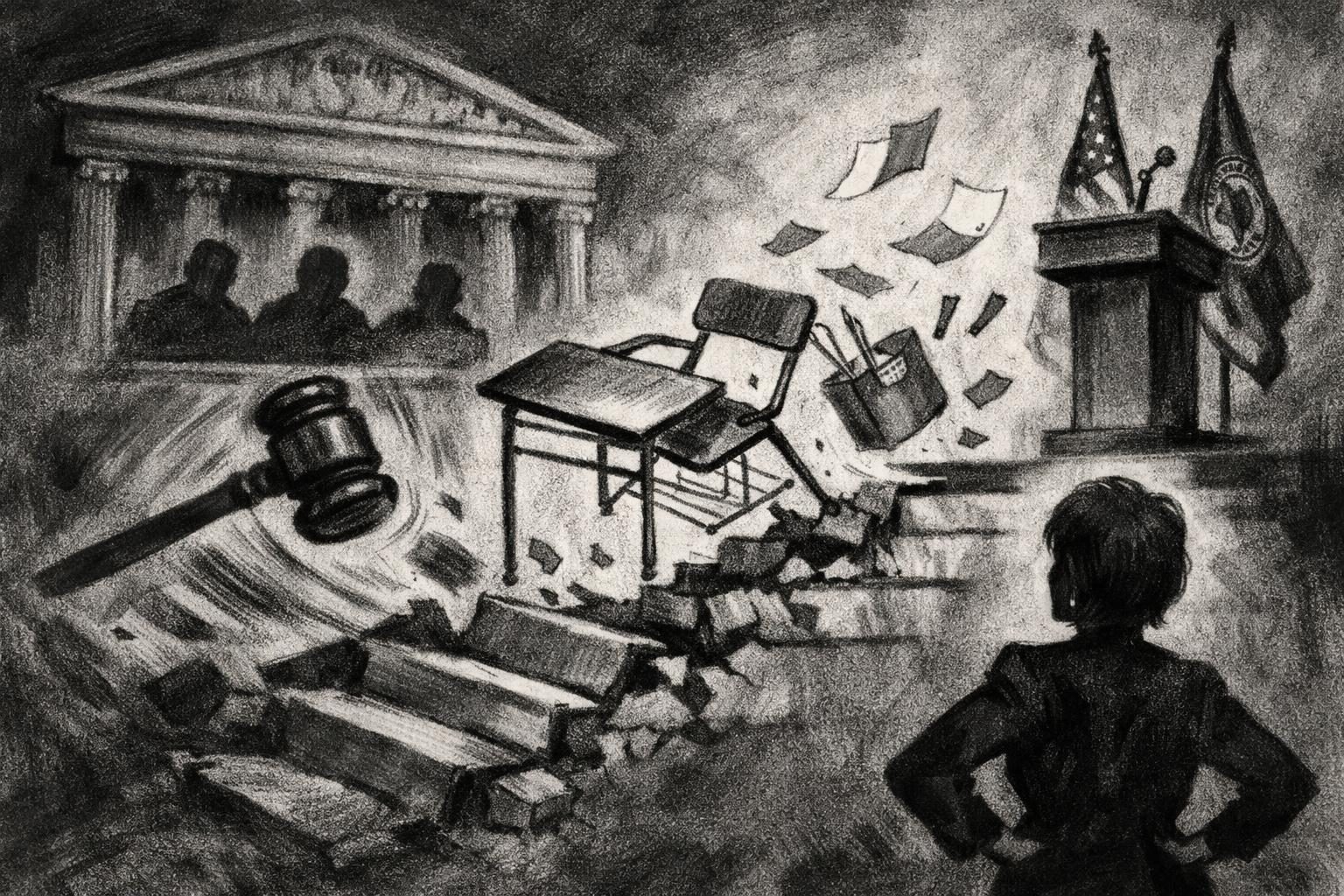
The Fourth Circuit’s published opinion on Oct. 15 in Fairfax County School Board v. Linda McMahon did not end the fight over the school district’s dispute with the Education Department, but it did make the fight longer, messier, and more politically meaningful. The panel vacated and remanded the case, a procedural outcome that means the lower court’s handling of the matter did not hold up and the dispute now goes back for further proceedings. That kind of ruling is not the same as a final win for either side, but it is still a real setback for whoever had been trying to preserve the earlier judgment. In practical terms, it also means the legal and policy questions at the center of the case remain unsettled for now. For a school system and a federal education agency already operating in a highly charged environment, that uncertainty is itself consequential.
The case sits inside one of the more persistent fault lines in American governance: who gets to decide what counts as compliance in public education, and how much authority the federal government can bring to bear on local schools. Fairfax County is not just any district, and the Education Department is not just any cabinet agency. When those institutions collide in appellate court, the dispute can carry implications well beyond the immediate parties, because it touches on funding, enforcement, local control, and the ability of Washington to impose or defend rules that affect classrooms on the ground. A published appellate opinion matters because it signals the judges thought the issue warranted a full public statement, not merely a routine procedural order. That alone makes it more than a passing docket entry. It is a reminder that education policy is often settled, or at least delayed, in courtrooms rather than through clean legislative action.
A vacatur and remand usually means the appellate panel found enough trouble with the case to wipe out the prior result and send it back for more work. That does not automatically tell us which side’s broader policy position is correct, but it does indicate that the legal theory or the lower court’s treatment of it was not ready to stand untouched. In the real world, these decisions can slow down implementation, add new layers of uncertainty, and force lawyers on both sides to adjust their strategies. School boards and federal officials do not get the luxury of treating such litigation as abstract debate; they have to make operational decisions while the record is still in motion. That can affect how policies are enforced, how long institutions wait before acting, and how much money is spent fighting over the meaning of rules that should, at least in theory, be clear. The fact that the case remains alive also means neither side can claim a decisive triumph just yet, even if the ruling clearly changes the terrain.
The broader significance is political as much as legal. Education cases have become a recurring proxy for arguments over civil rights, parental authority, bureaucratic power, and the proper reach of the federal government. That is why a dispute involving a school board and the Education Secretary resonates beyond the immediate courtroom. Every time an appellate court vacates and remands a case like this, it can shift leverage, unsettle expectations, and force both sides to spend more time and money defending positions that may already have been weakened. It also reinforces a larger pattern in which courts are asked to referee some of the country’s most combustible policy battles while elected officials and agency leaders struggle to settle them on their own. For now, Fairfax County’s dispute with the Education Department is not over, but the Fourth Circuit has made clear that the previous path will not simply be allowed to stand. That is enough to make this a genuine education setback, even if the final outcome is still to be determined.
Comments
Threaded replies, voting, and reports are live. New users still go through screening on their first approved comments.
Log in to comment
No comments yet. Be the first reasonably on-topic person here.