
A man shot by ICE officers showed up in immigration court, and the picture is ugly
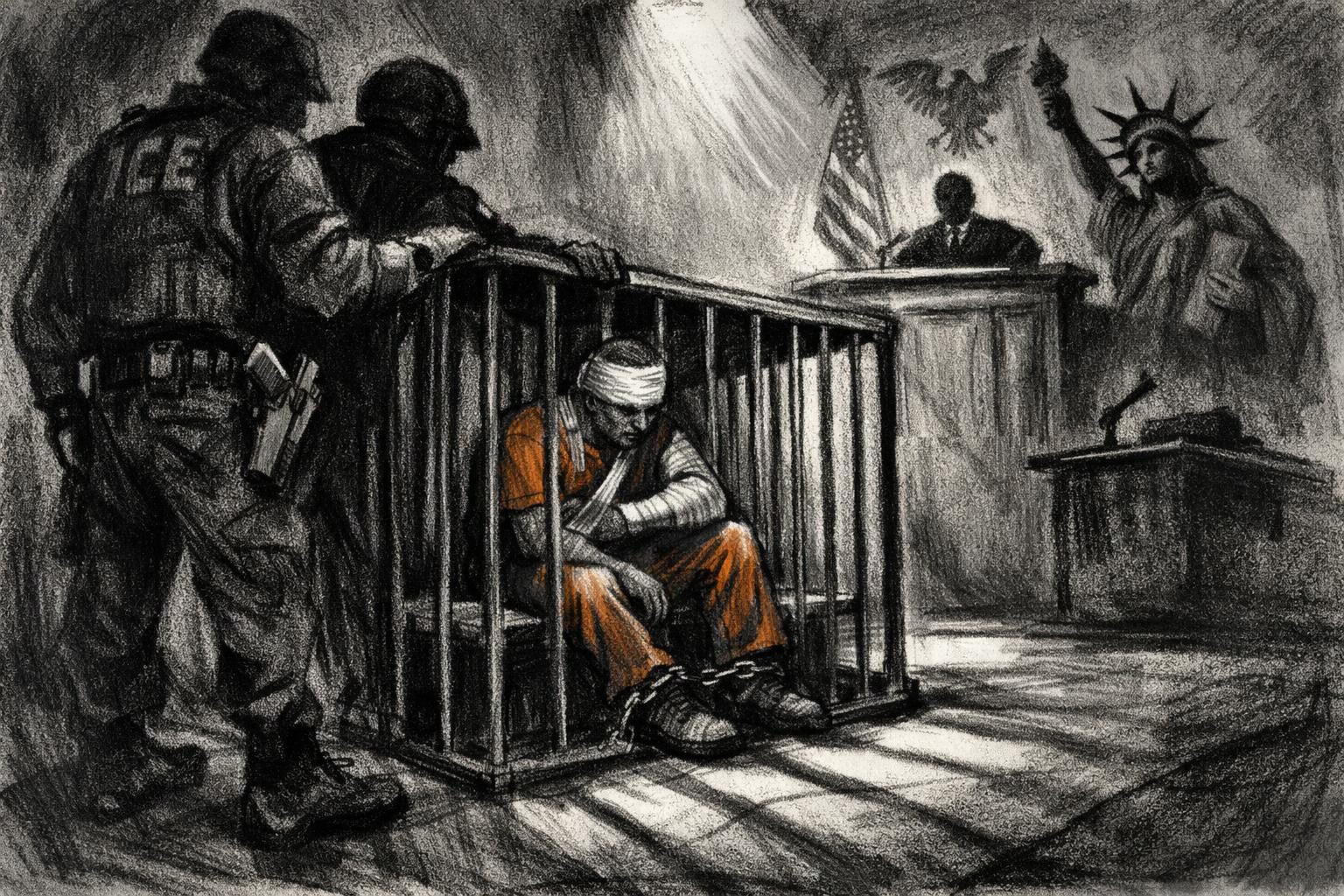
A man shot by federal immigration officers in New York appeared in immigration court Thursday for his first hearing since the shooting, joining the proceeding remotely from federal custody while his lawyers say he remains in solitary confinement and still needs surgery for a neck wound. The hearing itself was short. The image surrounding it was not. A wounded detainee, separated from his family and speaking to a judge from inside a jail cell, became the day’s most vivid reminder that immigration enforcement does not stop at the moment of arrest. In this case, it appears to have moved straight from a violent confrontation into an even colder kind of confinement.
That sequence matters because it turns what might otherwise be treated as a routine custody dispute into a broader question about how federal power is being used. Immigration authorities can insist that they are carrying out lawful enforcement, and in the abstract that claim is not meaningless. But a case involving a person who was shot, then reportedly isolated and kept under tight restrictions while still recovering, makes the legal process look less like orderly administration and more like a punishment system operating before the underlying case has even been resolved. That is where the civil-liberties concern begins. When someone is injured in the course of an immigration operation and then placed into harsh confinement, every part of the government’s response becomes part of the record, not just the initial use of force.
The details described by his lawyers raise questions that extend beyond one detention center or one judge’s calendar. Solitary confinement is already a loaded term in the immigration context, especially when used on a person with a fresh injury and pending medical needs. A hearing over video or remote connection may satisfy a procedural requirement, but it does little to answer the more basic concerns about access to counsel, physical safety, and the ability to challenge conditions of confinement from inside custody. If the government believes such restrictions are necessary, it will eventually have to explain why. If it does not, then the optics are even worse than they already are. A detained immigrant recovering from a gunshot wound is not just a witness to the system; he becomes an object lesson in how much force that system is willing to tolerate.
The larger political meaning is hard to miss. Immigration advocates are likely to point to the shooting, the reported solitary confinement, and the limits on communication as evidence of an enforcement apparatus that is growing harsher and less transparent. Officials, for their part, are likely to argue that the matter is being handled according to established procedures and that the facts remain under review. But those positions do not exist on equal ground in the public mind. Most people do not need a legal briefing to understand the basic picture of a wounded detainee appearing in court from a locked-down cell. It looks punitive. It looks isolating. And it feeds a much bigger argument about whether immigration detention is being used as a neutral administrative tool or as a blunt instrument of discipline. Even if this case does not end up producing a sweeping legal ruling, it already has the kind of visual force that can shape public debate, sharpen litigation, and harden suspicions about what federal custody looks like when no one is watching closely enough.
Comments
Threaded replies, voting, and reports are live. New users still go through screening on their first approved comments.
Log in to comment
No comments yet. Be the first reasonably on-topic person here.