
Judge tosses federal challenge to New York City sanctuary laws
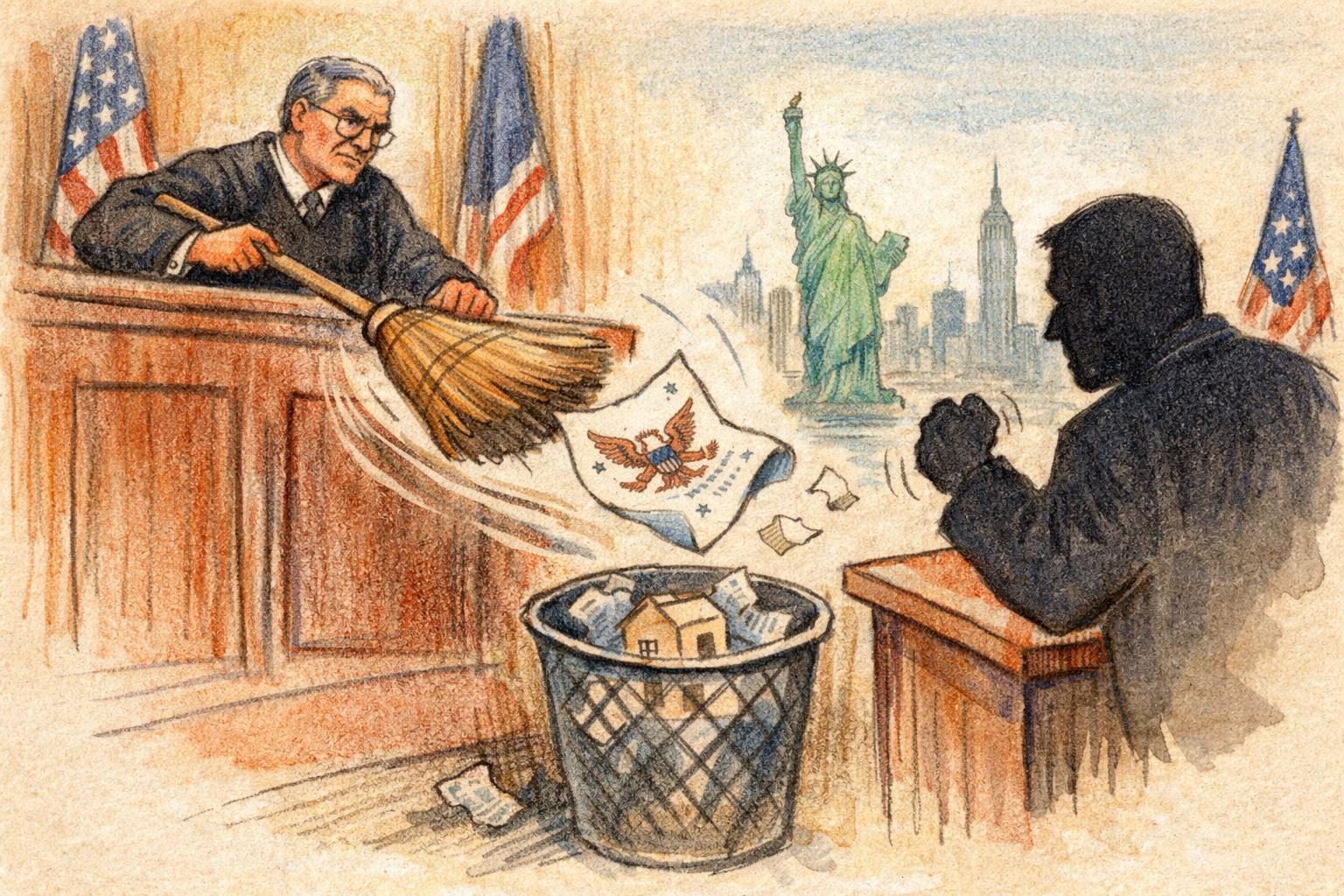
A federal judge has dismissed the government’s lawsuit targeting New York City’s sanctuary protections, handing the administration another courtroom defeat in its effort to force local governments to cooperate more closely with federal immigration enforcement. The decision, issued on Oct. 15, leaves the city’s long-standing limits on how municipal agencies can assist immigration authorities intact, at least for now. It also reinforces a familiar legal line in sanctuary disputes: Washington can set immigration policy, but it cannot simply commandeer local officials to carry it out. For New York City, the ruling is being treated as a confirmation that it may continue using local resources to serve residents without turning everyday city services into an extension of deportation operations. For the White House and its immigration team, it is one more reminder that attempts to punish sanctuary jurisdictions do not always survive in court.
The case centered on a familiar argument that has repeatedly surfaced in fights over sanctuary policies across the country. Federal officials have argued that local restrictions on cooperation can interfere with immigration enforcement and frustrate national priorities. New York City has maintained that its rules are designed to keep municipal services accessible and to prevent routine contact with city agencies from becoming a pathway into immigration detention. The dismissal suggests the court was not persuaded that the city’s policies crossed the line in the way the government claimed. While the ruling does not resolve the broader political battle over sanctuary jurisdictions, it narrows the administration’s options in New York and bolsters the city’s position that it may decide how to deploy its own personnel and resources. That distinction is often the heart of these cases, because sanctuary policy is less about lofty slogans than about who gets asked what information, when, and for what purpose.
City officials welcomed the outcome as a safeguard for immigrant communities that rely on local services for housing, health care, education, and public safety. Their argument has long been that local government works best when residents can seek help without fearing that the encounter will automatically be relayed to federal immigration agents. Supporters of sanctuary protections say that if city workers are turned into front-line immigration screeners, people will avoid hospitals, police, schools, and other public institutions, making communities less safe and less functional. The judge’s dismissal does not eliminate immigration enforcement in the city, and it does not prevent federal authorities from carrying out their own duties. It does, however, keep the city from being compelled, through this lawsuit, to reshape its daily operations around federal demands. That is why the ruling has been framed locally as more than a technical legal win: it preserves a policy choice that officials say is essential to keeping city services open to everyone.
The outcome also fits into a broader pattern of tensions between the administration and sanctuary jurisdictions, where the legal fights often carry a larger political message. The administration has repeatedly tried to portray local limits on cooperation as obstruction, while cities and states have responded that the federal government cannot bully them into doing immigration work for free. The New York decision does not end that debate, and it likely will not be the last word on the issue. Similar disputes continue to test how far the federal government can go in pressuring local governments that choose not to hold people, share information, or otherwise participate in immigration enforcement beyond what the law requires. Still, the dismissal marks another moment where a court declined to expand federal leverage over city policy, and that matters in a climate where immigration enforcement has become a proxy fight over the relationship between national power and local autonomy. For immigrant New Yorkers, the practical effect is immediate and concrete: one more attempt to pierce city protections has been pushed back, and the sanctuary framework remains in place while the larger legal and political struggle continues.
Comments
Threaded replies, voting, and reports are live. New users still go through screening on their first approved comments.
Log in to comment
No comments yet. Be the first reasonably on-topic person here.