
Texas clears a voter backlog it should never have had
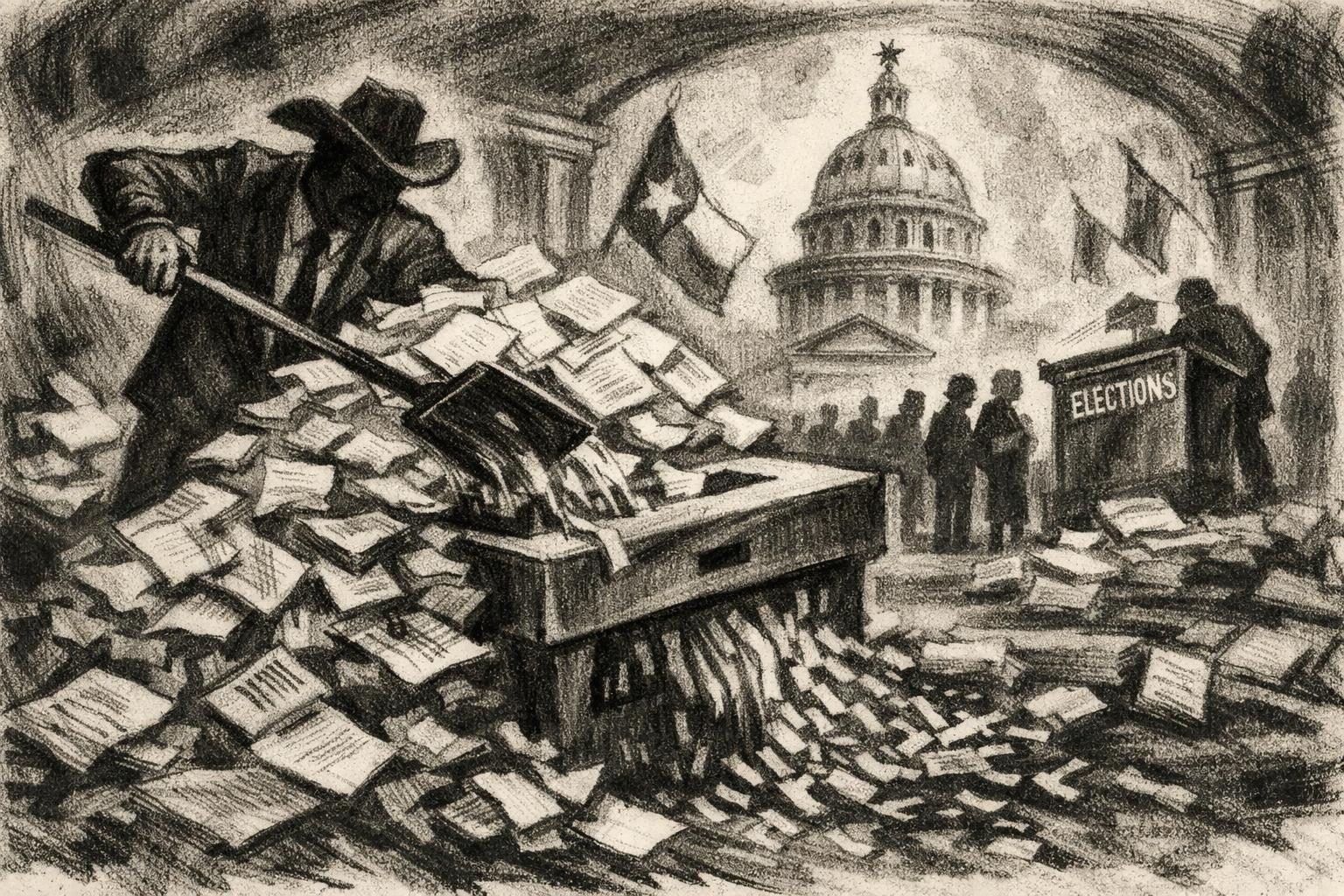
Texas election officials said this week that they have finally cleared a massive backlog of voter registration applications and updates that had been stuck in limbo for more than a year, an embarrassing cleanup that arrived only days before early voting is set to begin. The problem, officials said, stemmed from a failure tied to state systems that slowed the flow of records between agencies and left counties wrestling with delayed or incomplete registration work. For a state that routinely casts itself as a guardian of election integrity, the episode exposed a far less flattering reality: basic election administration can still be thrown off by a technical bottleneck long enough to affect millions of voters. The backlog may now be gone, but the fact that it persisted this long is the bigger story. The state did not discover a small glitch and fix it quickly; it lived with a serious processing failure until the calendar forced the issue.
That matters because voter registration is not some side task that can be deferred without consequence. It is the front door to the ballot box, the administrative step that determines whether eligible people are correctly listed, whether address changes are reflected, and whether voters will walk into an election season with their paperwork in order. When that system stalls, the result is not just inconvenience for local election workers. It can lead to confusion at polling places, more provisional ballots, more time spent resolving voter records, and more opportunities for people to show up on Election Day only to learn that the government’s paperwork is not where it should be. In a state the size of Texas, where county systems already operate under strain, a year-long backlog is more than a nuisance. It is the kind of failure that raises questions about whether officials understood the scope of the problem early enough to address it before it became a public crisis. The fact that the backlog was still unresolved so close to early voting suggests that whatever went wrong did not get the urgent attention a functioning election system demands.
The response has been predictably split between relief and anger. State officials are presenting the clearance of the backlog as evidence that the problem has been fixed and that voters should now be able to move ahead without disruption. That is a reasonable talking point, but it does not erase the larger sequence of events that led here. Counties had already been dealing with the operational fallout, and election staff were left to sort through delayed paperwork and uncertain records while the state’s timeline kept slipping toward the next election. Democrats and other critics saw the episode as a self-inflicted mess, one that undercut Republican claims of competence and invited renewed scrutiny of how Texas manages the mechanics of voting. Even if the backlog was cleared before ballots were cast, the fact that it lingered for so long left the state with a trust problem that cannot be wiped away by a press release. When a system meant to register voters instead produces uncertainty for months on end, it becomes hard to argue that the problem was minor.
The broader issue here is not simply one bad administrative episode in one large state. It is the gap between the rhetoric surrounding election oversight and the actual capacity to keep the machinery working. Texas officials have spent years emphasizing order, security, and control in election matters, but this backlog suggests the plumbing underneath those claims was far less reliable than the messaging. That disconnect matters because election administration does not fail all at once; it frays at the edges, through delays, mismatched records, frustrated county staff, and voters who have to do extra work to make sure they are properly registered. Some will probably sail through the system without noticing anything was wrong. Others may not be so lucky, especially if they moved, updated their information, or are trying to navigate the process for the first time. The state’s announcement may quiet the immediate alarm, but it does not answer the more uncomfortable question of why a basic voter registration problem was allowed to grow into a year-long backlog in the first place. For now, Texas can say it fixed the issue. It cannot honestly say the issue should ever have reached this point in the first place.
Comments
Threaded replies, voting, and reports are live. New users still go through screening on their first approved comments.
Log in to comment
No comments yet. Be the first reasonably on-topic person here.