
Treasury cracks down on Iran’s shadow banking web in a fresh sanctions sweep
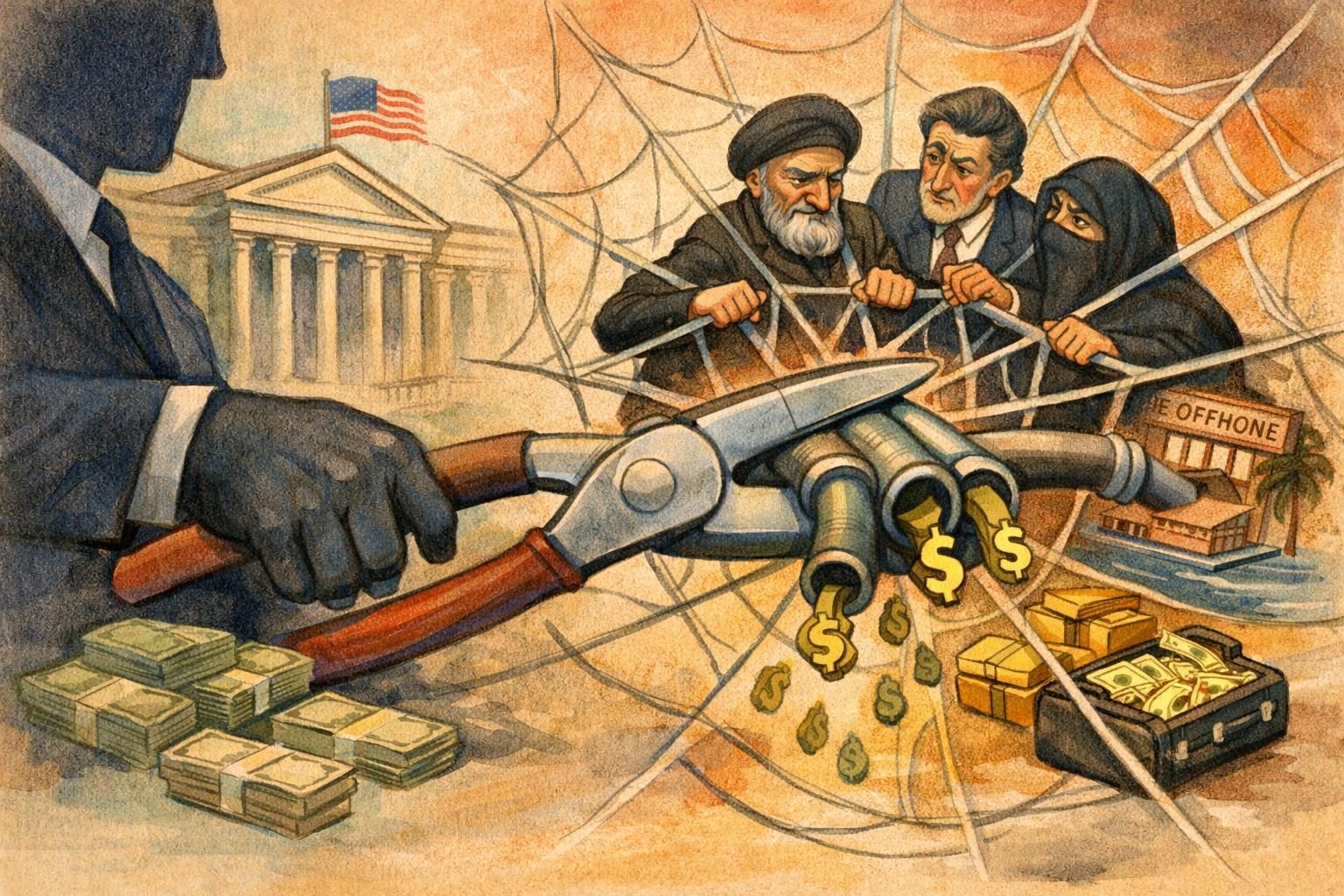
The Treasury Department opened a fresh sanctions front on October 15 with an action aimed squarely at Iran’s shadow banking system, intensifying a campaign that has long tried to choke off the financial channels Tehran uses to move money beyond the reach of normal oversight. Officials said the designation package targets an Iraqi bank that has helped Iran evade sanctions, along with other financial intermediaries tied to what Treasury described as a sprawling international network built to launder funds and preserve access to foreign currency. The move comes under Operation Economic Outcast, a name that captures the administration’s broader effort to isolate the Iranian economy by making its outside financial relationships more expensive and far more dangerous. Treasury framed the action as part of an effort to stop not only direct transfers, but also the shell-company structures and foreign-exchange specialists that make it possible for Iran to keep operating across borders. In practical terms, the department is signaling that it does not intend to leave any easy on-ramp into the international financial system for institutions that continue servicing Iranian interests.
The immediate significance is less about the symbolism of another sanctions announcement and more about the widening risk perimeter it creates for banks, brokers, and facilitators that may have treated previous designations as contained events. Treasury said Iran depends on multi-jurisdictional shadow banking networks to move money, launder proceeds, procure weapons, and access dollar banking relationships that would otherwise be unavailable. That description is important because it suggests the network is not a single pipeline but a layered financial architecture involving offshore entities, currency traders, and cutouts designed to obscure the origin and destination of funds. By moving against those nodes, Washington is trying to make the cost of participation rise not just for Iranian entities, but for foreign institutions that touch the system even indirectly. The expansion of secondary-sanctions exposure is the key lever here, because it broadens the threat to anyone who keeps doing business with the exposed network after the warning has been issued. That means compliance teams from the Gulf to Europe now have to consider whether they are dealing with a business partner, a sanctions risk, or both at once.
Treasury Secretary Scott Bessent cast the action as another turn of the screw in the administration’s pressure campaign, but the operational detail matters more than the rhetoric. What Treasury is trying to do is deny Iran the ability to use financial intermediaries as a substitute for legitimate banking access, and to make every workaround more fragile and more expensive. The department said the targeted network moves hundreds of millions of dollars through offshore banks, shell companies, and foreign-exchange specialists, which points to a mature and adaptable sanctions-evasion structure rather than a one-off scheme. If that assessment is accurate, then the action could complicate payments used to support Iran’s wider state apparatus and its proxies, while also discouraging third parties from continuing to provide services that have become increasingly hard to defend. If the intelligence only partially captures the full picture, the designation can still have a chilling effect because the burden of proof shifts onto counterparties that now have to explain why they remain in the line of fire. Either way, Treasury is acting as if the safest assumption is that any entity helping the network has become part of the problem.
The broader political significance is that sanctions enforcement has become one of the central tools of U.S. foreign policy, especially where direct military or diplomatic leverage is limited. This latest move fits a pattern in which Treasury uses designations both to punish current behavior and to warn off the next layer of enablers who might be tempted to step in once the first line of pressure tightens. For Iran, that means the challenge is not simply keeping formal banking doors closed in the United States, but preserving enough access through third countries and informal channels to keep money moving at all. For everyone else, the message is that the line between routine finance and sanctions violation is getting narrower and more aggressively policed. The result is likely to be a period of careful recalculation among banks and intermediaries that have exposure to the region, especially those that may have assumed the costs of doing business with Iranian-linked networks were manageable. Whether the new sweep materially disrupts Iran’s ability to fund proxies and sustain its workaround economy will depend on how much of the network Treasury actually mapped, but the warning is clear enough already: the U.S. intends to treat shadow banking not as a nuisance to be monitored, but as a target to be broken up wherever it surfaces.
Comments
Threaded replies, voting, and reports are live. New users still go through screening on their first approved comments.
Log in to comment
No comments yet. Be the first reasonably on-topic person here.