
Trump invokes executive privilege in Kennedy Center closure fight
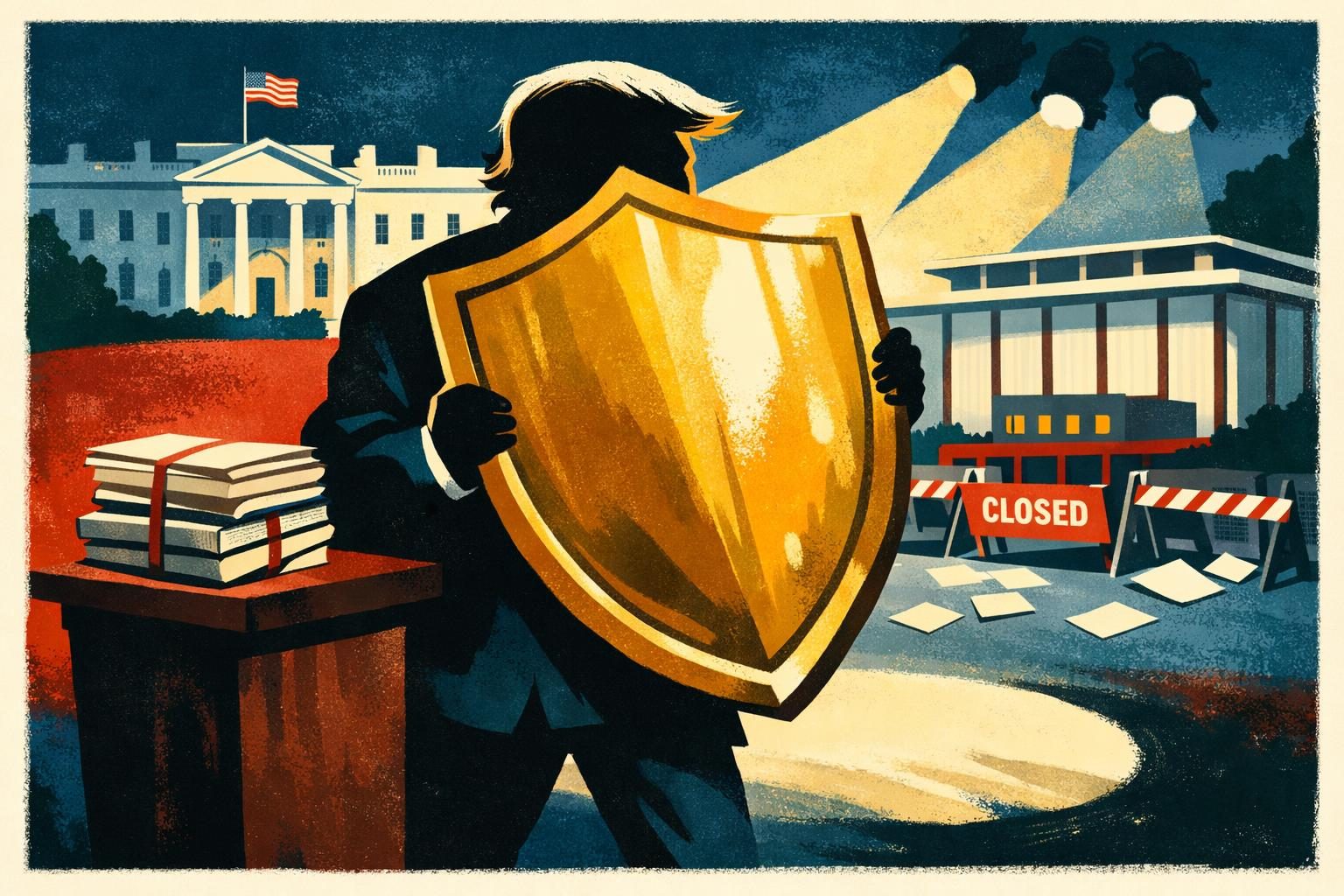
President Trump has invoked executive privilege in the legal fight over the Kennedy Center’s closure, adding a new layer of secrecy to a dispute that was already raising questions about how the administration is handling a major national cultural institution. The assertion was reflected in court filings surfaced Oct. 15, and it signals that the White House is not just defending the decision itself but also trying to shield the internal discussions that led to it. That matters because the Kennedy Center is not an ordinary agency office or a routine policy office inside the West Wing. It is a public-facing institution with a symbolic role that stretches far beyond Washington, and the administration’s choice to treat the dispute like a matter of protected presidential deliberation is likely to intensify the controversy around it. The move does not answer the central question at the heart of the case, which is why the closure happened and what authority was used to justify it. Instead, it places the administration on the familiar ground of fighting disclosure first and explaining later.
The practical effect of the privilege claim is to shift the lawsuit from a straightforward dispute over a shutdown into a broader test of how much the presidency can keep hidden when decisions involve institutions outside the executive branch’s normal day-to-day operations. Executive privilege is a serious legal doctrine, but its appearance here suggests the administration expects the record to be scrutinized in ways it would rather avoid. That does not necessarily mean the White House has no legal basis for the move, and it does not by itself resolve the underlying claims in the case. Still, the optics are hard to miss: a cultural landmark tied to public access, performance, and national prestige has now become a litigation battleground over secrecy. The more the administration insists on keeping deliberations under wraps, the more it invites suspicion that the closure was not merely administrative but part of a broader effort to exert direct control over an institution that many would expect to retain some distance from White House command. In that sense, the privilege fight is about more than documents. It is about whether the presidency can effectively treat a civic venue as an extension of its own internal machinery.
The lawsuit has already turned the Kennedy Center into another test case for the administration’s approach to institutions that are supposed to stand apart from immediate political control. That broader pattern is important because this dispute does not appear in isolation. It fits into a larger style of governance in which the White House acts first, then sorts out the explanation later, often after the matter has already hardened into a court fight or a political controversy. For critics, that pattern looks less like decisive leadership and more like a reflex to centralize authority wherever possible. For supporters, the administration may argue that it is simply exercising lawful control and protecting sensitive internal communications from being dragged into public litigation. Both things can be true at once in the abstract, but the political reality is less forgiving. When a cultural institution becomes the subject of executive-privilege assertions, the public is likely to conclude that the White House is trying to avoid scrutiny rather than provide a clear rationale. And when a case reaches that point, the administration has already accepted a level of distrust that will be difficult to reverse in the courtroom or outside it.
The response is likely to keep growing, both from the plaintiffs in the case and from members of Congress who see the Kennedy Center dispute as part of a larger pattern of overreach. That is especially true because the center carries symbolic weight well beyond the specific issue of closure. It is meant to serve the public, and any decision to shut it down or alter its operations is going to invite questions about authority, process, and accountability. If the White House is now leaning on privilege to block closer inspection, opponents will almost certainly argue that the administration is trying to conceal the rationale behind a decision that should be defended in daylight. The fight is therefore not just about one building or one legal filing. It is about whether the executive branch can use secrecy to defend its reach over institutions that were never meant to function as personal assets of the presidency. The outcome of the case may turn on legal details, but the political message is already clear enough: the administration would rather control the narrative than explain the closure in full, and that choice will keep the Kennedy Center at the center of a much larger argument about power, transparency, and who gets to decide what counts as normal government behavior.
Comments
Threaded replies, voting, and reports are live. New users still go through screening on their first approved comments.
Log in to comment
No comments yet. Be the first reasonably on-topic person here.