
White House floods the zone with campaign-style releases and border boasts
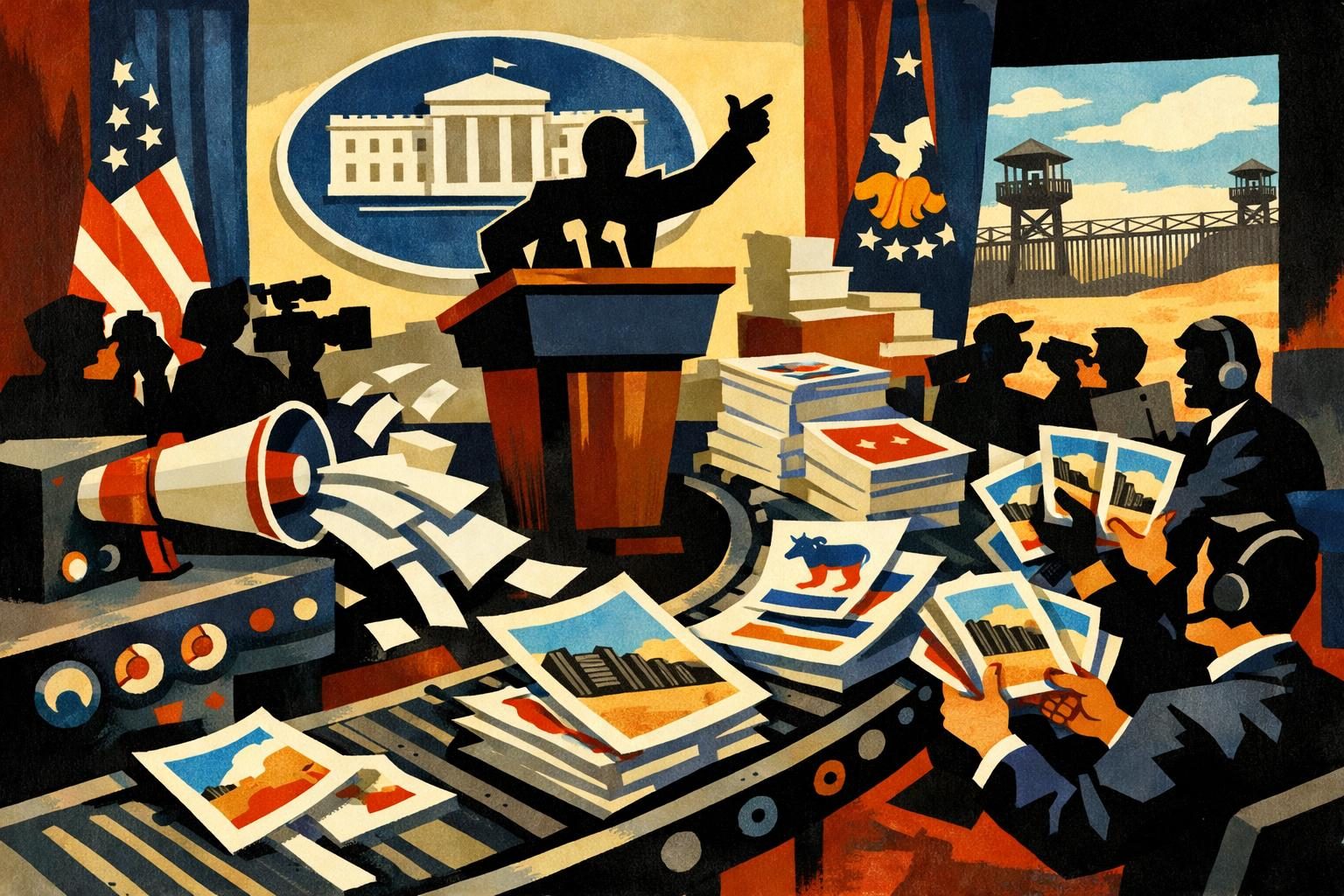
On October 15, the White House pushed out a conspicuously political batch of releases that made the communications shop look less like a sober government operation and more like a campaign bunker with a federal seal on the door. The day’s material leaned hard on border-and-crime messaging, recycled anti-Democratic attacks, and triumphalist language meant to frame the administration as an engine of nonstop wins. None of that is lawmaking, and none of it changes a statute or signs a bill, but the tone and volume are still revealing. When the official voice of the White House spends a full day sounding like opposition research dressed up as public information, it says something about how the administration wants to be perceived. The point seems less to explain policy than to keep supporters energized and critics on the defensive. That is a political choice, not an administrative necessity, and it is hard to miss. ([whitehouse.gov](https://www.whitehouse.gov/releases/?utm_source=openai))
The most telling part is not any single release on its own but the overall pattern. A border boast may be aimed at reinforcing the administration’s preferred story about security and control, while a partisan swipe at Democrats serves a more obvious electoral purpose. Put together, the releases suggest a White House that sees communications as a weapon rather than a bridge between government and the public. That matters because the press office helps set the tone for the rest of the executive branch. Agencies notice what the White House rewards, what it repeats, and what it treats as worth amplifying. If the top messaging shop is openly political, the people below it get a clear signal that they are expected to celebrate victories, spotlight enemies, and treat every policy dispute like a campaign ad. That can distort priorities even when nothing formally changes on paper. It is a small but meaningful way political instincts seep into governing habits. ([whitehouse.gov](https://www.whitehouse.gov/releases/))
There is also a practical consequence to the way this material is presented. A White House that floods the zone with aggressive, promotional content risks exhausting the audience it needs to persuade. Voters who already support the administration may enjoy the combat posture, but everyone else is likely to read the same releases as proof that the place is more interested in scoring points than in explaining decisions. That perception does not require any dramatic scandal or legal violation to take hold. It only requires repetition, and this release pattern offers plenty of that. Over time, the line between official communication and campaign-style messaging starts to blur so much that the institution itself can look interchangeable with a political operation. That is useful if the goal is to keep attention locked on conflict and loyalty. It is less useful if the goal is to present government as something other than a permanent election machine. The administration may consider that tradeoff worth making, but it is still a tradeoff. ([whitehouse.gov](https://www.whitehouse.gov/election-integrity/?trk=public_post_comment-text))
The larger fallout here is reputational, but reputational damage is not trivial in a democracy that depends on some baseline trust in public institutions. When every announcement sounds polished for partisan consumption, the White House invites the argument that official government communication has become indistinguishable from propaganda. That accusation may be overstated in some contexts, and it is fair to avoid pretending that every forceful release is sinister. Still, the October 15 burst points in a very particular direction: toward a communications strategy built around mobilization, confrontation, and message discipline rather than neutral explanation. In an election year, that approach may help rally the base and keep the news cycle focused where the White House wants it. But it also risks making the presidency look smaller, not stronger, because the whole enterprise starts to resemble a stump speech delivered from behind the Resolute Desk. If the administration intended to show confidence, it may have instead advertised anxiety about staying in constant political combat. For supporters, that may feel like energy. For everyone else, it looks like the government is auditioning for a campaign role it already has too many lines in.
Comments
Threaded replies, voting, and reports are live. New users still go through screening on their first approved comments.
Log in to comment
No comments yet. Be the first reasonably on-topic person here.