
White House doubles down on horror-show messaging in immigration push
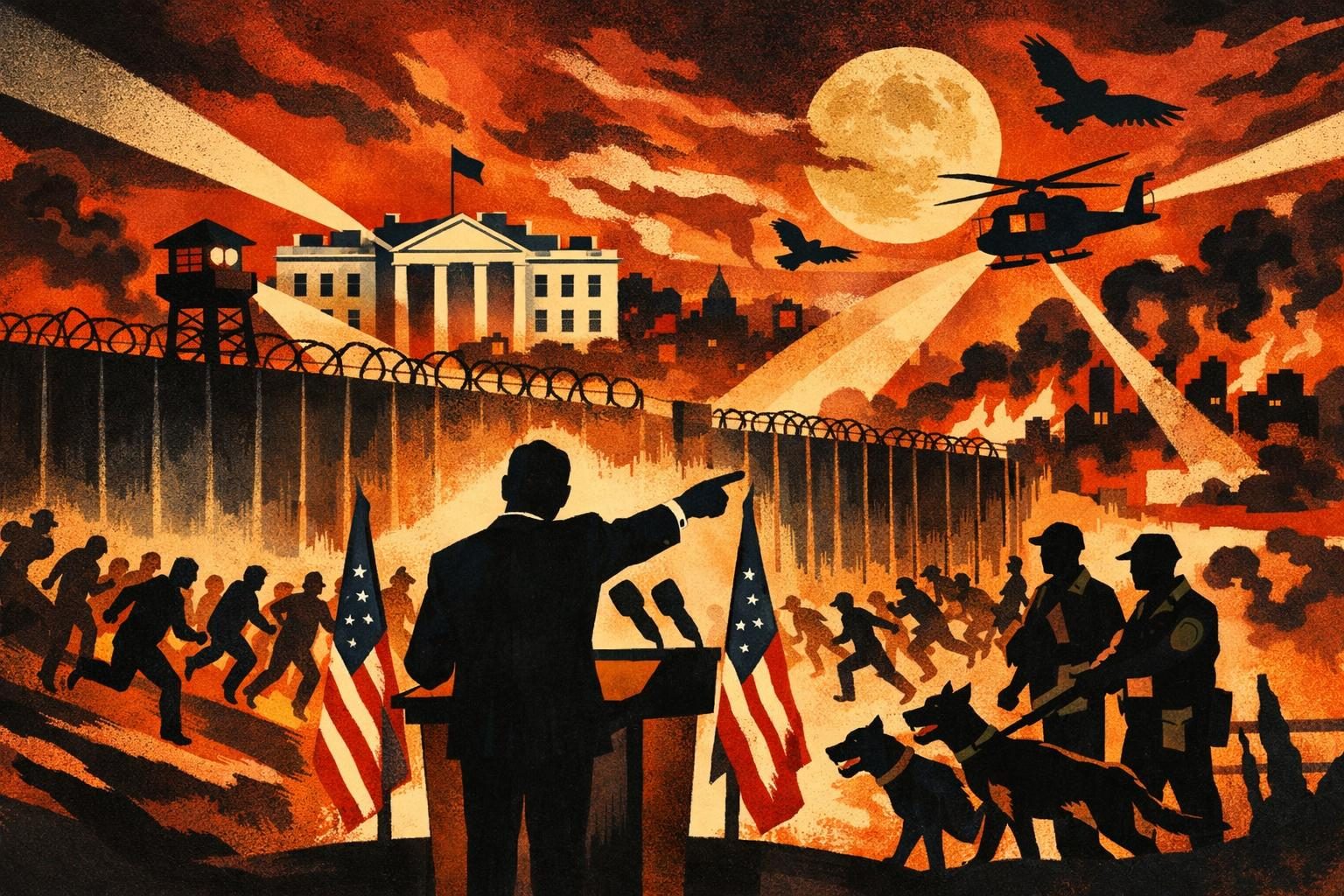
On October 15, the White House put out a new immigration message that was less a standard policy update than a full-throated attempt to lock in a very specific emotional frame. The language leaned hard into catastrophe, casting the border fight in sweeping, almost apocalyptic terms and bundling migration, enforcement, and criminality into one tightly wound fear narrative. That alone does not amount to a change in law or a formal directive, and it should not be treated as one. But it is still an official act of communication, which means it matters in the same way other executive messaging matters: it signals priorities, defines the administration’s preferred storyline, and sets the tone for what comes next. In this case, the tone was unmistakable. The White House was not trying to sound measured, procedural, or even especially persuasive in a policy sense. It was trying to sound urgent, severe, and unmistakably combative.
The release fits into a broader October 15 communications push that also highlighted mass deportation and border enforcement themes. Taken together, the material suggests the administration is not simply keeping immigration on the agenda; it is trying to dominate the agenda with immigration, and to do so in language that leaves little room for ambiguity. The pitch is not subtle. It is built for repetition, for short clips, for internal rallying, and for the sort of media coverage that thrives on confrontation. That does not mean the administration has no underlying policy case to make. It does mean the messaging has moved well beyond dry argument or administrative explanation. Instead, it reads like a deliberate effort to normalize a politics of emergency, one that treats immigration not as a durable governing challenge but as a threat environment that demands extraordinary attention. When a White House communicates this way, it shapes more than public opinion. It also shapes the atmosphere around enforcement, the assumptions made by lower-level officials, and the way the public understands what the government is about to do next.
That matters because official language is never just language when it comes from the presidency or its staff. It can influence how agencies prioritize cases, how local authorities anticipate federal action, and how courts interpret the broader context in which enforcement decisions are being made. It can also feed fear far outside Washington, especially among asylum seekers, mixed-status families, and immigrant communities already living with uncertainty about detention, deportation, and eligibility. Even if the White House release itself does not command a specific operational step, it contributes to a climate in which harsher moves feel more acceptable and less exceptional. That is one of the quieter but more consequential functions of executive rhetoric: it lowers the threshold for escalation by making escalation sound ordinary. At the same time, it can make accountability harder, because once a government has publicly cast the issue as a crisis of near-civilizational proportions, nearly any enforcement action can be sold as necessary. The line between messaging and instruction may remain formally intact, but in practice the two often bleed together, especially when the message is this loaded.
The likely reactions are easy to predict. Immigration hardliners will probably see the release as proof that the White House is serious, or at least serious-sounding, about enforcement. Civil-rights advocates and immigration lawyers are far more likely to view it as dehumanizing, inflammatory, and strategically irresponsible. Both reactions have some basis in the text of the message itself, which does not seem designed to invite nuance. The deeper concern, though, is not simply that the language is harsh. Governments are allowed to argue forcefully for policy goals. The problem is that this kind of official communication often trades evidentiary precision for political effect. It collapses complex realities into a single alarm signal and invites the public to treat fear as proof. That is a dangerous habit for any administration to cultivate, especially on an issue where the consequences of overreach can land on vulnerable people long before the legal system catches up. If the White House believes its position on immigration is defensible, it ought to be able to present it without sounding as though every post is a warning siren. The fact that it chose this register instead says a lot about what kind of fight it wants, and even more about how it wants that fight to feel.
Comments
Threaded replies, voting, and reports are live. New users still go through screening on their first approved comments.
Log in to comment
No comments yet. Be the first reasonably on-topic person here.