
Court filing in California election case sharpens the dispute over ballot handling
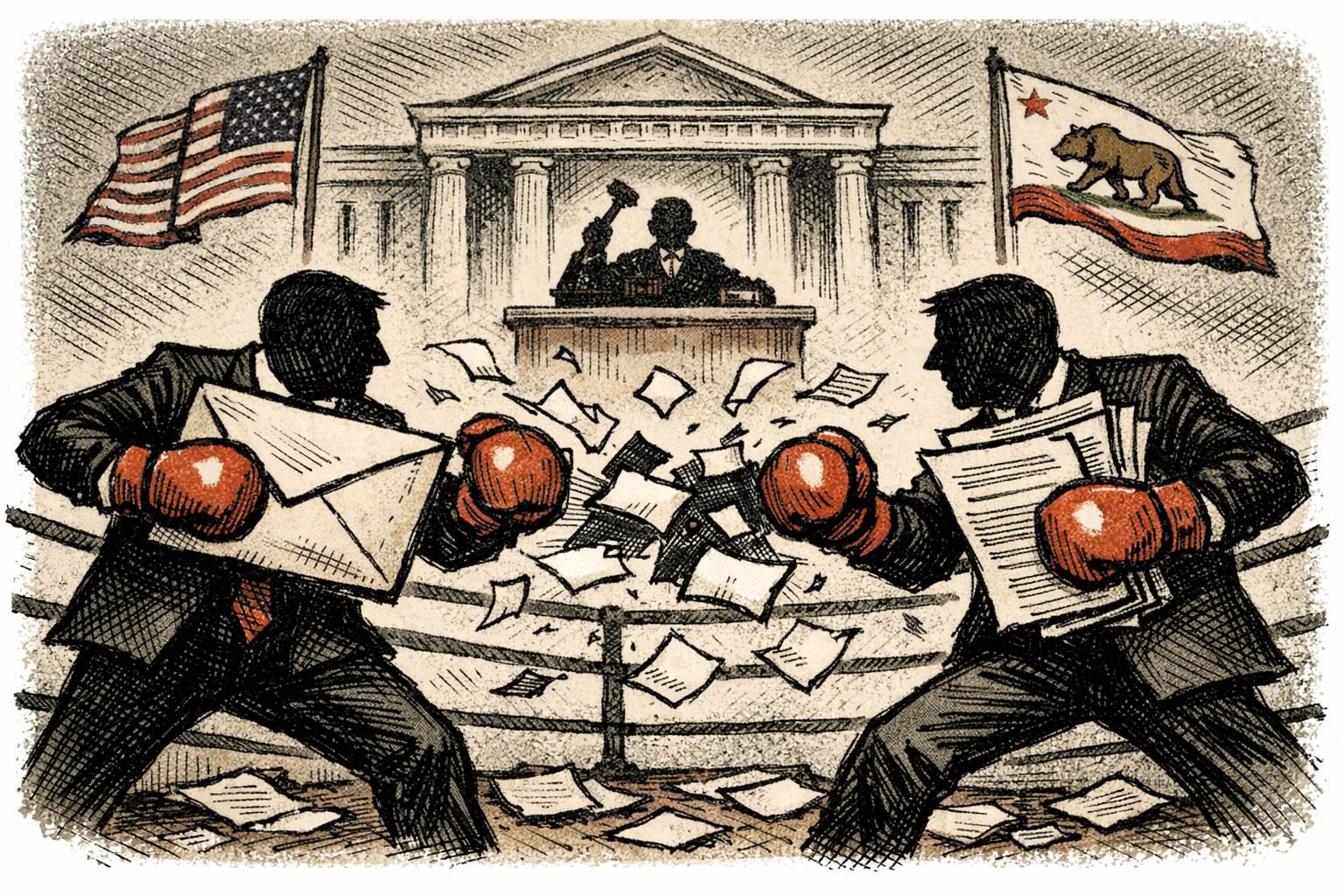
A new federal filing in the California election dispute is pushing the case out of the realm of broad political accusation and into a more immediate fight over evidence, timing, and what state officials did with a disputed voter list once it landed in their hands. The complaint, filed on October 15 and appearing on the docket on October 16, adds fresh factual claims to the government’s contention that roughly 20,000 noncitizens are registered in California. That number remains an allegation rather than a judicial finding, but the filing is significant because it tries to turn a public argument about election integrity into a record-based dispute that a court can actually manage. In practical terms, the document is designed to matter now, not later. It is the sort of pleading that can shape whether a judge sees the case as a political standoff or as an urgent legal controversy with real-world consequences for ballot handling during an active election period.
According to the filing, federal agencies shared the list with California on October 13 and expected the state to help verify whether the voters on it were citizens. The government says that did not happen, and the complaint frames that refusal, or failure to cooperate, as central to the controversy. California’s response, whatever form it takes in court, is likely to focus on the reliability of the data, the legality of the federal request, and the state’s own election procedures. But the immediate point of the complaint is to establish a paper trail: when the federal government says it sent the list, what it said was on the list, what California was asked to do, and how the state answered. That is not just procedural filler. In a case like this, those details can determine whether a judge treats the dispute as a policy disagreement or as evidence that one side ignored a warning it had a duty to examine. The filing also sharpens the question of whether the government’s concern is rooted in broad suspicion or in specific records that it believes demand action.
The stakes are higher than the rhetoric around voter rolls usually suggests. If the government can show that California received the information, had time to review it, and chose not to cooperate in verification, then the complaint becomes more than a symbolic challenge to state election administration. It becomes a claim that the state may have left potentially ineligible registrants on the rolls while declining to engage in a check that federal officials viewed as necessary. On the other hand, if California can show that the list was incomplete, unreliable, legally flawed, or not useful for making citizenship determinations, then the filing may end up highlighting the limits of the federal case rather than strengthening it. That is why this is, at bottom, an evidentiary fight. The dispute is not only about how many people might be affected; it is about what the government can prove, what the state knew at each step, and whether the communications between the two sides were enough to create a legal obligation or simply an exchange of accusations dressed up as enforcement. Either way, the complaint gives the court something concrete to assess instead of forcing the matter to remain in the abstract.
The possible consequences go beyond this one filing because election administration is unforgiving about timing. If a judge were to find merit in the government’s position, the practical result could be a court-ordered change in how California handles ballot verification while the election period is still underway. That would be a serious intervention, especially because any change in registration review or ballot processing can have downstream effects on voter access, county procedures, and administrative staffing. Even before any ruling, the complaint itself can pressure state officials to defend their process in public and in court, which can alter how the dispute is discussed by voters and election workers alike. At the same time, the filing does not by itself settle whether the federal government’s underlying claims will stand up under scrutiny. The case may still turn on whether the evidence is strong enough to justify the remedy the government appears to want, and whether the state’s own records and procedures contradict the picture presented in the complaint. For now, what changed on October 16 is not the outcome but the posture of the case: the argument now has a docket entry, a factual record to test, and a narrower question for the court about what California was told, what it did next, and whether that response was enough to satisfy federal concerns about voter eligibility and ballot handling.
Comments
Threaded replies, voting, and reports are live. New users still go through screening on their first approved comments.
Log in to comment
No comments yet. Be the first reasonably on-topic person here.