
Five noncitizens are arrested in New York voter-fraud cases, and the administration gets another ammo dump
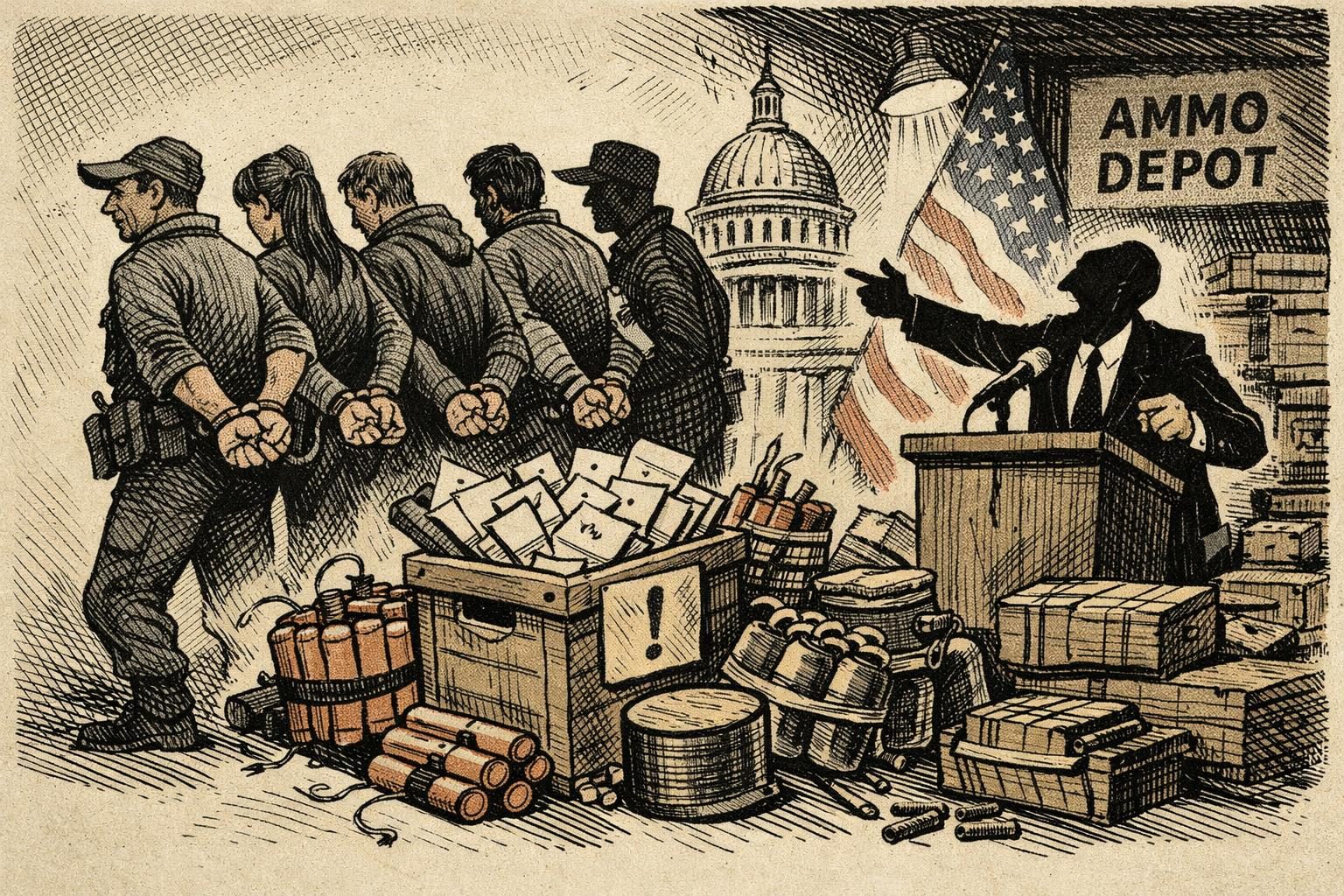
Federal prosecutors in New York say five noncitizens have been arrested on voter-fraud charges, a development that is legally serious and politically convenient in roughly equal measure. In an announcement on Oct. 16, the U.S. attorney’s office for the Northern District of New York said the cases involve allegations that the defendants knew they were not U.S. citizens but voted anyway in elections that included federal contests. Prosecutors also said the defendants are lawful permanent residents, which gives the matter an especially combustible quality because it sits at the intersection of criminal law, election administration, and immigration politics. None of the defendants has been convicted on the basis of these allegations, and the complaints remain allegations, not findings of fact. Still, the timing and scale of the announcement fit neatly into a broader government push to present election fraud as a live and widespread national threat.
The immediate legal question is straightforward enough: if the allegations are true, then people who were not entitled to vote apparently did so in elections governed by federal law. That is not a trivial matter, and it is not the kind of issue anyone should wave away just because voter-fraud claims are often overstated in public debate. Election systems depend on the basic premise that only eligible voters cast ballots, and when that premise is violated, even in a small number of cases, it gives prosecutors a legitimate reason to step in. But the leap from a handful of prosecutions to a claim of systemic collapse is where the political messaging starts to outrun the evidence. A few criminal complaints can prove that a system had holes in specific places under specific circumstances; they cannot, by themselves, prove that fraud is swallowing the whole process. That distinction matters, even when officials would prefer to flatten it.
There is also a broader strategic context here that makes the announcement hard to read as just routine law enforcement. The administration has made election integrity and fraud a recurring theme, and it has done so in a way that often turns isolated cases into symbolic ammunition for a much larger argument. That does not mean the prosecutors are fabricating facts, or that the cases should be dismissed as theater. It does mean the public is being asked to absorb the arrests not only as criminal allegations, but as proof of a bigger narrative about a fragile system under siege. That is a risky way to communicate about elections, because it can encourage people to interpret any fraud case as confirmation of a sweeping conspiracy or a nationwide breakdown. Once that frame takes hold, the evidentiary standard gets blurry fast, and the difference between a real case and a generalized panic can start to disappear in the political noise.
The immigration dimension only sharpens that problem. When officials emphasize that the defendants are lawful permanent residents, the cases may be intended to underscore that the alleged conduct allegedly involved people who were present in the country legally but still not eligible to vote in federal elections. That is a meaningful factual distinction, but it is also the kind of detail that can be absorbed into a much broader anti-immigrant narrative if it is presented without restraint. The danger is not only that the public comes away believing fraud is more common than the evidence supports, but that immigrants more generally become targets of suspicion whenever election procedures are discussed. That outcome may not be the stated objective, but it is a foreseeable political side effect. And if the government wants these prosecutions to strengthen confidence in elections, it should be careful not to use them in a way that weakens trust in other institutions, including the principle that people are innocent until proven guilty.
The better test for the administration is not whether it can generate a dramatic headline every time a fraud case surfaces, but whether it can show a consistent and disciplined approach to enforcement. That means distinguishing between alleged misconduct and proven misconduct, between isolated incidents and systemic trends, and between legitimate prosecution and political branding. It also means recognizing that election integrity is not served by turning every arrest into evidence for a preexisting story. Public confidence is built when officials present facts carefully, explain the limits of what a case can prove, and resist the temptation to oversell the implications of a criminal complaint. For now, these arrests may bolster the administration’s rhetoric, but rhetoric is not the same thing as proof. The allegations will have to be tested in court, and only then will anyone know whether this is a genuine breach worth punishing or another example of political actors squeezing a few cases for maximum national drama.
Comments
Threaded replies, voting, and reports are live. New users still go through screening on their first approved comments.
Log in to comment
No comments yet. Be the first reasonably on-topic person here.