
Hawai‘i delegation presses over Honolulu immigration court shift
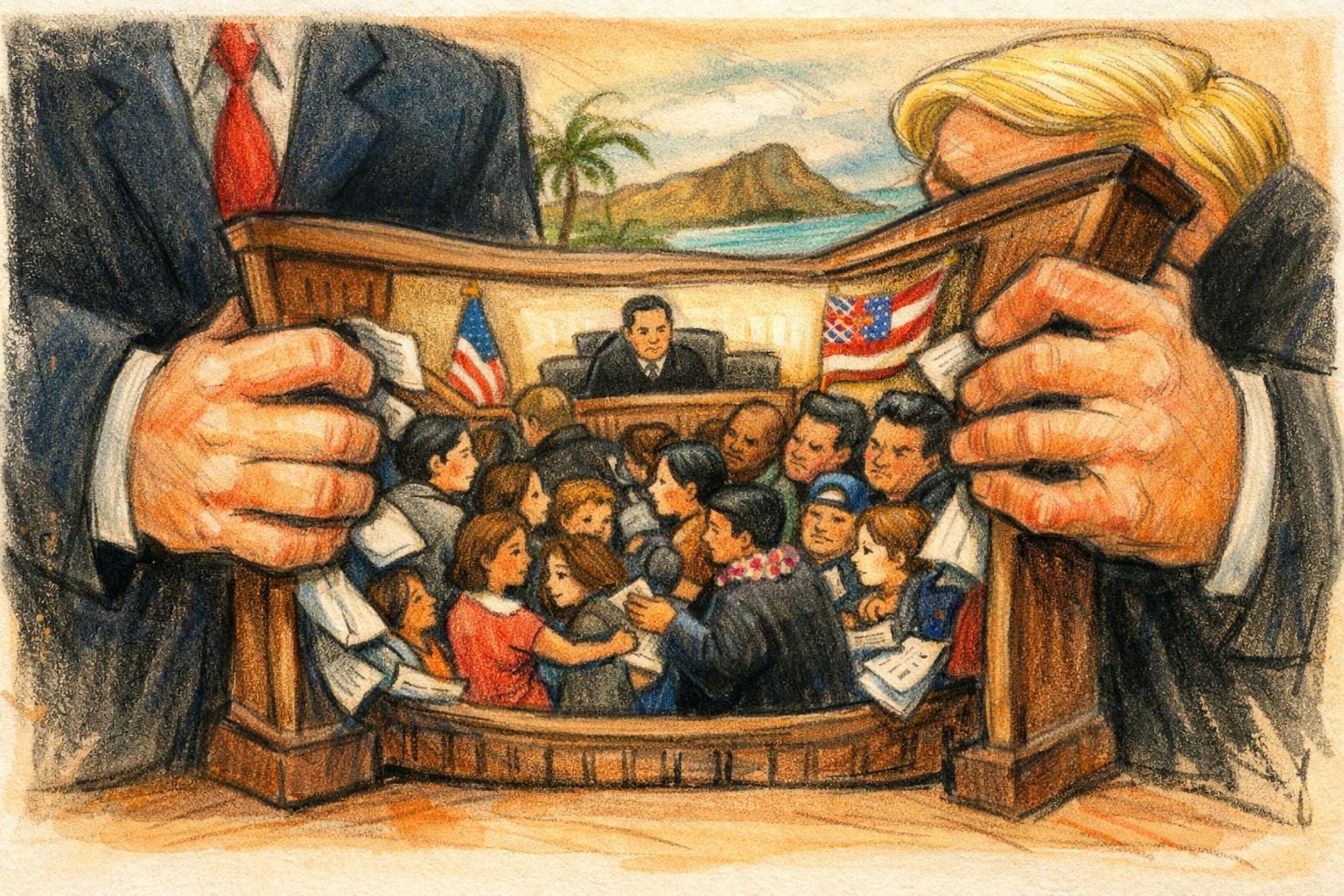
Hawai‘i’s congressional delegation spent October 16 publicly pressing the Trump administration over a seemingly narrow but consequential change to the Honolulu immigration court: a shift toward in-person hearings. On paper, the dispute is about scheduling and courtroom procedure. In practice, it goes to the heart of whether people caught in immigration proceedings can actually show up, secure counsel, manage work and family obligations, and navigate a system that already runs on deadlines, distance, and pressure. That is why the move has drawn such quick pushback from Hawai‘i’s elected officials. When lawmakers intervene at this stage, it usually means the administrative change has already begun to affect real cases, not just theoretical ones. The fight is less about whether a hearing should be in person in the abstract than about what that choice does to access, fairness, and the ability of ordinary people to defend themselves.
The shift may sound technical, but immigration courts are built in ways that make technical changes feel punishing very quickly. A hearing format can determine whether someone has to travel across an island, rearrange work, find child care, pay for transportation, or try to coordinate with an attorney whose office may already be overloaded. For respondents who are detained, represented by overburdened counsel, or living far from the courthouse, what looks like a routine administrative adjustment can become a serious barrier. That is especially true in Hawai‘i, where geography alone can turn a courthouse requirement into a logistical hurdle. Critics argue that when the government makes access to a hearing harder, it is not simply restoring normal operations; it is changing the terms of participation in a system where one missed appearance can carry severe consequences. Supporters of the administration may describe the move as a return to conventional procedure, but the practical effect depends on who can realistically comply. In that sense, the dispute is not just about form. It is about whether the system is being made more orderly or merely more unforgiving.
The delegation’s decision to speak out publicly gives the issue more weight than a routine complaint about courthouse management. Lawmakers do not usually make a public fight out of a scheduling tweak unless they believe the change has immediate consequences for constituents or for the functioning of the local court. Their criticism suggests that the impact has already become visible enough to register politically. It also points to a broader concern that administrative decisions in immigration enforcement can operate like policy by another name. Courts do not have to announce a new law to make the process harsher. They can alter the mechanics of appearance, access, and timing, and the effect can be just as real for the people caught inside. That is part of what makes immigration bureaucracy so difficult to challenge. A change can be presented as procedural, while the burden falls unevenly on people least able to absorb it. Access to counsel, in particular, is central to this fight. If respondents and lawyers cannot reliably appear together, the balance in proceedings shifts further toward the government.
The confrontation fits a broader pattern of hardening under the Trump administration, where operational changes often carry the force of policy even when they arrive without much fanfare. Immigration advocates have long warned that barriers do not always need to come in the form of new statutory rules. They can emerge through court operations, enforcement practices, or the quiet redesign of how the system works day to day. That is why this hearing-format shift matters beyond Honolulu. It reflects a model of governance in which access becomes harder by degrees, and each bureaucratic adjustment compounds the next. Lawmakers object, advocates warn of the consequences, and immigrant communities are left to adapt to a system that keeps becoming more difficult to survive. Whether the administration frames the move as efficiency, normalcy, or courtroom discipline, critics see something else: another small but meaningful tightening in a process already defined by asymmetry and fear. In a year marked by aggressive enforcement and administrative hardening, even a change in how a case is heard can carry the force of a quiet punishment. That is why the fight over Honolulu is not minor, even if the paperwork looks minor. It is a reminder that in immigration policy, the most consequential changes are often the ones disguised as routine.
Comments
Threaded replies, voting, and reports are live. New users still go through screening on their first approved comments.
Log in to comment
No comments yet. Be the first reasonably on-topic person here.