
House Democrats introduce bill aimed at blocking Trump’s Russia diesel deal
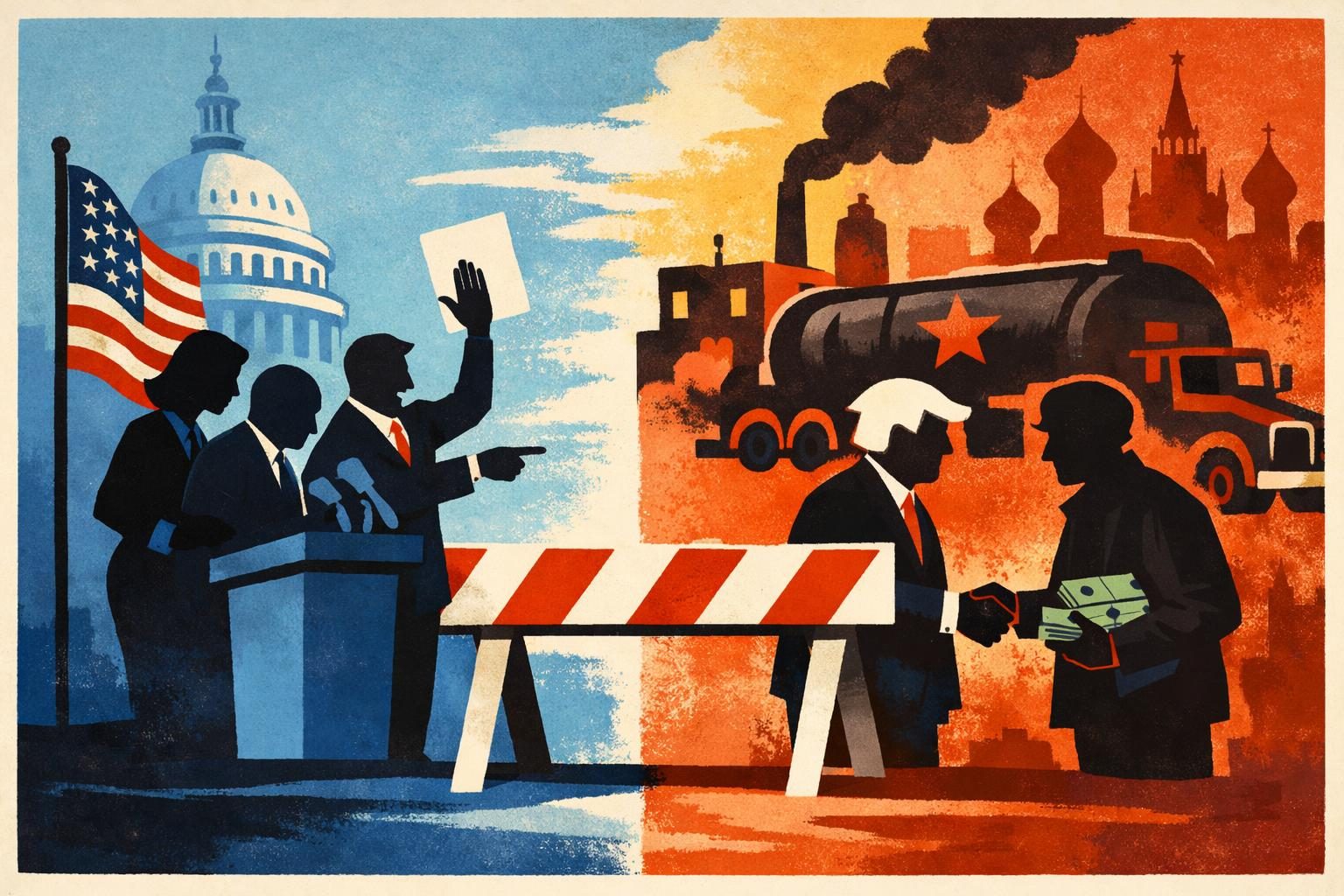
House Democrats moved on October 16 to turn their criticism of what they describe as Donald Trump’s Russia diesel deal into something more concrete: legislation. The bill, announced by Rep. Gregory Meeks, is aimed at blocking an arrangement that opponents say would weaken sanctions pressure on Moscow and potentially give Russia a strategic or economic advantage at a sensitive moment in foreign policy. That matters because it is not just another round of partisan rhetoric or a carefully timed statement designed to get attention for a day. Introducing a bill forces the fight into Congress, where the administration has to answer in a more formal and durable way. It also creates a paper trail that can be used to measure support, opposition, and the seriousness of the complaint. In Washington, that kind of move usually signals that lawmakers believe the dispute has crossed from being a talking point into something they think could have real policy consequences.
The decision to file legislation also says something about how Democrats are framing the issue. They are not merely arguing that the administration’s Russia posture is unwise in the abstract. They appear to believe it is dangerous enough to require a legislative brake before any deal or policy shift becomes normalized. That is a heavy accusation, even by the standards of the capital’s daily combat. It implies that lawmakers see some combination of sanctions pressure, commercial benefit, or diplomatic concession that they do not trust the White House to manage responsibly. In practical terms, the bill is a way of saying Congress should not leave the matter to executive discretion alone. For critics, the concern is not simply whether a particular arrangement is politically embarrassing. It is whether the administration is creating room for Moscow to benefit while claiming the move is part of a broader strategy. That is why the legislative route matters as much as the substance itself. It transforms a foreign-policy argument into a formal test of whether Congress is willing to intervene.
The political significance is easy to see, even without knowing how far the measure will ultimately go. Russia remains one of the few foreign-policy issues that can still generate broad anger when lawmakers believe sanctions or leverage are being mishandled. The introduction of this bill suggests that Democrats think the issue is serious enough to warrant more than a press release and a few hostile quotes. It also reflects a familiar strain in the broader fight over the administration’s approach to international affairs: the complaint that the White House treats geopolitics as a dealmaking exercise and then expects Congress to admire the hustle. That line of attack has been around for years, but it takes on more force when lawmakers believe the details involve Russia, sanctions, and energy markets. If the underlying arrangement is real and politically vulnerable, then the bill gives opponents a vehicle to press the attack on substance rather than just style. It also gives members a way to put their names on a public record that shows they tried to stop it.
There is still some uncertainty around the broader public narrative, and that is worth keeping in view. The legislative introduction is clear, but the exact contours of the deal Democrats are trying to block may continue to develop as more details emerge. For now, the point is not that Congress has resolved the policy fight. The point is that Democrats believe the issue has moved far enough to justify an active legislative response. That alone is a meaningful headache for the administration, because it suggests skepticism not just about the wisdom of the deal but about the credibility of the people defending it. If the measure gains traction, it could sharpen scrutiny of the administration’s Russia posture and force a more explicit defense of whatever arrangement critics are targeting. Even if the bill goes nowhere, the move underscores a broader truth about the current political climate: when Russia is involved, and when lawmakers think sanctions discipline may be slipping, the opposition is not content to complain from the sidelines. It is trying to write the complaint into law.
Comments
Threaded replies, voting, and reports are live. New users still go through screening on their first approved comments.
Log in to comment
No comments yet. Be the first reasonably on-topic person here.