
ICE’s Houston chase appears to have targeted a man who had already died
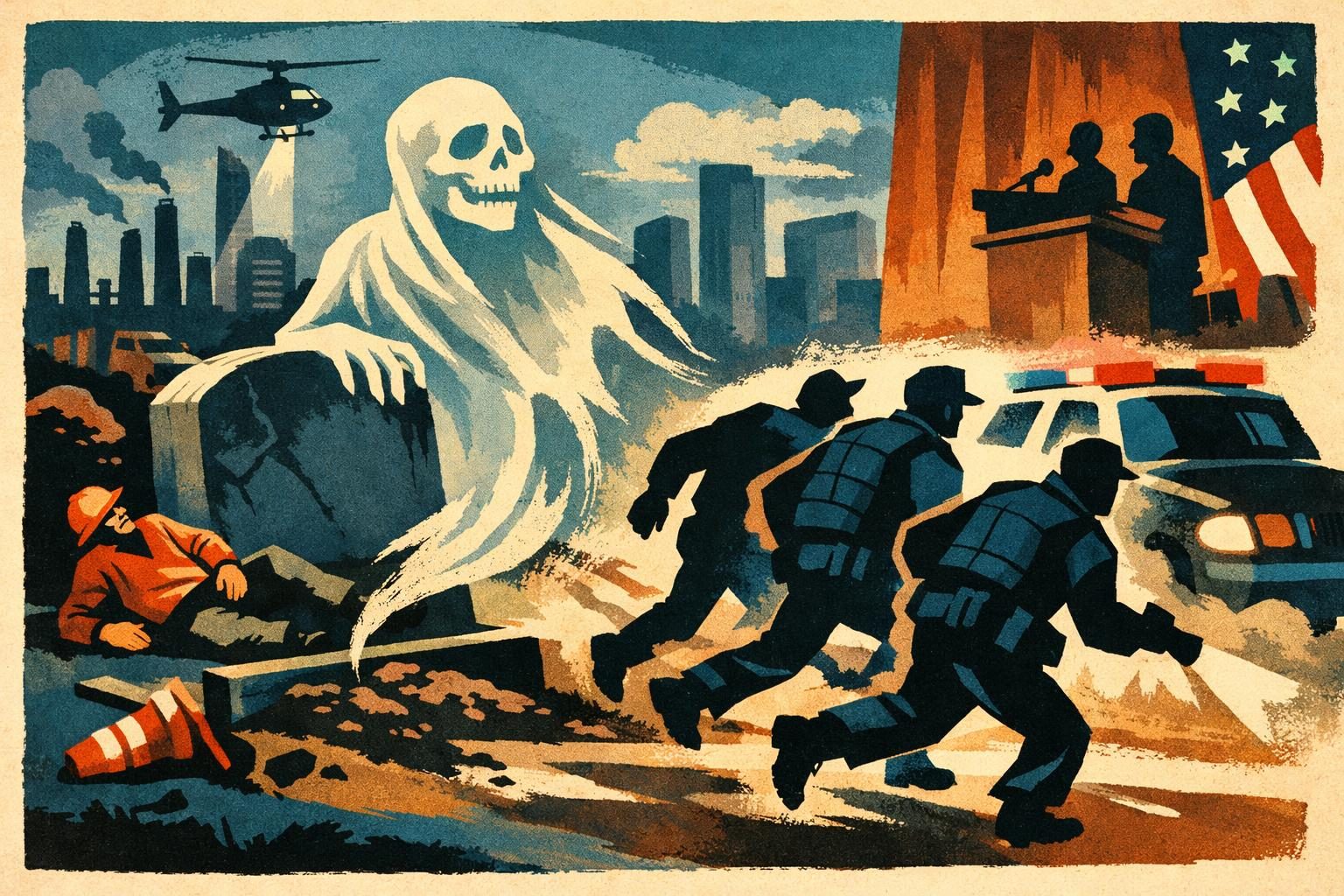
A Houston construction worker was left with multiple broken legs after an immigration enforcement pursuit that now appears to have gone spectacularly wrong at the most basic level: the agency may have been chasing a man who had already died. By Oct. 16, the worker’s family and a local immigrant-rights group were saying that the person federal officers believed they were tracking was dead years earlier, a claim that, if confirmed, would turn a violent street stop into something much more troubling than a simple mistaken detainment. The injured man was not a statistic or a piece of collateral math. He was a worker who went to work and ended up hospitalized after a federal chase he did not appear to start and could not have controlled. That reality gives this case a grim clarity: whatever the intended enforcement goal was, the outcome involved a badly hurt bystander and a public explanation that is now under serious strain.
The timeline is what makes the episode especially damaging. Immigration officers said they were pursuing a suspect identified as Jose Mendoza-Cervantes and that they saw him get into a vehicle with the construction worker who was later injured. But a spokesperson for the Harris County District Attorney’s Office later said Mendoza-Cervantes was not in that vehicle, undercutting the agency’s account and adding another layer of doubt about how the encounter unfolded. The family says it has documentation indicating that Mendoza-Cervantes died years ago, which would mean the target of the pursuit may have been wrong from the beginning. That is not a minor paperwork error or a clerical hiccup. It suggests a verification failure at the front end of an enforcement action, with real-world consequences measured in shattered bones and medical bills rather than internal corrections or after-action memos. If officers were relying on stale or mistaken identity information, then the pursuit was built on sand before anyone hit the gas.
What makes the case especially combustible is that it lands squarely inside a broader argument over how immigration enforcement is being carried out and what level of risk the public is expected to absorb in the name of it. Advocates for immigrants have already seized on the incident as evidence that ICE is becoming more aggressive while becoming less transparent about how it picks its targets and how it accounts for harm when things go badly. Even without every factual dispute resolved, the basic optics are brutal for the agency. A man ends up hospitalized with multiple fractures, the alleged target may have been dead for years, and local officials are publicly disputing key pieces of the federal version. That combination does not just raise questions about one operation. It raises questions about whether the agency’s internal checks are strong enough to keep a chase from becoming a public disaster. When enforcement is sold as precise and professional, the public is entitled to expect more than a pursuit that may have missed the target entirely.
The political fallout also cuts in a direction the administration would rather avoid. Hardline immigration policy is usually defended as careful, necessary, and focused on dangerous individuals, but that pitch depends on the government getting the identity of the person it is chasing right. If the target was deceased before the operation ever began, then the incident stops looking like the unfortunate edge case defenders of aggressive enforcement always talk about and starts looking like institutional sloppiness with a badge. That is why this story is resonating beyond the immediate injury and why the family’s account matters so much. There is still uncertainty about the full sequence of events, and the official record may yet settle some of the contradictions. But the emerging picture is bad enough already: a federal chase, a seriously injured construction worker, a claimed suspect who may not have been there, and a name that may have belonged to someone who was no longer alive. If that holds up, the government will not just have explained itself poorly. It will have demonstrated a level of basic failure that should alarm anyone who expects law enforcement to know whom it is chasing before someone gets hurt.
Comments
Threaded replies, voting, and reports are live. New users still go through screening on their first approved comments.
Log in to comment
No comments yet. Be the first reasonably on-topic person here.