
Judge blocks Trump’s voting-order gambit and tells agencies to unwind it
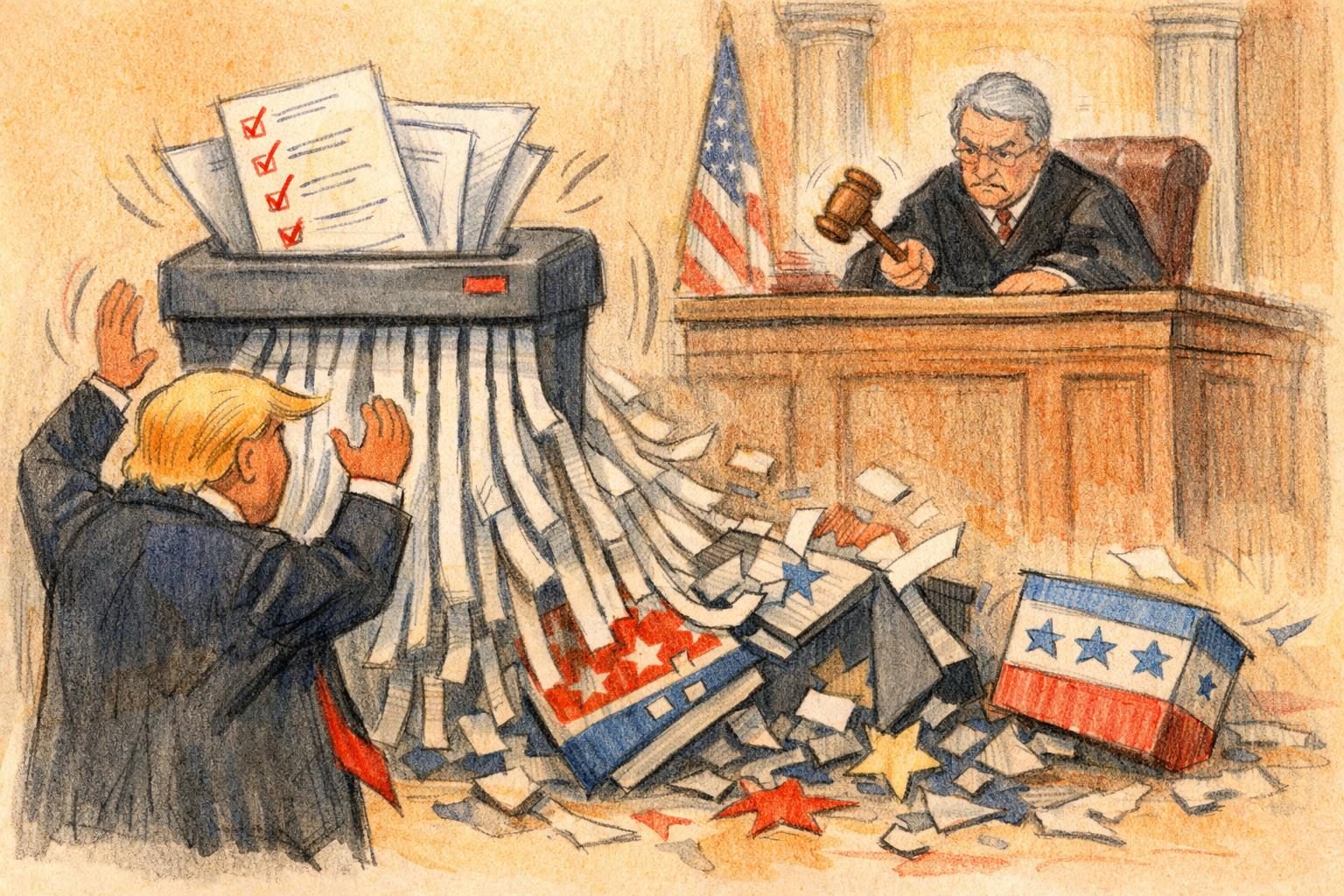
A federal judge delivered a sharp rebuke on October 16 to President Trump’s latest attempt to steer election rules from the Oval Office, ordering executive-branch defendants to stop carrying out major parts of his voting executive order and to undo any implementation already underway in the plaintiff states. The ruling does more than pause a policy fight. It declares the challenged provisions unlawful, null, and void as applied to those states for the coming federal election, which is about as close as a court can get to slamming the brakes without physically locking the steering wheel. The order also tells agencies to notify employees and relevant recipients about the ruling, a detail that matters because election directives do not just sit on paper. They move through bureaucracies, get translated into memos and checklists, and can create confusion long before anyone files a motion in court. In practical terms, the judge has forced the administration to back away from actions it may have already begun taking, or at minimum to freeze them while the legal fight continues.
That is a serious setback for a White House that has repeatedly tried to use executive authority to reshape how elections are run, despite the fact that election administration has long been shared between Congress, the states, and a dense thicket of existing law. The administration’s broader approach has leaned on the idea that the president can set the tone and often the terms on which federal agencies engage with voting-related procedures. The court’s order pushes back hard on that theory and signals that there are real limits on how far a signature can go when it collides with state control and statutory boundaries. The timing makes the blow sting even more, because the dispute lands in the middle of the 2026 election cycle, when state officials, agency staff, and voters are all sensitive to anything that could change the mechanics of registration, voting, or election oversight. A legal ruling like this does not merely affect lawyers. It ripples through election offices, compliance teams, and public messaging, all of which have to react quickly when a federal judge tells the government to stop. For an administration that likes to present itself as decisive and in command, being ordered to unwind its own work is not a flattering tableau.
The court’s decision also undercuts the political narrative that these moves were purely about safeguarding elections. Opponents of the executive order have argued from the start that the deeper objective was not integrity but leverage, with the federal government trying to insert itself into spaces traditionally left to the states. The judge’s ruling does not endorse that criticism as a political slogan, but it does validate the core legal complaint: whatever the policy goals, the government cannot simply bootstrap new authority by executive fiat. The order’s demand for a status report within seven days reinforces that this is not a symbolic scolding. The court wants to know what steps were taken, what has been reversed, and where the administration stands after the ruling. That matters because bureaucratic resistance, delay, or ambiguity can sometimes be as consequential as an outright refusal. If agencies were already circulating guidance, preparing training, or telling employees to act on the executive order, those instructions now have to be revisited. In a charged election year, even a temporary period of uncertainty can generate confusion among officials and suspicion among the public, which is exactly the sort of collateral damage this kind of dispute tends to produce.
What happens next is likely to depend on how aggressively the administration chooses to fight back. It could appeal, seek to narrow the order, or attempt to preserve parts of the policy while conceding others. It could also simply comply while building a record for the next stage of litigation. None of those options is painless. Compliance would mark another visible retreat from an agenda that has frequently depended on bold unilateral action. An appeal would keep the issue alive but prolong the cloud over election administration. A narrower approach might reduce the immediate legal exposure, but it would also amount to an acknowledgment that the original order reached too far. Either way, the ruling adds another entry to the growing record of judicial resistance to attempts to federalize election rules by decree. It also serves as a reminder that executive orders may carry the force of presidential will, but they do not automatically carry the force of law. When a court says the relevant provisions are void in the affected states, the White House is left with the uncomfortable task of explaining why a sweeping directive has suddenly become a paperwork problem. For an administration that prefers to project certainty, that is a damaging look, and one that could linger well beyond this one fight.
Comments
Threaded replies, voting, and reports are live. New users still go through screening on their first approved comments.
Log in to comment
No comments yet. Be the first reasonably on-topic person here.