
NCAA sues Ohio over governor’s order blocking new eligibility rule
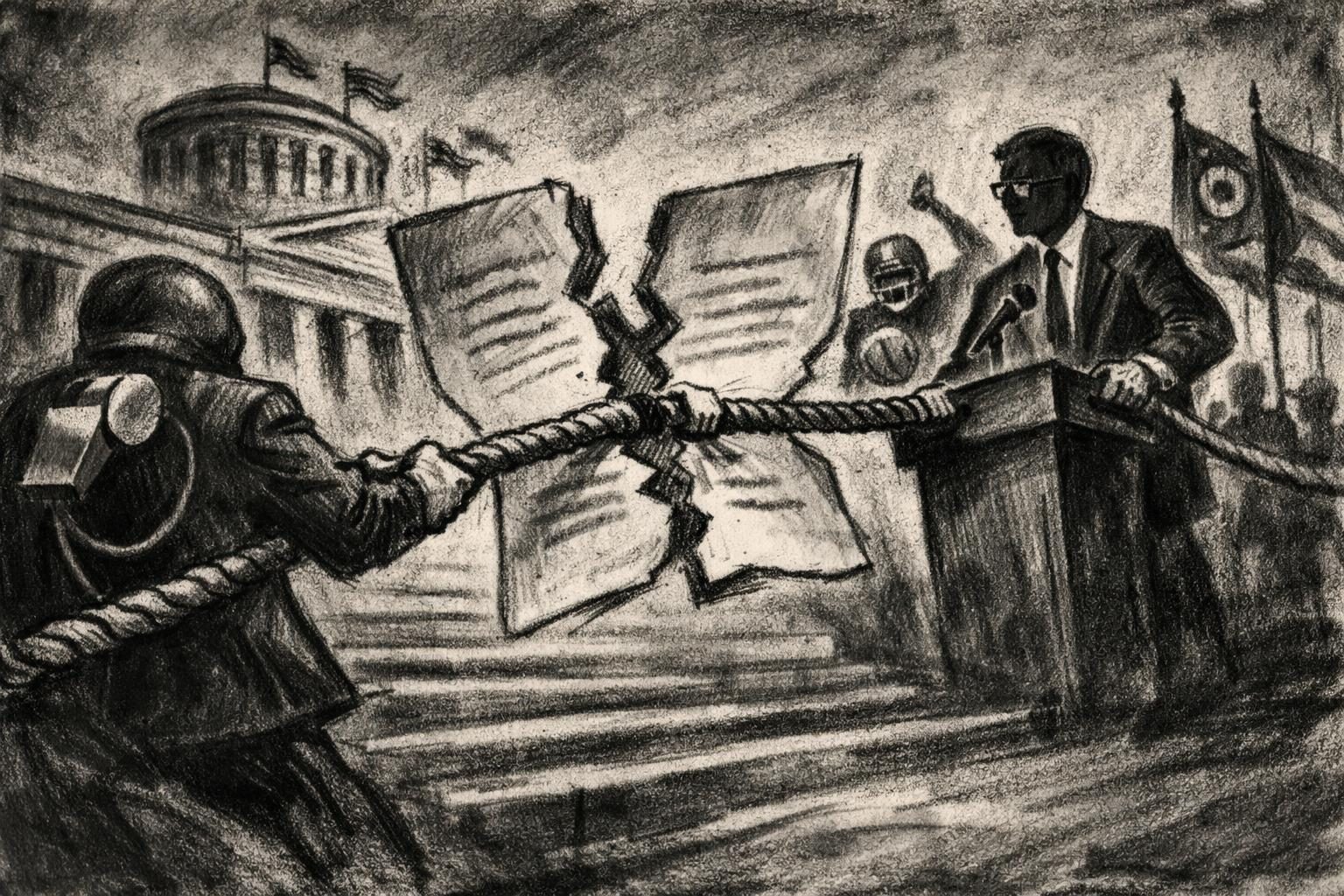
The NCAA has turned Ohio’s eligibility fight into a federal case, asking a judge to block the state from enforcing Gov. Mike DeWine’s order that would let schools sidestep a new eligibility rule. The association says the executive action would let Ohio’s colleges and universities gain an unfair edge over programs in other states that are still expected to follow the rule as written. On paper, this is a dispute about eligibility standards and who gets to decide whether they apply. In practice, it is a test of whether one state can simply tell its schools to ignore a national rule when that rule becomes politically inconvenient. Ohio’s response may have been framed as a defense of local institutions, but the NCAA is treating it as an open challenge to the idea of uniform enforcement.
The core complaint from the NCAA is not subtle: if one state can opt out, then the rule stops being a rule and starts being a suggestion. That is why the association moved quickly to federal court after the governor’s order, rather than letting the issue simmer inside the sports bureaucracy. The NCAA is arguing that consistency matters, especially in a system built on schools competing across state lines under the same basic framework. If Ohio is allowed to carve out its own path, other states could try the same play whenever a rule hits too close to home. That would leave administrators, coaches, and athletes guessing which standards apply from one campus to the next. Even for a sports governance fight, that is a recipe for confusion, unequal treatment, and a lot of courtroom homework.
DeWine’s order appears to have been an attempt to protect Ohio schools from the immediate effects of the rule change, but the move also puts the state on a collision course with the national body that regulates the competition structure. The NCAA’s lawsuit says the order is not just a policy disagreement but an extraordinary step that threatens the integrity of a national system. That is a strong phrase, and it signals that the association wants the court to treat this as more than a routine administrative squabble. The timing adds to the friction, because the dispute lands just as schools are trying to plan rosters, eligibility decisions, and compliance calendars around a rule that is supposed to be uniform. When one state executive tries to rewrite the terms on the fly, everyone else is left to wonder whether the same tactic will be used somewhere else tomorrow. That uncertainty is exactly what sports regulators try to avoid, and exactly what this fight seems to be producing.
There is also a larger political problem buried inside the legal one. Governors regularly make noise about defending their states’ institutions, but this kind of maneuver risks looking less like principled resistance and more like rule-bending for local advantage. If the court sides with the NCAA, Ohio’s order could end up looking like an expensive gesture that created more trouble than protection. If the state is allowed to stand behind it, then the precedent could invite other states to try the same thing whenever a national sports rule starts to bite. Either outcome would leave the system weaker than before. The NCAA’s filing suggests it believes the harm has already begun, because the mere prospect of selective enforcement can distort planning and competition. In that sense, this is not just about one eligibility rule. It is about whether national sports governance still means anything when a state decides it can simply opt out. That is a smallish fight compared with the biggest legal battles in public life, but it is still a reminder of how quickly a political stunt can become a federal dispute.
Comments
Threaded replies, voting, and reports are live. New users still go through screening on their first approved comments.
Log in to comment
No comments yet. Be the first reasonably on-topic person here.