
New York’s attorney general blasts the Justice Department’s attack on Minnesota judges
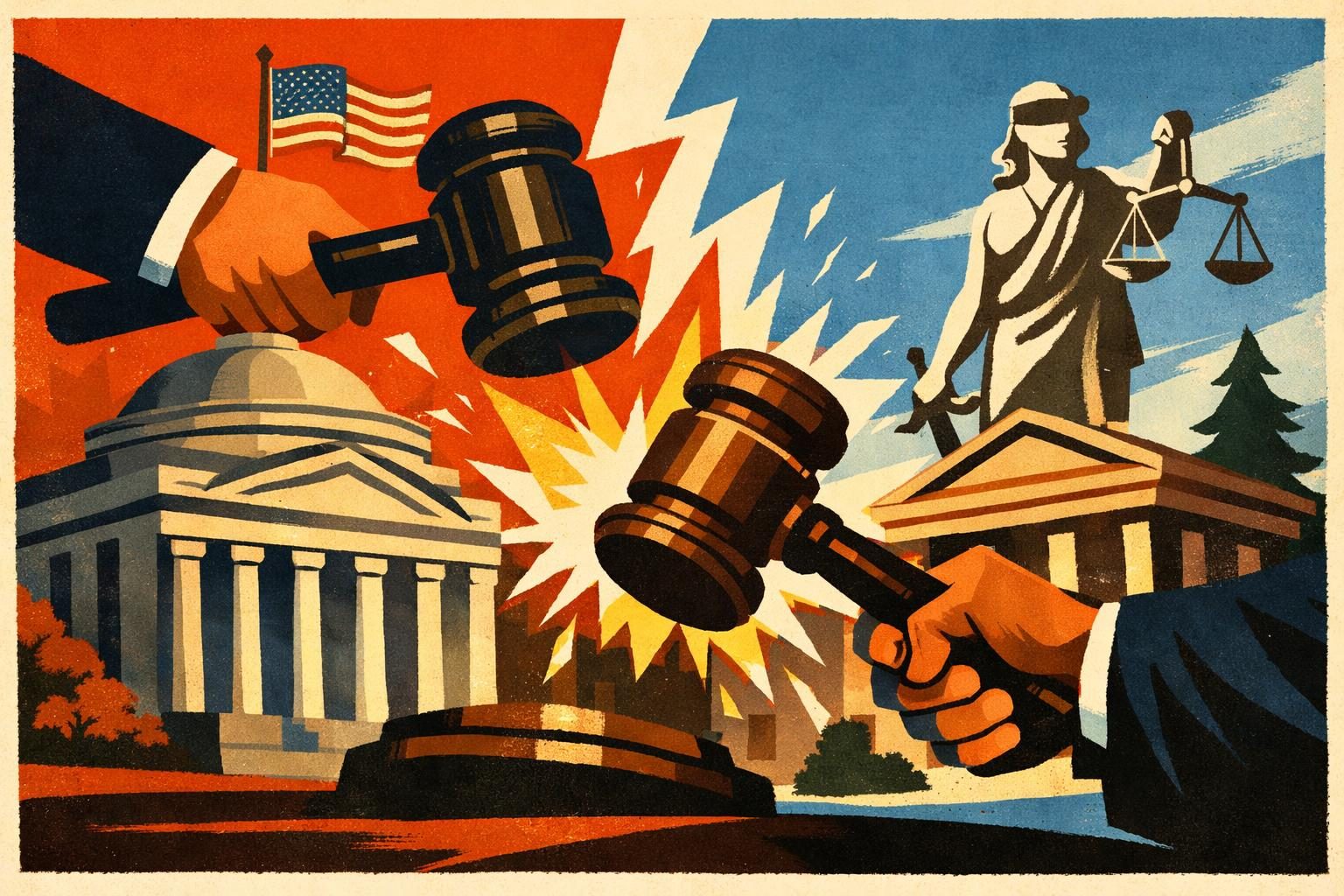
New York Attorney General Letitia James added her voice on October 16 to the rising backlash over the Justice Department’s move targeting Minnesota federal judges, turning what might have been treated as another Washington skirmish into a wider fight over the boundaries of executive power. James framed the department’s action as something far more serious than a routine personnel or policy dispute, placing herself among the most prominent state-level critics of the administration’s latest courtroom maneuver. The statement did not settle the underlying legal question, and it did not purport to answer whether the Justice Department’s reasoning will hold up under scrutiny. But it did make one thing clear: the controversy has already spilled beyond the federal courthouse and into a broader political confrontation. For a state attorney general to publicly challenge the Justice Department over the conduct of federal judges is not just symbolic posturing. It is a sign that the issue is being read by legal officials as an institutional threat, not simply a partisan disagreement.
The timing matters because the department’s action arrives in a climate already primed for arguments about judicial independence, executive overreach, and the increasingly combative relationship between state prosecutors and Washington. James’s statement fits into that pattern, serving as a formal rebuttal from an office that routinely finds itself in the middle of federal-state disputes. When the nation’s top law enforcement department takes a step that state officials view as targeting sitting judges, the response is rarely confined to the legal merits alone. It also becomes a test of whether the public institutions involved are willing to push back when they believe the other side is crossing a line. James’s criticism suggests she sees this episode in those terms. Her remarks elevate the dispute from a technical issue inside the Justice Department to a broader constitutional argument about who gets to pressure judges, how far federal power can reach, and what happens when that power appears to be aimed at the judiciary itself. Even without resolving the underlying facts, the statement signals that the matter is no longer being interpreted as an internal federal matter.
That broader reaction is important because the Justice Department’s own materials show the administration has been presenting the issue through a highly political lens. A department release tied to its weaponization working group describes a report attacking a Garland-era memo, saying that memo chilled parental rights and raised alarm about what it characterizes as federal overreach. That framing helps explain why the controversy is metastasizing so quickly. Once a department begins describing legal decisions or guidance in sweeping political terms, critics are likely to answer in kind, and the dispute becomes about more than a single memo or one set of judges. It becomes part of a larger narrative about whether law enforcement is being used to police politics rather than merely enforce the law. James’s response lands directly in that environment. By condemning the Justice Department’s move, she is not only defending the judges involved, but also pushing back against the idea that federal officials can recast internal judicial disagreements as targets for public pressure. The result is a fight that is legal in form, political in effect, and institutional in consequence.
What makes the criticism from Albany noteworthy is that it comes from a state official who is herself deeply familiar with the ways litigation can become a proxy battle for larger political struggles. State attorneys general are often the first line of resistance when they believe Washington has overstepped, and James has frequently occupied that role in high-profile disputes. Her statement therefore carries more weight than a generic partisan reaction, because it comes from an office that is expected to understand both the legal stakes and the practical fallout of federal enforcement decisions. It also underscores how quickly this episode has broadened into a separation-of-powers conversation. The central concern is no longer just whether the Justice Department has a strong case. It is whether the department is using its authority in a way that undermines the appearance or reality of judicial independence. That distinction matters, because public confidence in the courts depends not only on what judges decide, but on whether the executive branch seems to be trying to influence them through pressure or retaliation. James’s statement implies that this line may have been crossed, or at minimum that the department is dangerously close to it. For now, the department has not been forced to retreat, and the legal fight remains unresolved. But the political response is already building, and that alone tells you how sensitive the episode has become.
Comments
Threaded replies, voting, and reports are live. New users still go through screening on their first approved comments.
Log in to comment
No comments yet. Be the first reasonably on-topic person here.