
Federal prosecutors in New York pile on with noncitizen voter-fraud arrests
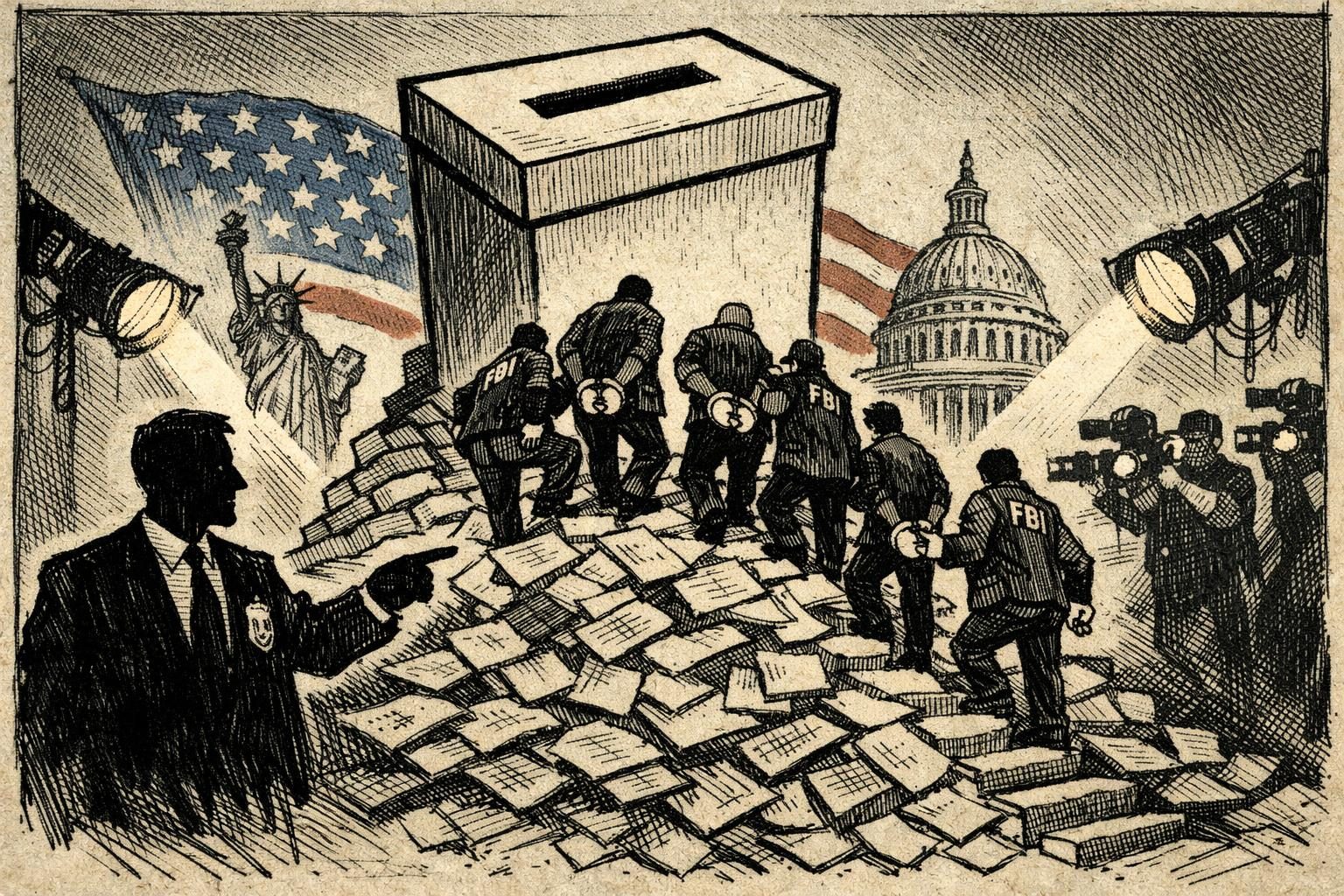
Federal prosecutors in the Northern District of New York said Thursday that five lawful permanent residents have been charged in connection with allegedly voting as noncitizens, a case that immediately fits into a broader and increasingly partisan fight over election integrity. The defendants are identified in court filings as people from Ballston Spa, Glens Falls, Clifton Park, Tupper Lake, and Albany, and prosecutors say the votes at issue were cast in an election that included federal offices. That detail matters because it gives the matter not just local significance but federal jurisdiction as well, turning what could have been treated as a routine eligibility violation into something that can be folded into a larger national message. The announcement comes at a moment when the administration has repeatedly elevated noncitizen voting as a political theme, often presenting it as evidence that election systems need tighter control and more aggressive enforcement. None of that proves the allegations in this case any less serious, but it does explain why the charges are landing with such force and why the timing is getting noticed.
The filing from the Northern District should also be understood as separate from the broader Justice Department election-crimes rollout that has been circulating through Washington. This is a distinct office, a distinct public announcement, and a distinct set of defendants, even if the political effect ends up being similar. In other words, this is not just another echo of a centralized campaign message; it is a local prosecution that happens to arrive in the middle of a federal push on the same subject. That distinction matters because the administration can point to it as proof that its rhetoric has real enforcement behind it, while critics can argue that the government is choosing cases that maximize symbolism. In the hands of political actors, a narrow criminal case can become a broad argument about who is entitled to participate in elections and what level of government oversight is acceptable. The result is that a set of charges in upstate New York is now part of a much larger fight over voter eligibility, immigration status, and public confidence in election systems.
That is where the optics get especially useful for the White House and especially irritating for its critics. Noncitizen voting has become one of the administration’s preferred examples whenever it wants to argue that election administration needs stricter rules, tougher penalties, and closer scrutiny of registration systems. The legal case itself may be straightforward: prosecutors say the defendants voted despite not being citizens, and federal law treats that as a serious offense when federal elections are involved. But the political lifecycle of the case does not stop at the courthouse. Once announced, it becomes evidence in a familiar story line about fraud, lax enforcement, and the need to harden the system against abuse. That story line can be persuasive to voters who already think election rules are too loose, but it also carries obvious risks. It can feed suspicion toward immigrant communities, sharpen demands for roll purges, and create pressure for measures that may sweep more broadly than the conduct alleged in any one case. Those concerns do not negate the charges, but they do help explain why each new announcement can feel less like a one-off prosecution and more like a move in an ongoing political campaign.
There is also a structural reason this case will probably outlive the initial announcement. Election-fraud allegations, especially those involving noncitizens, tend to travel quickly from local charges to national talking points because they offer a simple and emotionally charged narrative. A small number of accused defendants can be used to suggest a much larger problem, even when the underlying facts are limited and the legal process has only begun. That makes these cases unusually potent and unusually vulnerable to overstatement at the same time. The government says it is enforcing the law, and on a basic level that is true: if prosecutors have evidence that ineligible voters cast ballots in a federally linked election, the matter is legitimately within their remit. But the broader public-facing effect is unmistakably political, because the administration has incentives to showcase the case as validation of its warnings about voter integrity. Opponents, meanwhile, have every incentive to portray the same case as part of a campaign to cast doubt on election administration and to justify more surveillance, stricter verification, and more suspicion directed at people with immigrant backgrounds. Those competing uses of the same prosecution are what give the announcement its force.
In that sense, the Northern District of New York case is less important for the number of defendants involved than for the narrative it reinforces. Five people charged in five upstate communities is not, by itself, proof of a systemic collapse in election security. It is, however, exactly the kind of fact pattern that can be cited over and over again by officials eager to argue that voter eligibility rules need more aggressive policing. The administration knows that dynamic, and the timing suggests it is comfortable benefiting from it. Critics will say the government is turning isolated allegations into a justification for broader enforcement powers and for policies that may burden lawful voters as well as alleged violators. Supporters will say that the mere existence of such charges shows why vigilance matters and why even a small number of violations should be taken seriously. Both reactions are predictable, which is part of why the announcement lands with such political resonance. What is happening in court is a criminal case; what is happening in public is something closer to a referendum on trust, enforcement, and who gets to shape the rules of the democratic process.
Comments
Threaded replies, voting, and reports are live. New users still go through screening on their first approved comments.
Log in to comment
No comments yet. Be the first reasonably on-topic person here.