
Labor Department cites six construction employers after worker-safety failures
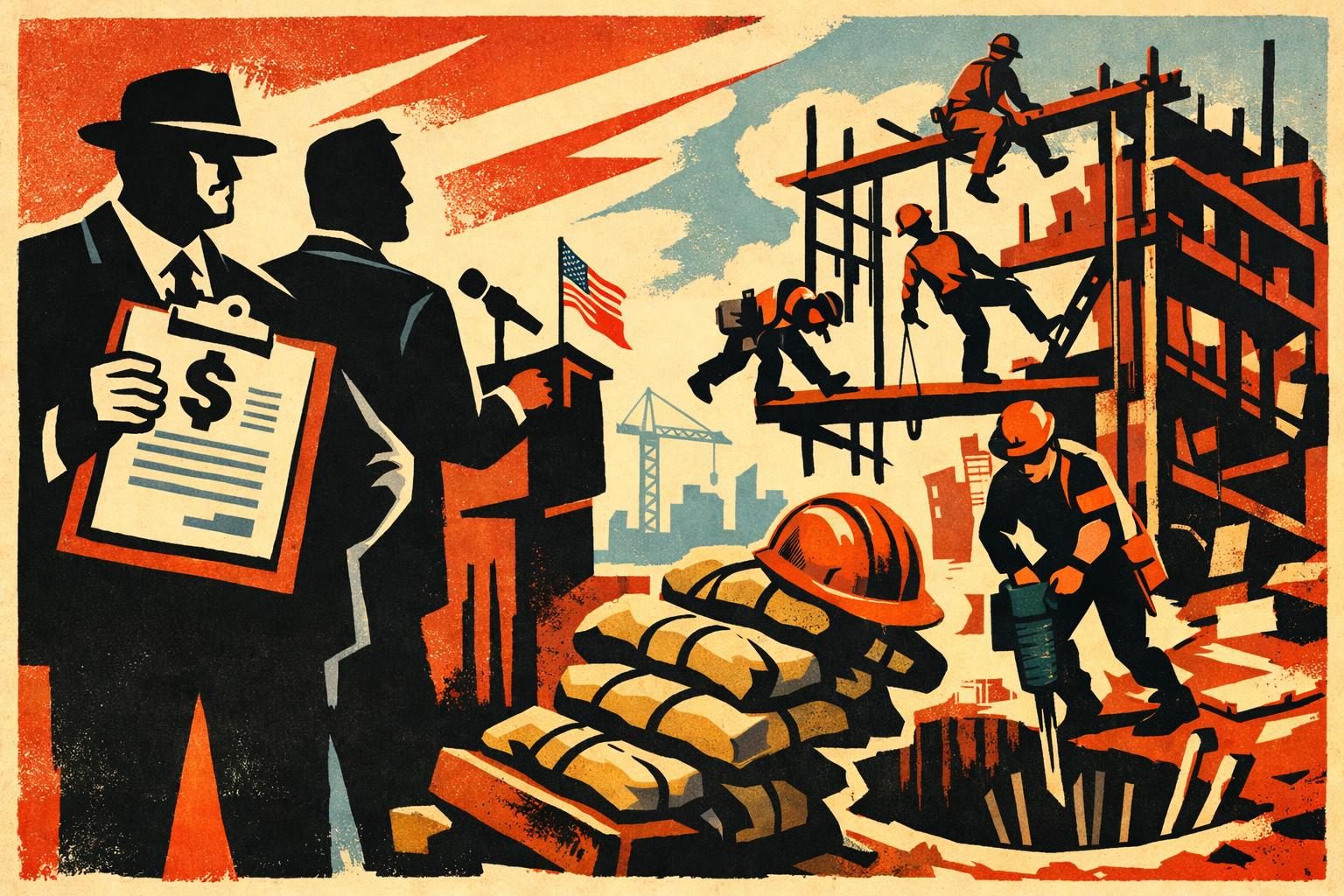
The Labor Department said Oct. 16 that the Occupational Safety and Health Administration had cited six construction employers in New York and New Jersey for willful and serious safety violations and proposed nearly $650,000 in penalties, a penalty package that turns a routine-sounding jobsite hazard into a concrete enforcement action with immediate consequences. According to the agency, the citations involved excavation conditions at a large commercial building site, the kind of work that can become dangerous quickly when trenching, shoring, protective systems, or other basic safeguards are not handled correctly. OSHA’s proposed fines total $648,094, a figure large enough to signal that investigators believed the problems were not minor oversights. The allegations matter because excavation sites are not forgiving places, and a failure to control the risks can expose workers to cave-ins, collapses, falls, and other serious injuries in a matter of seconds. Even without turning every citation into a catastrophe story, the agency’s move suggests it viewed the conditions as serious enough to justify public punishment rather than quiet correction behind the scenes.
What makes this enforcement action notable is not simply the dollar amount, but the mix of willful and serious violations the agency says it found. In OSHA terms, those labels are not casual; they imply that the problems were more than paperwork mistakes or accidental lapses, and that regulators believed the employers either knew or should have known they were failing to protect workers. That does not automatically settle every factual dispute, and employers can contest citations, challenge proposed penalties, or argue over the agency’s interpretation of the site conditions. Still, the government does not usually pile on a six-figure penalty proposal unless it believes it has something substantial to enforce. In that sense, the announcement is less a symbolic warning than a direct signal that the federal government is willing to use its penalty authority when construction safety breaks down. For workers, especially those doing the kind of dangerous hands-on labor that keeps major projects moving, the distinction matters because it determines whether safety rules remain theoretical or become enforceable obligations with real financial consequences.
The case also fits into a broader pattern that labor advocates have complained about for years: safety becomes headline-worthy only after the government decides the violations are serious enough to mention publicly. Construction remains one of the most hazardous industries in the country, and excavation work in particular has long been associated with preventable injuries when employers cut corners on training, supervision, or protective systems. That reality is familiar enough to workers and safety specialists, but it often fails to register outside the jobsite unless there is a fatality, a near-collapse, or a citation package large enough to attract attention. The Labor Department’s announcement is a reminder that OSHA’s enforcement role is not just about compiling statistics after the fact; it is one of the few federal tools available to force changes before more workers are hurt. If the cited conditions were as serious as the agency says, then this was not merely a case of imperfect housekeeping at a construction site. It was a failure of basic risk management in an industry where the margin for error is thin and the consequences can be immediate.
The political subtext is hard to miss. Government agencies are often criticized for either overreacting or not acting soon enough, but workplace safety is one area where visible enforcement can have direct, measurable effects. A penalty notice does not by itself make a site safe, and it does not guarantee that every employer will suddenly become more careful. But it can create pressure to fix dangerous conditions, retrain crews, and treat compliance as a real cost of doing business rather than an optional expense that can be postponed until after an inspection. For the employers involved, the citations may mean hearings, legal bills, internal reviews, and a scramble to show they are taking corrective action. For workers, the more important question is whether the cited hazards are removed before anyone gets injured. The federal government is essentially saying that the alleged failures were serious enough to cost money, and that is the part of the story that gives the case its immediate public-interest value. It is a live enforcement action with labor implications, not a generic reminder that construction is dangerous. And if the announcement does anything beyond filling a news cycle, it may be to reinforce a basic point that too many jobsites still need to relearn: safety rules are not decorative, and workers should not have to wait for a federal fine to make them matter.
Comments
Threaded replies, voting, and reports are live. New users still go through screening on their first approved comments.
Log in to comment
No comments yet. Be the first reasonably on-topic person here.