
Trump heads to Georgia as Republican divisions keep bleeding into the open
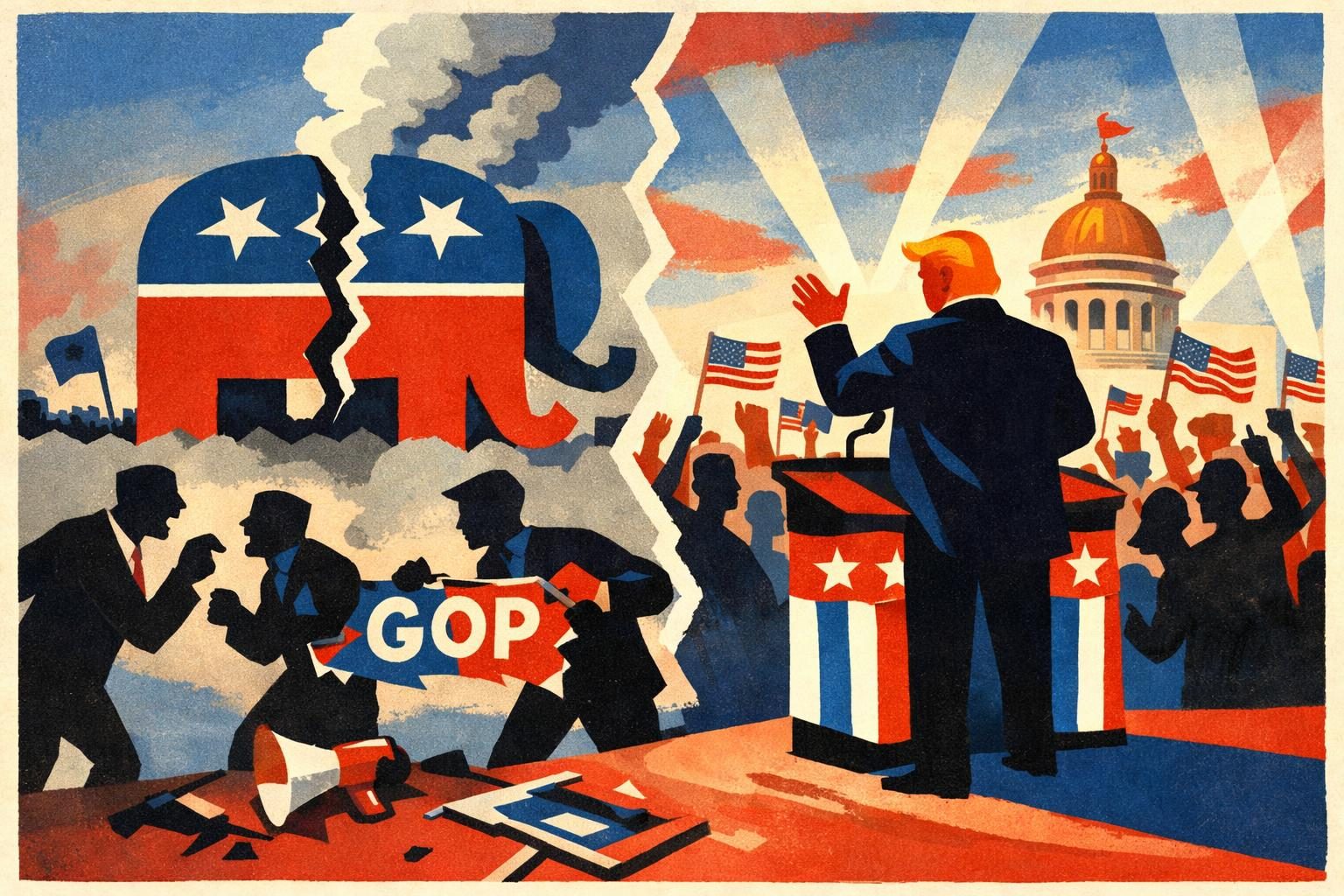
President Donald Trump is in Georgia on Oct. 16 for a rally that is meant, at least on paper, to energize Republicans in a battleground state. In practice, it arrives as something closer to a live demonstration of how much managing the GOP now requires in places where the president’s influence is both an asset and a source of friction. Georgia has remained one of the clearest tests of Trump’s political reach, because he can still draw attention and enthusiasm there while also stirring up the kinds of disputes that make party leaders nervous. The rally is not a legislative announcement, and it is not tied to a legal milestone. It is a political move, plain and simple, but one that lands in a state where the party’s internal tensions keep spilling into the open. That alone makes the event more revealing than routine campaign theater usually is.
The broader significance is not the rally itself so much as the context surrounding it. Georgia Republicans have spent recent cycles dealing with the aftereffects of election denial, the strain of personality-driven feuds, and the enduring habit of treating Trump’s preferred version of events as the one that must govern everyone else’s conduct. Those pressures have not disappeared just because the calendar has moved on. Instead, they have settled into the background as a recurring part of the state party’s political weather. Candidates and strategists can talk all they want about unity, but the actual work of staying unified has often meant avoiding open conflict, flattering the base, and hoping that the next controversy does not force another round of cleanup. That is a difficult way to run a competitive operation in a state as important as Georgia, especially when the party is trying to look disciplined while still keeping Trump’s supporters fully engaged. The result is a political environment in which loyalty management often matters as much as persuasion, and sometimes more.
That dynamic is why the rally feels less like a standard campaign stop than a stress test. Trump’s supporters remain a powerful force inside the Georgia GOP, and no serious Republican wants to dismiss that reality. At the same time, the former president’s presence can drag candidates and local officials back into fights they would prefer to leave behind, whether those fights are about elections, personal grievances, or the broader question of who gets to define what Republicanism is supposed to look like now. The tension is obvious enough that both critics and allies can make plausible arguments from opposite directions. Critics say Trump’s continuing dominance keeps the party trapped in old arguments and makes it harder for Republicans to appeal to voters who want stability rather than drama. Allies counter that the party cannot afford to alienate a base that still responds to Trump more reliably than to any traditional message about policy or competence. Both arguments contain some truth, which is exactly what makes the situation so hard to resolve. If Trump’s presence helps mobilize turnout, then party leaders have an obvious incentive to keep him front and center. If his presence also keeps reopening internal wounds, then every appearance becomes another reminder that the party’s coalition is being held together by more than just enthusiasm.
Georgia is especially important in that regard because it has become one of the places where the contradictions inside the Republican coalition are most visible. The state is close enough to be competitive, but not so predictable that party leaders can ignore any source of instability. That means every high-profile appearance can be interpreted through two lenses at once: as an effort to boost Republicans in a crucial state, and as another sign that the party is still dependent on a figure who can unify the base while unsettling everyone else. For now, the consequences are mostly political rather than structural. There is no immediate crisis here, and the rally is not likely to settle every argument inside the Georgia GOP. But it does underline the continuing reality that the party’s message discipline is fragile, its internal factions are still alive, and its candidates are often forced to perform a balancing act between Trump loyalty and broader electability. If the event succeeds, Republicans will call it evidence that the coalition is working. If it fails to calm the divisions, then it will serve as one more example of a party that keeps having to repair the same cracks while insisting they are not cracks at all. Either way, Georgia remains a useful place to watch because it shows how the GOP’s internal contradictions are not abstract theory. They are part of the day-to-day political operating system, and they keep showing up whenever Trump does.
Comments
Threaded replies, voting, and reports are live. New users still go through screening on their first approved comments.
Log in to comment
No comments yet. Be the first reasonably on-topic person here.