
Trump signs Russia sanctions law, then immediately starts waiving it
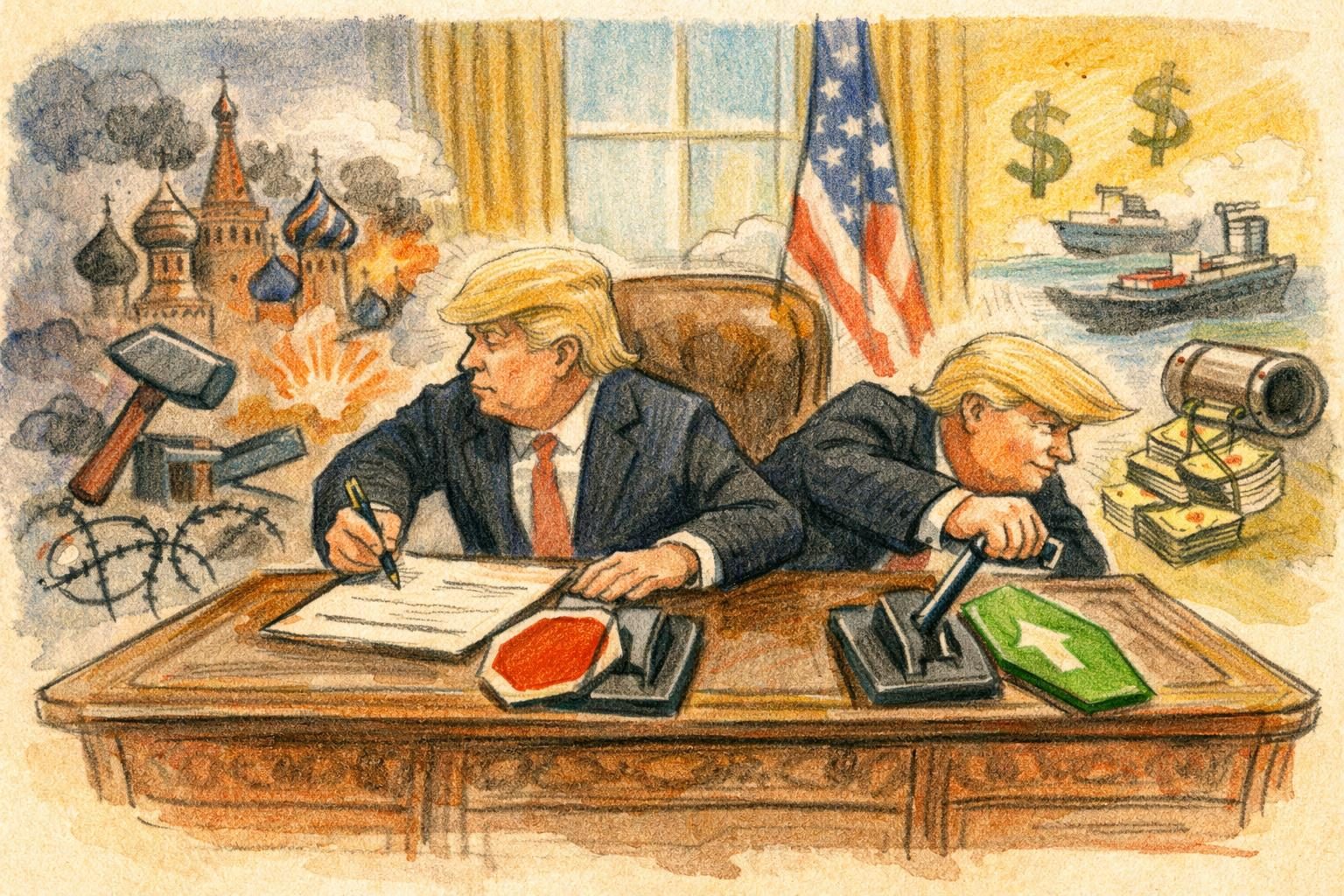
President Donald Trump on October 16 signed an executive order meant to put the Lindsey O. Graham Sanctioning Russia and Iran Act of 2026 into motion, but the administration’s own paperwork also carved out broad waivers that immediately softened the law’s edge. The result was a classic Washington contradiction wrapped in a single document: a promise of tougher pressure on Russia, followed almost instantly by language that gives the president room to step around some of the very penalties he just triggered. According to the order, the White House intends to raise duties on Russian goods and on certain countries that keep buying Russian oil and gas, a move designed to make continued support for Moscow more expensive. But the same order also suspends some sanctions and restrictions on national-interest grounds, blunting the force of the new regime before it has even had time to settle in. That is the kind of maneuver that can make a sanctions package look less like a coherent strategy and more like a political performance with an exit ramp built in from the start.
The immediate problem is credibility. Sanctions work best when the target believes the penalties are real, durable, and likely to get worse if the behavior continues. Trump’s order undercuts that logic by pairing a hardline announcement with a built-in escape hatch, which gives foreign governments a simple question to ask: how serious is Washington, really? Allies trying to calibrate their own response to Russia now have to guess whether the White House is laying the groundwork for sustained economic punishment or simply signaling toughness for domestic consumption. Adversaries, meanwhile, have every incentive to test the limits of the waiver language and see how much pressure can be avoided before the administration decides to tighten the screws. If the point of the law was to create leverage, the waiver language immediately reduces the perceived cost of ignoring it.
There is also a procedural haze hanging over the decision that makes the whole thing look even more improvised. The order says the president has certified that the waiver is in the national interest, but the public explanation for why those exemptions are necessary does not amount to much beyond the usual broad presidential discretion. That may be legal, but legality is not the same thing as clarity, and sanctions are one of the few tools that depend heavily on both. Businesses, diplomats, and governments caught in the middle need to know exactly what is being waived, how long the waiver will last, and what conditions, if any, would cause the administration to reverse course. Without that information, the policy starts to resemble a moving target, with a public threat at one end and a private off-ramp at the other. In practical terms, that means uncertainty for trade flows, uncertainty for diplomatic messaging, and uncertainty for every country trying to figure out whether Washington intends to squeeze Russia or merely stage a show of squeezing it.
That uncertainty is likely to shape the political reaction just as much as the substance of the order itself. Critics are already treating the move as a familiar Trump pattern: maximalist language, selective enforcement, and a strong preference for leaving himself room to maneuver whenever the consequences become inconvenient. Supporters may argue that the waivers are necessary to preserve U.S. flexibility and avoid collateral damage, especially if the administration believes it needs room to manage energy markets or negotiate with partners that buy Russian fuel. But that defense does not erase the central contradiction of the order, which is that it tries to project firmness while simultaneously ensuring that the president can mute parts of the policy at will. The White House may still be able to impose real costs through tariffs, sanctions, and diplomatic pressure, and there may be strategic reasons for keeping some options open. Even so, the decision to announce a tough new framework and then immediately narrow its reach gives opponents an easy line of attack: the administration is willing to talk big about punishing Russia, but not willing to live entirely inside the consequences of its own rhetoric.
Comments
Threaded replies, voting, and reports are live. New users still go through screening on their first approved comments.
Log in to comment
No comments yet. Be the first reasonably on-topic person here.