
The White House Transcript Archive Fight Is Really About the Public Record
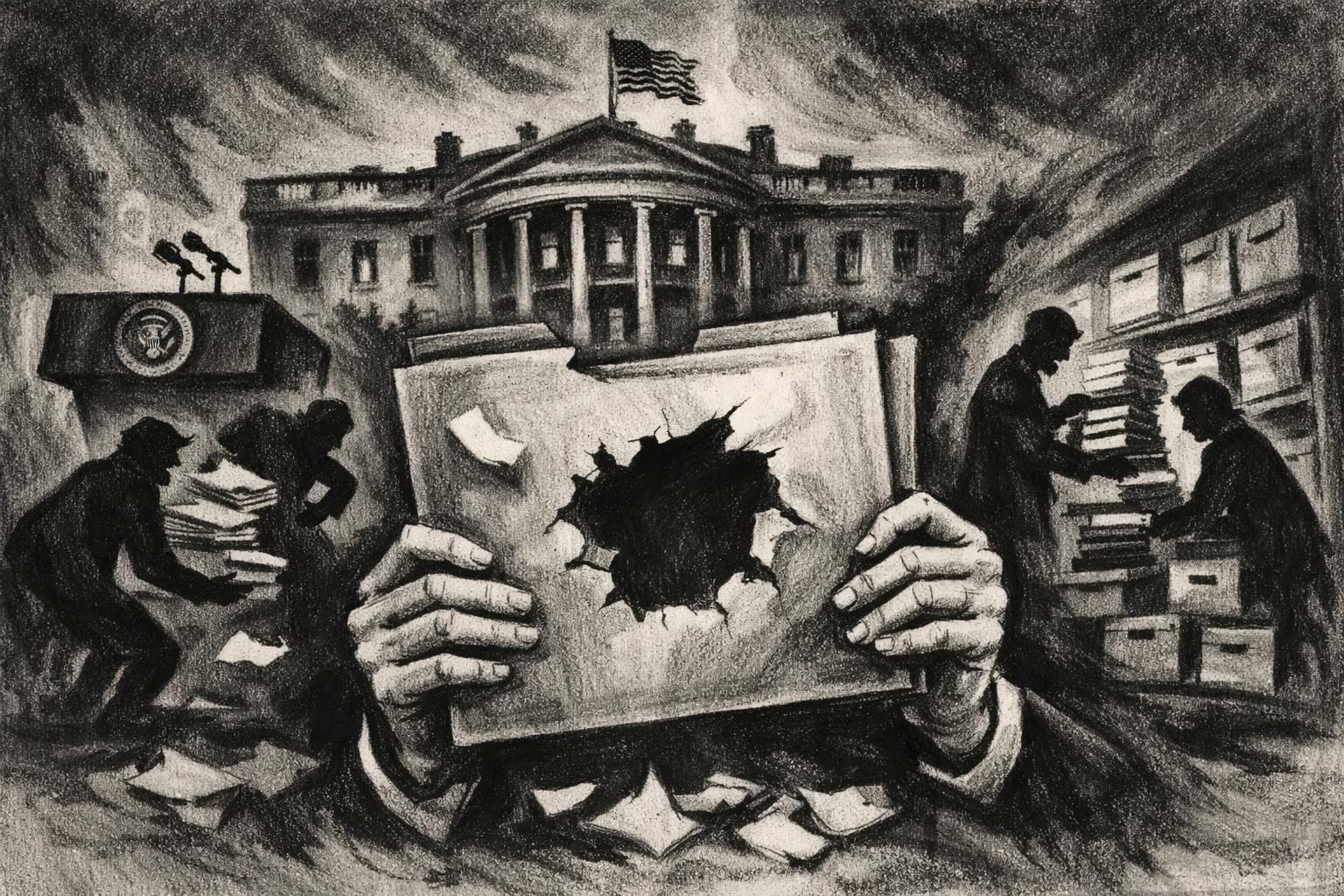
The argument over White House transcripts is not really about whether Donald Trump speaks in public. He does, constantly, and often in ways that seem designed to generate more headlines than any one press office can reasonably file away. The real dispute is over whether those remarks are being preserved in a form the public can reliably use later, without having to piece together fragments from social media, video clips, and whatever copy happens to survive on the web. Critics say the official White House archive has been inconsistent, with some transcripts difficult to locate and others apparently missing from the main public record. Senate Democrats say they created a backup archive after concluding that official Trump transcripts began disappearing in late May 2025. That makes this less a question of communication style than of record keeping, and the stakes are bigger than they might sound at first glance. If a presidency talks this much, then preserving the words should be the easy part. Instead, the archive has become another item people have to watch closely.
That matters because transcripts are the cleanest way to verify what a president actually said, especially once the moment has passed and the spin cycle has begun. Video can be clipped, quoted lines can be lifted out of context, and summaries can soften or sharpen whatever was said in the room. A transcript gives reporters, lawyers, historians, watchdogs, and ordinary voters a fixed text to compare against later denials, clarifications, or cleanup attempts. When that record is inconsistent, the burden shifts away from the government and onto everyone else who is trying to document the historical paper trail. The White House still posts releases, briefing statements, and other materials on its public sites, so this is not a story about total silence or a vanished website. It is a story about whether the official version is complete, durable, and easy to recover when people need it most. There is a meaningful difference between saying the information exists somewhere and making sure the authoritative version remains accessible in a stable public archive. If the archive is spotty, then the government is effectively asking everyone else to do the housekeeping.
The political edge here is obvious, even if the administration would prefer to describe the problem as routine website management. The White House has no shortage of ways to project transparency when it wants to claim the credit for openness, and that is part of why the transcript issue draws attention. A president who dominates the public conversation should not be operating a system that leaves people wondering whether the official record will still be there a few weeks later. When the Senate Democrats set up a separate archive, they were not just making a symbolic point; they were signaling that the official record could not be counted on to stay consistently available. That is a tacit admission that the administration’s own process was not enough, at least from the perspective of the critics who are now tracking the missing material. It is also a reputational problem, because the White House is asking the public to trust its claims while also leaving gaps in the documentary trail that would normally support those claims. If the government wants to argue that nothing important has been lost, it still has to explain why outside actors felt compelled to create a parallel archive in the first place.
The practical consequences are not dramatic in the movie sense, but they are significant in the way institutions actually work. Journalists trying to verify quotes may have to lean on backup mirrors or independent archives rather than the official site alone. Researchers studying the administration’s language will spend more time hunting down primary-source material that should already be easy to find. Future disputes over what Trump said in a briefing, a gaggle, or some other public appearance will begin from a weaker official record than they ought to have. That kind of institutional sloppiness does not always trigger an immediate scandal, but it can do lasting damage by making the public record less stable and less trustworthy over time. The White House can insist that any missing material is simply an archiving hiccup, or that the pages are still somewhere on the site, or that no one should read too much into the inconsistency. Maybe so. But when people have to build their own safety net because the official archive is unreliable, the criticism is easy to understand: this administration may not be trying to erase history outright, but it is making history harder to pin down, and that is its own problem for a government that claims to be operating in public view.
Comments
Threaded replies, voting, and reports are live. New users still go through screening on their first approved comments.
Log in to comment
No comments yet. Be the first reasonably on-topic person here.