
Trump reaches for another tariff workaround as the legal wall keeps wobbling
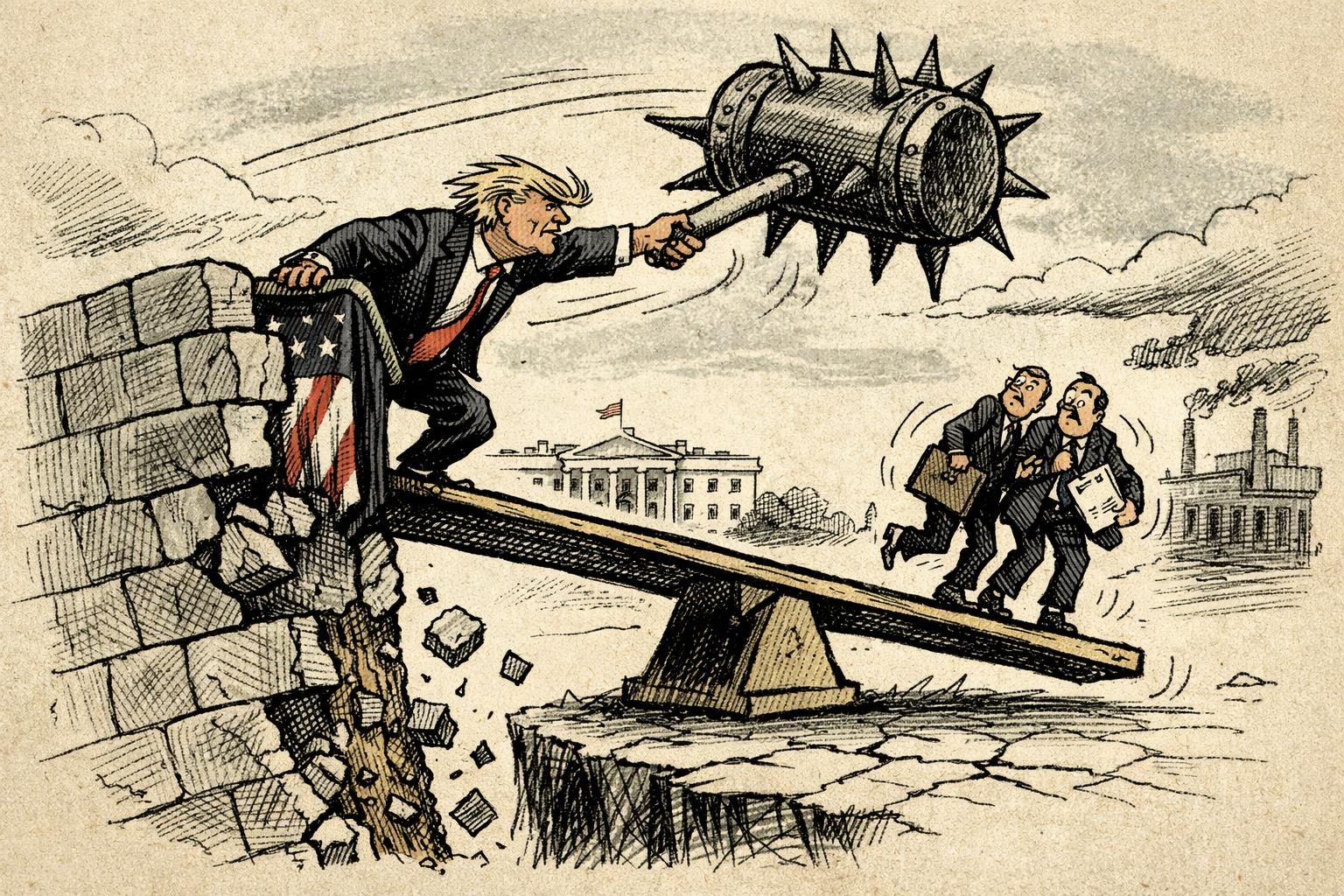
The Trump administration spent July 21 doing what it has increasingly had to do in trade policy: hunt for another legal hook because the last one was already showing strain. The White House moved to rely on Section 122 of the Trade Act of 1974, a temporary authority that can impose tariffs of up to 15 percent for as long as 150 days. On paper, that sounds like a neat emergency measure. In practice, it reads like the latest sign that the administration is still trying to rebuild its tariff wall with whatever scaffolding happens to be available after earlier tariff moves ran into legal, practical, or political limits. The fact that the president’s preferred economic weapon keeps needing a fresh citation does not project stability. It projects repair work, and not the tidy kind.
The timing makes the maneuver harder to dismiss as routine. Only a day after the White House unveiled separate tariff actions tied to Canada and aluminum, it was already signaling another path for tariff authority, this time through Section 122 rather than the statutes used for those earlier moves. That matters because the administration is now working across multiple legal frameworks at once, each with its own scope, trigger, and ceiling. Section 122 is not the same thing as the Section 338 proclamations used against Canada, and it is not the same thing as the Section 232 authority used for aluminum. Put together, the sequence suggests an administration that is not so much executing a single grand trade design as it is stitching together different authorities to keep pressure on trading partners while waiting for the legal and political environment to change. Clever, maybe. Coherent, less so. When one authority starts to wobble, another is already being pulled off the shelf, which is a useful fallback but also a sign that the original structure is not holding.
The practical consequences of that approach are exactly the kind of mess businesses hate and governments claim not to create. Importers have to price goods without knowing which tariff layer will survive the next court challenge, next administrative correction, or next policy improvisation. Exporters and foreign governments have to decide whether the United States is establishing a durable trade regime or just firing off temporary measures to gain leverage in the moment. Manufacturers that depend on imported inputs are left making decisions in an environment where a shipment can become more expensive before the paperwork is finished. Even firms that support tougher trade policy can usually do the math on uncertainty, and the math is ugly. A tariff is one thing when everyone thinks it is real and lasting. It is another when everyone can see the government reaching for a different legal tool every time the first one starts to bend.
That is the larger problem with the administration’s tariff strategy, and it is bigger than the fine print of any one statute. Trump has long treated tariffs as a way to project strength, squeeze foreign competitors, and force concessions while telling domestic critics that the pain is temporary and the payoff will be worth it. But the repeated need to invoke new authorities tells a different story: the earlier tools were not sturdy enough to carry the weight the White House wanted them to bear. That does not mean the administration is helpless, and it does not mean the tariffs will vanish overnight. It does mean the White House keeps having to improvise around the edges of its own overreach, using temporary provisions to keep a broader trade offensive alive while more permanent questions remain unresolved. Section 122 may buy time, and it may even add short-term pressure, but it also advertises that the legal architecture underneath the tariff campaign is unstable enough to require constant patching. If the plan has to be rewritten every time a court, a statute, or a deadline gets in the way, then the plan is no longer looking like strategy. It is looking like a scramble, and the scramble is increasingly visible in the legal plumbing.
There is also a political cost to this kind of improvisation, even if the White House is comfortable pretending otherwise. Repeatedly swapping authorities creates an impression that the administration is always reacting, never settling, and that its trade agenda depends on finding the next workaround before the last one is fully tested. That may keep tariffs in motion, but it also makes the entire effort look less like disciplined economic statecraft and more like a series of tactical moves designed to preserve leverage from one week to the next. Foreign counterparts will notice that. So will American companies trying to lock in contracts, plan inventory, or decide where to invest. The administration can still argue that temporary power is better than no power at all, and maybe that is true in the narrowest sense. But every new authority it reaches for is also an admission that the old ones were not enough. For a president who wants tariffs to signal resolve, the constant need to improvise sends a different message: the wall is still wobbling, and the White House is still looking for whatever can prop it up next.
Comments
Threaded replies, voting, and reports are live. New users still go through screening on their first approved comments.
Log in to comment
No comments yet. Be the first reasonably on-topic person here.