
Trump’s fraud crusade is already a mess of bragging and overreach
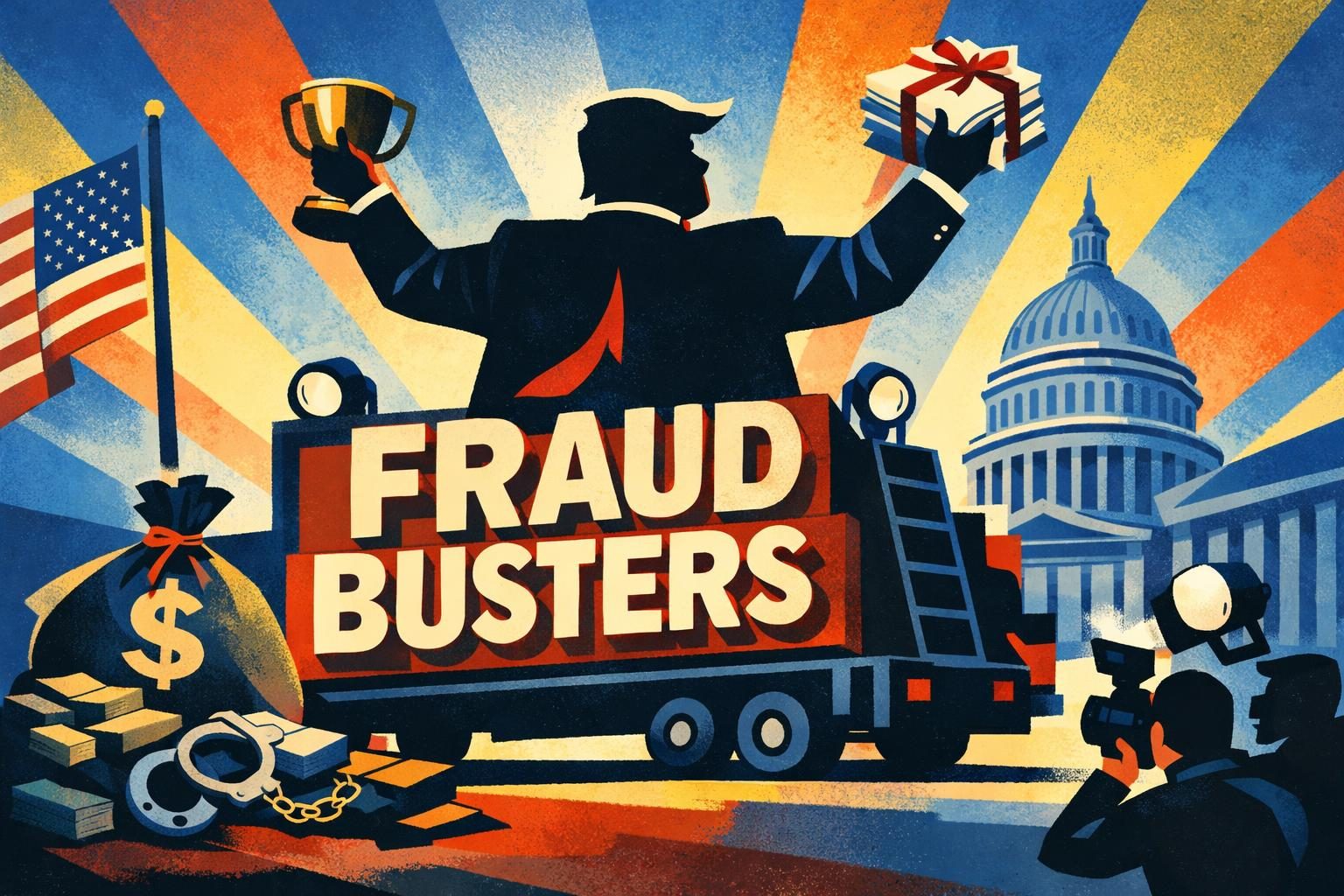
The Justice Department’s April 7 fraud rollout was real enough, and it dealt with a real public problem. The department announced three civil and criminal actions tied to schemes that allegedly tried to bill taxpayer-funded programs for more than $500 million, with the cases centered on healthcare and COVID-related fraud. It also used the moment to highlight a new National Fraud Enforcement Division and a broader task force effort under President Trump. Those are not fake issues or decorative bureaucratic flourishes. Public programs are always vulnerable to people who know how to game paperwork, exploit weak oversight, and turn emergency spending into a private feeding trough. But the political framing around the announcement was just as important as the underlying law-enforcement work, because the administration clearly wanted the rollout to function as proof of its own toughness.
That makes the whole exercise harder to assess than it should be. The department’s figures were meant to impress: a half-billion-dollar value attached to the alleged schemes, multiple defendants, and a wide range of healthcare and pandemic-era conduct bundled into one forceful announcement. The memo creating the National Fraud Enforcement Division promised something more durable than a one-day press event, describing a coordinated approach in which prosecutors would work with agencies that administer benefit programs, as well as federal, state, tribal, territorial, and local law enforcement. The division’s public description says it will rely on data-driven methods, build systems to identify fraud more efficiently, and set national enforcement priorities. Those are the kinds of operational claims that can matter in practice, because fraud enforcement often fails when agencies are siloed, slow to share information, or too reactive to follow complex schemes across programs. But the fact that those claims are real does not make the surrounding performance less noticeable. The administration wrapped them in the kind of victory-lap language that suggests it is trying to sell momentum before it has had time to demonstrate much of anything.
That gap between substance and sales pitch is where the political problem starts. A department can announce charges, create a unit, and set priorities without turning the whole thing into a branding exercise. This White House, however, has a habit of using enforcement actions as evidence of broad competence and personal resolve, as if every prosecution is also a campaign ad for the president’s instincts. That instinct can be useful in politics, because a giant headline number and a stern promise to crack down are easy to communicate. But it also muddies the public’s view of what has actually happened. A press release can tell the country that a division exists and that a set of cases is moving forward. It cannot prove that the cases will hold up, that the division will be staffed and coordinated well enough to matter, or that the announcement marks a lasting improvement rather than a burst of attention. If the administration wants credit for serious fraud work, the cleaner case would be built on personnel, case quality, interagency coordination, and results that can be tracked over time. Self-congratulation is cheaper, but it is also much less persuasive.
There is also a risk in turning fraud enforcement into a moral theater. Once every action is presented as evidence that the administration is waging a righteous war on cheating, the government invites scrutiny about how and why it chooses its targets. That is especially true when the rhetoric is broad and the number attached to the allegations is enormous. Big numbers are memorable, but they can also obscure the mundane truth that fraud cases are usually won or lost in the details: records, billing patterns, witness credibility, data comparisons, and the slow work of building a record that survives court. If the administration keeps using these cases to advertise a political identity, it may make the public less certain about whether the underlying enforcement is being guided by law-enforcement judgment or by messaging needs. Serious anti-fraud work should look boring from a branding perspective. It should be about catching bad actors, protecting legitimate program money, and building institutions that can keep doing that after the cameras move on. The more the rollout reads like a self-praising campaign stop, the more it distracts from those goals.
None of this means the fraud initiative is meaningless or that the cases themselves are trivial. The government should pursue schemes that drain public funds and exploit programs meant to help people. A formalized division and a more coordinated enforcement structure could, in theory, improve that effort if they are backed by competent staffing and sustained focus. But the administration’s presentation still matters, because it shapes how the public understands what the Justice Department is doing and why. Right now, the message seems to be that the cases are significant, the numbers are huge, and Trump’s leadership is the reason to notice. That is a convenient political story, but it is not the same thing as proof of institutional strength. If the department wants the fraud push to be judged seriously, it will need to show more than a polished announcement and a few headline-friendly figures. It will need to show that the machinery works, that the priorities are coherent, and that the effort produces durable results instead of just another round of government-issued bragging.
Comments
Threaded replies, voting, and reports are live. New users still go through screening on their first approved comments.
Log in to comment
No comments yet. Be the first reasonably on-topic person here.