
Justice Department sues New Mexico and Albuquerque over immigration enforcement rules
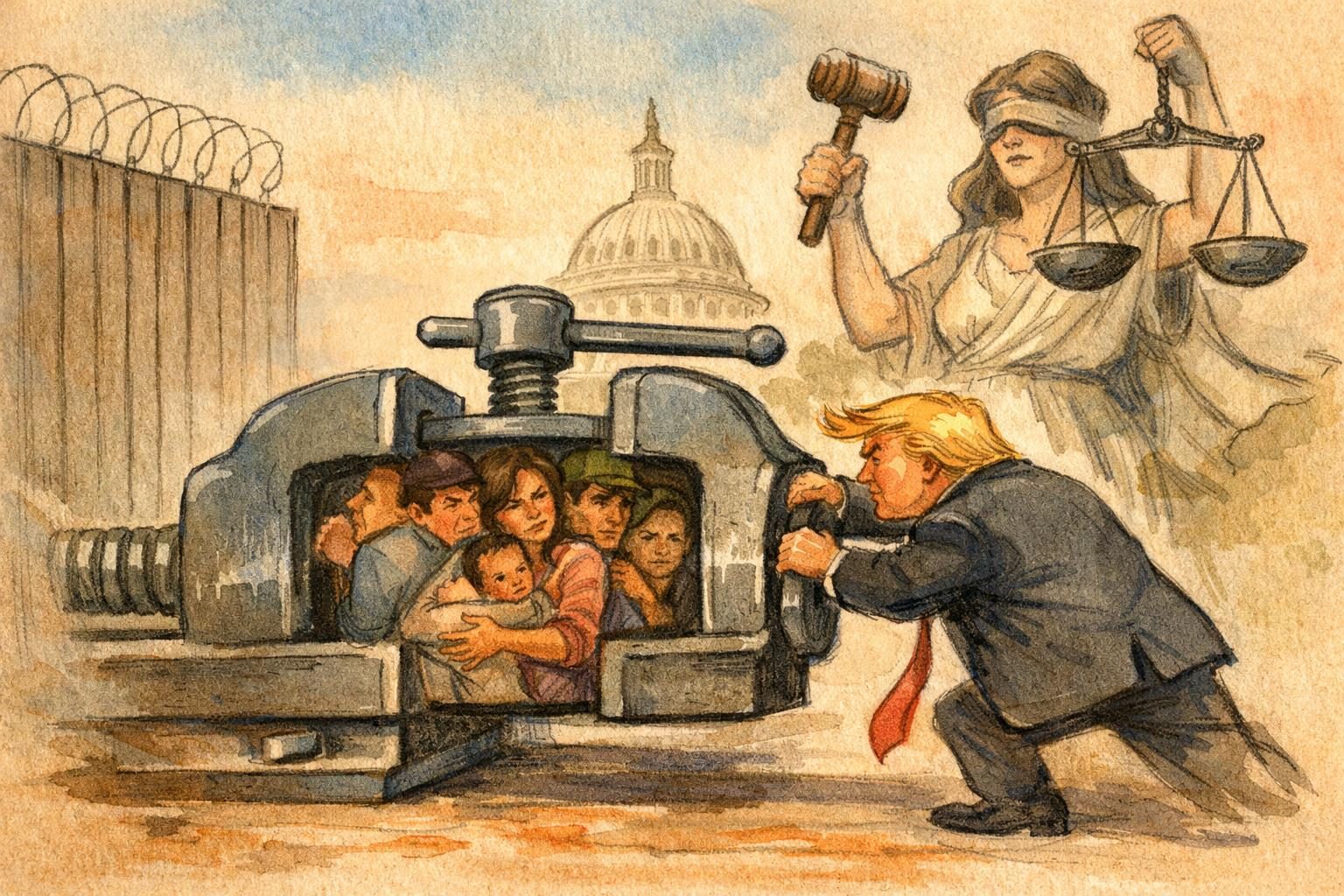
The Trump Justice Department has sued New Mexico, Albuquerque, and several of their top officials in a fresh clash over how far states and cities can go in setting their own limits on immigration cooperation. The lawsuit, filed May 8, targets Gov. Michelle Lujan Grisham, Attorney General Raul Torrez, Mayor Timothy Keller, and the governments they lead. It focuses on a pair of local measures that restrict how closely state and municipal authorities can work with federal immigration agents. The federal government says those rules cross a legal line and should be wiped away because immigration enforcement belongs to Washington, not to local governments that choose to draw their own boundaries. State and city officials, by contrast, say they are trying to protect schools, hospitals, and other public spaces from being turned into routine immigration dragnet zones.
At the center of the dispute is House Bill 9, known as the Immigrant Safety Act, along with Albuquerque’s Safer Community Places Ordinance. According to the Justice Department’s complaint, those measures interfere with federal immigration authority and are therefore preempted by federal law. That is the basic legal theory behind the suit, and it is a familiar one in modern immigration fights: if a local rule makes enforcement harder, the federal government argues, it cannot stand. New Mexico and Albuquerque have taken the opposite position, saying the point is not to nullify immigration law but to keep local government from being conscripted into federal enforcement at the expense of community trust. In practice, that means drawing lines around sensitive places where people seek services, attend school, or obtain care without worrying that a routine trip will become an immigration encounter. The question now is whether a federal court will treat those boundaries as a legitimate local policy choice or as an unlawful obstacle to federal power.
The filing fits neatly into the Trump administration’s broader habit of meeting state and local resistance with litigation. Rather than treating local noncooperation as a political disagreement over how immigration enforcement should work, the administration has repeatedly cast such disputes as constitutional conflicts that demand a federal override. That framing is useful to the White House because it turns a policy argument into a supremacy test, with Washington claiming that anything short of full cooperation amounts to obstruction. It is also a way to pressure municipalities into backing down before a judge ever rules, since the cost of defending a lawsuit can itself have a chilling effect. But local governments have been pushing back for years, arguing that they still have room to decide how police, schools, hospitals, and city agencies interact with immigration authorities. The New Mexico case is another example of that standoff, and it suggests that the administration is not interested in narrowing the conflict even when the underlying policies are limited to public-space protections.
The lawsuit is also part of a larger pattern in which federal officials are testing the outer limits of preemption in immigration law. In one sense, the argument is straightforward: the Constitution gives the federal government broad authority over immigration, so state and local rules cannot directly interfere with that system. In another sense, the issue is more complicated because these state and city measures are not trying to create their own immigration regime. They are trying to decide how much assistance local authorities must provide, and where local institutions should be off limits for enforcement activity. That distinction matters, because the line between cooperation and coercion is often blurred in litigation of this kind. The Trump Justice Department wants courts to see the local measures as unlawful resistance. New Mexico and Albuquerque are likely to present them as ordinary governing choices aimed at reducing fear and preserving access to public services. What happens next will depend on how a judge interprets that divide, and on whether the court is willing to give the federal government the broadest possible reading of its immigration powers. For now, the suit adds another front to the administration’s ongoing drive to force local governments into compliance, or at least into a costly legal fight they may not want but cannot easily avoid.
Comments
Threaded replies, voting, and reports are live. New users still go through screening on their first approved comments.
Log in to comment
No comments yet. Be the first reasonably on-topic person here.