
Comey Indictment Gives Trump Another Revenge-Politics Legal Fight
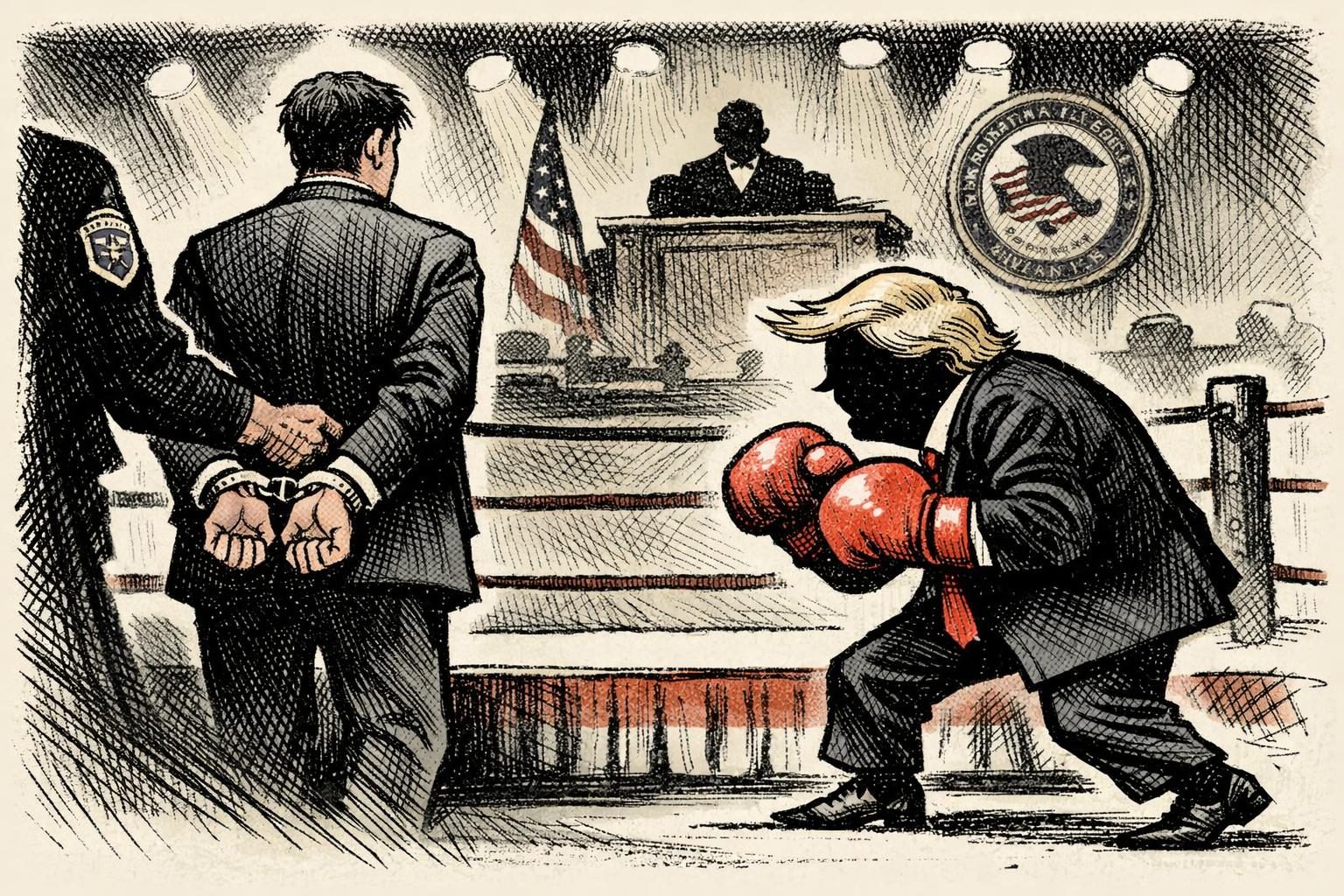
A federal grand jury in the Eastern District of North Carolina has indicted former FBI Director James Comey over a social media post that prosecutors say amounted to a threat against President Donald Trump, setting up another politically explosive courtroom fight in an already combustible Trump-era relationship. The indictment, returned on April 28, centers on an Instagram post from May 15, 2025, in which seashells were arranged to spell out “86 47.” In the government’s telling, the post was not a stray joke or an empty bit of online provocation, but a message that crossed the legal line into a threat to the president’s safety. Prosecutors say Comey knowingly and willfully made a threat to take the life of, or inflict bodily harm on, Trump, and they also accuse him of transmitting a threat in interstate commerce under 18 U.S.C. § 875(c). The alleged threat against the president is charged under 18 U.S.C. § 871(a). Still, this is an accusation, not a finding of fact, and Comey remains presumed innocent unless and until the government proves its case in court.
The meaning of the post is the entire dispute, and it will likely be the center of the legal battle from the first hearing to the last appeal. Prosecutors will need to convince a jury that the image was more than political snark or ambiguous internet shorthand, and that a reasonable viewer familiar with the circumstances would have understood it as a serious expression of intent to harm. Comey has said he viewed the post as political commentary rather than a call for violence, and he removed it after realizing that others were reading it as threatening. That distinction matters enormously, because the case turns less on the existence of the post than on what it conveyed, how it would have been understood, and whether the evidence can support the government’s reading of intent. The law will require more than proof of a careless choice of imagery or a reckless lapse in judgment. It will require proof that the message was meant to be taken as a true threat, not simply a tasteless or inflammatory gesture that landed badly in a hyperpolarized political environment. In other words, the government has to persuade jurors not just that the post was offensive, but that it was criminal.
The political backdrop makes the indictment even more volatile. Comey was fired by Trump in 2017 amid the Russia investigation, and the two men have spent years locked in a public feud that has come to symbolize the broader clash between Trump and the institutions that investigated, challenged, or constrained him. Trump has long cast Comey as part of a law-enforcement establishment he believes turned against him, while Comey has remained one of the most recognizable faces in the long national argument over loyalty, power, and whether federal institutions can stay above partisan combat. That history gives the indictment an obvious revenge-politics feel, even though the criminal case itself will turn on evidence, legal standards, and the interpretation of a single post. Whatever the outcome, the prosecution guarantees another high-profile confrontation inside Trump’s Justice Department orbit, where even routine charging decisions are often immediately read through suspicions about motive. The courtroom may be built for legal questions, but this case arrives already carrying the weight of old grievances and fresh political memory.
That is the larger problem for the administration: the case is likely to be seen through two very different lenses at once. On one hand, the Justice Department can argue that no one is above the law, that threats against a president deserve scrutiny, and that the evidence will either prove the charge or fail to do so. On the other hand, critics are certain to frame the indictment as a politically charged move against a famous Trump antagonist, especially given the president’s history with Comey and the broader atmosphere of retaliation that has surrounded so many Trump-related investigations. A grand jury indictment is only the beginning of that fight, but it is enough to trigger a fresh wave of partisan outrage and a new round of claims that the government is either enforcing the law or settling scores. If prosecutors win, they will say they pursued a genuine threat and proved their case before a jury. If they lose, opponents will say the Justice Department took a public swing at an old enemy and invited the exact cynicism it says it wants to avoid. Either way, the case deepens the sense that the Trump era is still being litigated in courtrooms and on social media, with old enemies, coded messages, and political grievance all feeding back into the same national drama. The legal questions will matter, but so will the perception that yet another presidency defined by revenge has produced yet another revenge-shaped prosecution.
Comments
Threaded replies, voting, and reports are live. New users still go through screening on their first approved comments.
Log in to comment
No comments yet. Be the first reasonably on-topic person here.