
Trump’s China announcement looks like progress, but it is not a finished trade deal
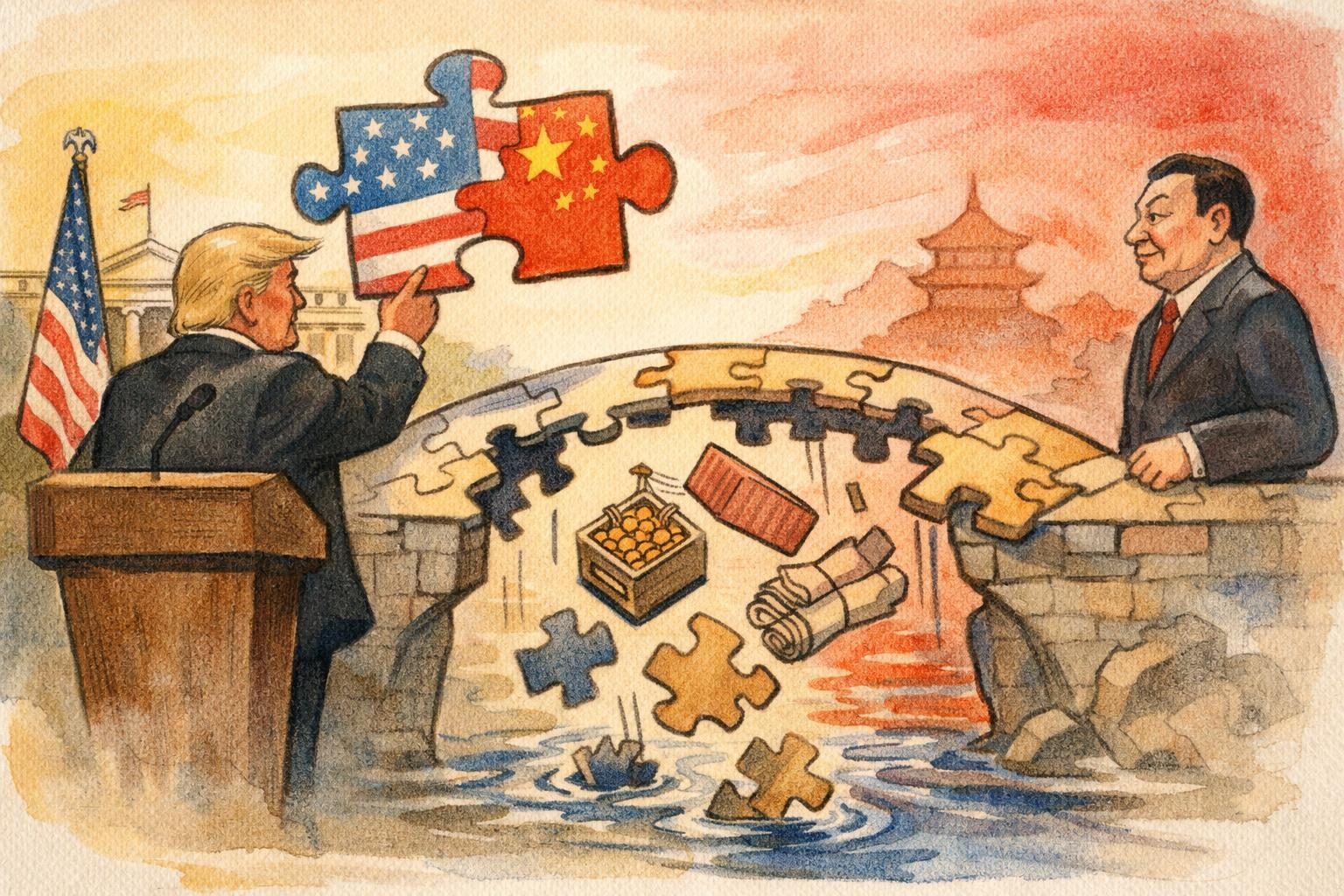
The White House wants the latest China announcement to read like the end of a long, punishing trade saga: pressure applied, concessions extracted, American interests defended, victory declared. The administration’s May 17 fact sheet reaches hard for that framing, presenting the deal as a major step for workers, farmers and industry and listing specific items meant to prove it. Among them are an initial order for 200 Boeing aircraft and Chinese commitments to buy $17 billion in U.S. agricultural goods annually from 2026 through 2028. Those are not trivial numbers, and they are the kind of headlines that can briefly quiet markets and energize a political base. But the public record still points to a work in progress rather than a fully sealed trade settlement, and that distinction matters more than the celebration suggests.
What the White House has put forward is an announcement of understandings and next steps, not a signed, comprehensive agreement that resolves every dispute between Washington and Beijing. The fact sheet says the two governments reached agreements on a cluster of issues that have been central to the trade fight, including rare earths, fentanyl, soybeans and market access. It also says they will create two new bodies, the U.S.-China Board of Trade and the U.S.-China Board of Investment, which are supposed to help manage the relationship going forward. Those are real policy items, and if they survive the hard part — implementation — they could shape the trade relationship in meaningful ways. But they also fit a familiar pattern in Trump-era trade diplomacy: large on announcement, less certain on enforcement, and still vulnerable to the old problem of promises that look firmer on paper than they turn out to be in practice.
That gap is especially important because Trump’s trade politics depends on finality. His pitch has always been that if he applies enough pressure, the other side will fold, the market will settle down, and he will be able to declare that he alone forced a better outcome. In that sense, every trade announcement is not just about tariffs or shipments or access rules; it is also a performance of dominance. The problem here is that the performance has outrun the paperwork. Saying a “consensus” has been reached is easy. Turning that consensus into a binding framework that can survive follow-through, bureaucracy, and future disputes is harder. The history of U.S.-China trade negotiations is full of moments that looked decisive at the podium and then became murky when the parties had to decide who was doing what, when, and under what consequences if someone dragged their feet.
The Boeing order illustrates both the usefulness and the limits of the administration’s presentation. The White House says China approved the purchase of 200 aircraft, and Boeing has separately said the arrangement reopened a key market for the company. That is a concrete development, not a vaporous talking point, and it is the kind of item the administration can point to as evidence that the pressure campaign produced something measurable. But even there, the more important questions remain unanswered: timing, final implementation, whether the order stays intact, and what happens if the broader relationship deteriorates again. The same uncertainty applies to the agricultural purchases, which sound impressive in the abstract but still depend on continued compliance over multiple years. Farmers, investors and businesses do not just care whether a pledge was announced. They care whether it will endure long enough to change planning, pricing and supply decisions in the real world.
That is why this looks less like a disaster than a softer kind of self-own. The administration can reasonably claim that something happened, and it can point to specific sectors that may benefit if the terms hold. But it is also trying to sell a partial arrangement as if it were a completed trade peace, and the more it leans into that framing, the more exposed it becomes if the details soften or the follow-through stalls. The political upside is obvious: Boeing, soybeans and China are all useful markers for an audience that wants proof of strength. The downside is also obvious: if the announcement is oversold, any delay or backtracking later will make the original triumph language look inflated. Trump has long relied on the gap between a sharp announcement and a messy implementation to keep the story moving in his direction. This time, though, the country is being asked to treat a negotiation snapshot as if it were the final chapter. It is not. The deal may become something sturdier, but for now the scoreboard is still being written, and the difference between a press release and a finished trade settlement remains the whole story.
Comments
Threaded replies, voting, and reports are live. New users still go through screening on their first approved comments.
Log in to comment
No comments yet. Be the first reasonably on-topic person here.