
Trump’s anti-weaponization crusade keeps looking like a grievance fund with a seal on it
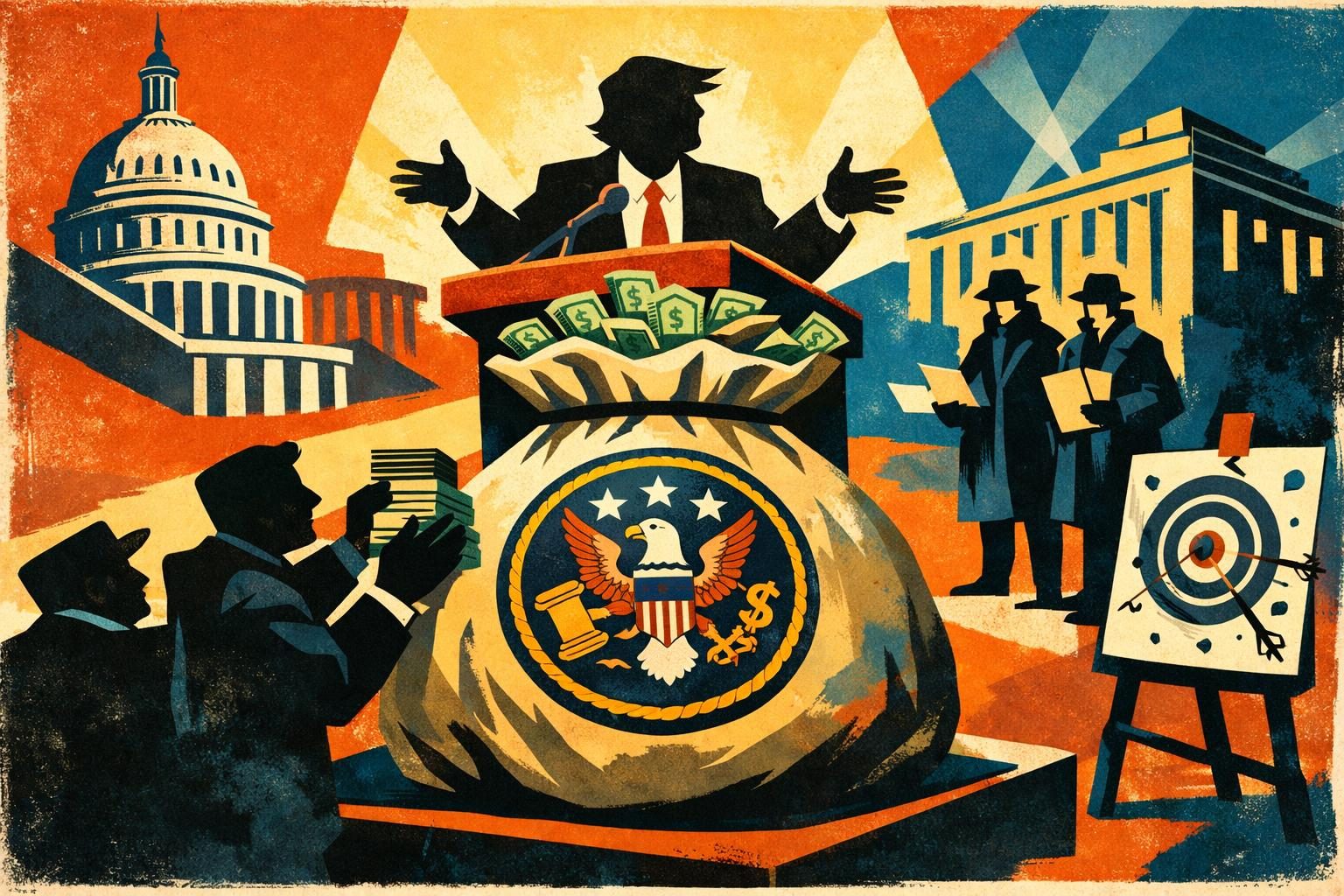
The Trump administration’s latest anti-weaponization push is once again making it look as if the federal government has been repackaged into a grievance machine with better stationery. Recent Justice Department actions tied to the initiative have been presented as a response to alleged abuses of power, including matters involving Trump family members and other loyalists, but the public pitch keeps landing in the same awkward place: it sounds less like a neutral effort to clean up law enforcement and more like an official vehicle for revisiting old resentments. That distinction matters because the entire point of an anti-weaponization program should be to establish standards, not to relive personal scorecards. When an administration frames institutional reform through the language of vindication, it invites the obvious suspicion that the project is built around whom it wants to defend rather than what rules it wants to repair. The latest public posture only deepened that impression. Instead of projecting restraint and institutional seriousness, it reinforced the idea that Trumpworld sees federal power as a tool for correcting the emotional injuries of Trump and his circle. That may play well with a loyal base, but it is a lousy way to persuade anyone else that the government is becoming more evenhanded.
The problem is not simply that Trump has long argued the justice system was turned against him, though he has. The problem is that his own administration now appears to be answering that claim by building an entire bureaucratic vocabulary around it. That creates a circular logic that is hard to defend outside the MAGA faithful. If the government defines weaponization largely as anything that made life difficult for Trump, his family, or his allies, then the initiative stops looking like reform and starts looking like a selective amnesty operation with a patriotic seal on top. Official references that bundle together unrelated cases, lawsuits, and old grievances under one anti-weaponization banner make the optics even worse. They suggest the administration is less interested in setting clear standards than in curating a narrative in which all past conflicts can be placed into one tidy victimhood folder. That is not how serious oversight is supposed to work. Oversight requires boundaries, definitions, and at least some effort to distinguish legitimate accountability from abuse. A grievance project, by contrast, needs only a villain and a microphone.
Critics do not have to stretch very far to see the hypocrisy. Trump and his allies have long operated on a simple rule that changes depending on whether the outcome favors them: when the law helps Trump, it is proof that the system works, and when the law hurts Trump, it is proof that the system has been weaponized. That is not a principle anyone should confuse with a doctrine. It is more like a political reflex, or a mood swing in a suit. To be fair, defenders of the administration can point out that previous governments have sometimes overreached, and there may well be real examples of overreach worth scrutinizing. But that argument collapses when every response becomes an all-purpose wrapper for Trump’s personal and political complaints. If the administration keeps folding together separate disputes and old resentments into a single anti-weaponization story, it undercuts its own credibility before the public even gets to the details. The trouble is not that there is never any basis for concern. The trouble is that the administration keeps presenting concern as if it were a loyalty test, which makes the whole effort look self-serving before it has a chance to look principled. Even the language of reform starts to feel borrowed when it is deployed mainly to flatter the president’s sense of persecution.
That is why the latest episode reads less like a one-off messaging stumble and more like a pattern of self-inflicted damage. Every time the administration reaches for the anti-weaponization label, it spends more of the trust it would need to make the label mean anything. The Justice Department’s recent posture has helped make the problem visible, not resolved it, because the public can see how quickly a broad anti-abuse framework can turn into a personalized political instrument. The danger is not only that critics will mock the effort, though they clearly will. It is that neutral observers will start assuming any future claim of reform is really just another round of Trumpian account-settling. That weakens the administration even in the places where its complaints may be partly justified, because it blurs the line between legitimate institutional repair and selective vindication. A government can certainly examine whether past law-enforcement conduct crossed the line. But if it does that while consistently packaging those questions as proof that Trump was uniquely wronged, it invites the very skepticism it says it wants to eliminate. In the end, Trump may have identified a real problem, then immediately converted it into a branding disaster. That is not just on character for this White House. It is a reminder that when grievance becomes policy, even the most defensible critique starts to look like a hustle.
Comments
Threaded replies, voting, and reports are live. New users still go through screening on their first approved comments.
Log in to comment
No comments yet. Be the first reasonably on-topic person here.