
Judge issues preliminary injunction keeping covered White House offices on record-preservation duty
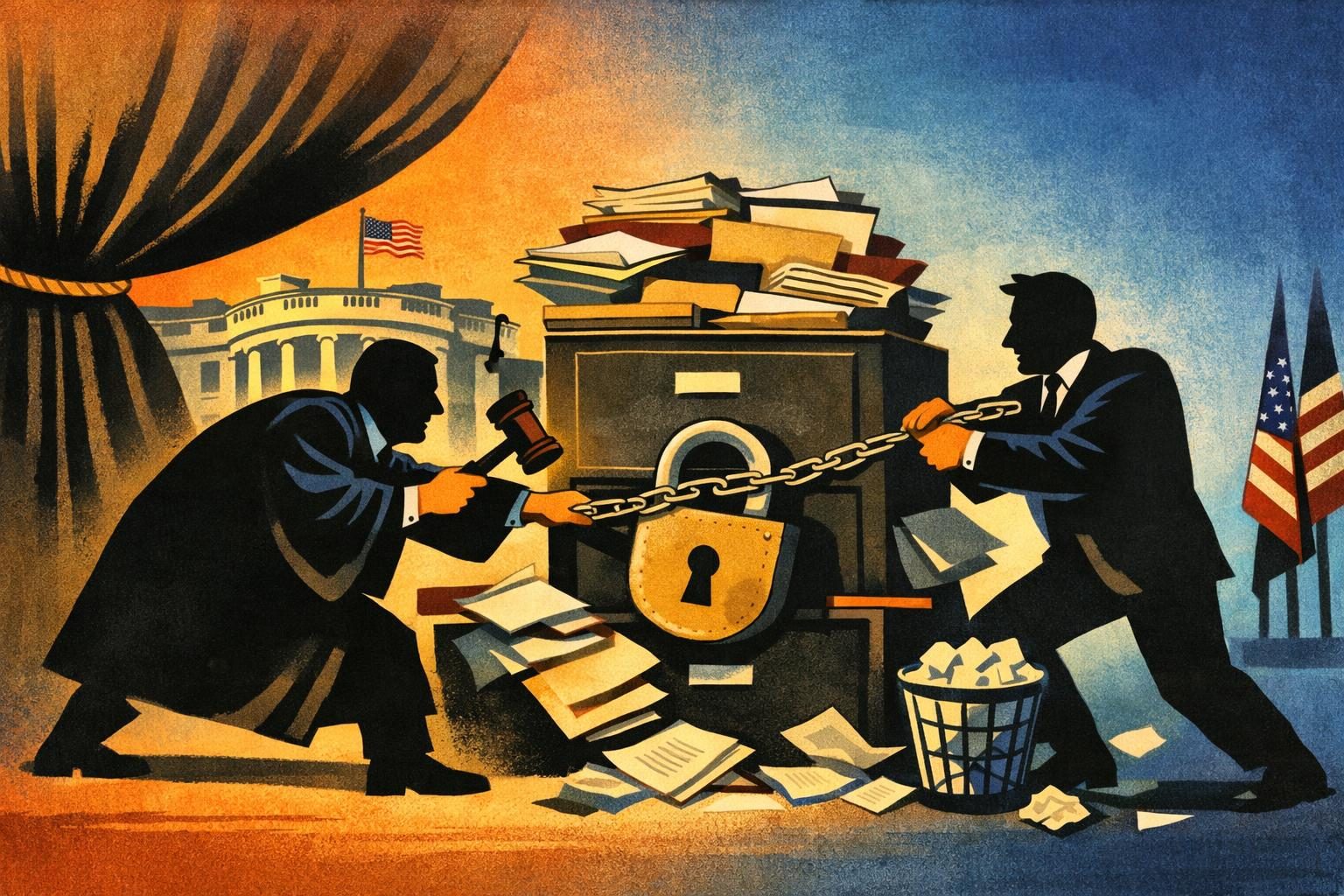
The latest turn in the fight over presidential records is not subtle: a federal judge told covered White House offices to keep preserving them while the administration presses a constitutional attack on the law that requires it.
On May 20, U.S. District Judge John D. Bates issued a preliminary injunction in litigation over the Presidential Records Act, after the Justice Department’s Office of Legal Counsel concluded in an April 1 memorandum that the statute is unconstitutional. The ruling is not a final decision on the merits. It is a limited court order meant to hold the line while the case is litigated, and it is set to take effect on May 26.
The Justice Department memo argues that the Presidential Records Act exceeds Congress’s powers and intrudes on the constitutional independence of the executive branch. The law itself, as the National Archives describes it, sets the rules for how presidential records are owned, maintained, and preserved after a presidency ends. That is the point the administration is now challenging.
Bates’ order is narrower than the administration’s legal theory. According to the court docket and the public reporting around the case, the injunction applies to the White House Office, the National Security Council, the U.S. DOGE Service, and advisers covered by the suit. It does not apply to the president or vice president personally, and it also leaves out the National Archives, the Archivist, the Justice Department, and the attorney general. The result is a partial injunction, not a wholesale ruling on every White House-related entity.
The practical effect is straightforward. For now, the offices covered by the order must keep preserving records while the lawsuit continues. That matters because recordkeeping cases are not just paperwork fights. They decide whether later investigators, courts, Congress, historians, and the public can reconstruct who knew what, when they knew it, and what the government did with that information.
The administration may still try to win its constitutional argument, and the court may eventually narrow or reject it. But Bates has already done the immediate thing the law asked him to do: keep the records intact while the broader dispute plays out.
Comments
Threaded replies, voting, and reports are live. New users still go through screening on their first approved comments.
Log in to comment
No comments yet. Be the first reasonably on-topic person here.