
Appeals Court Says Trump’s Transgender Troop Ban Is Likely Unlawful, but Enlistment Restrictions Remain
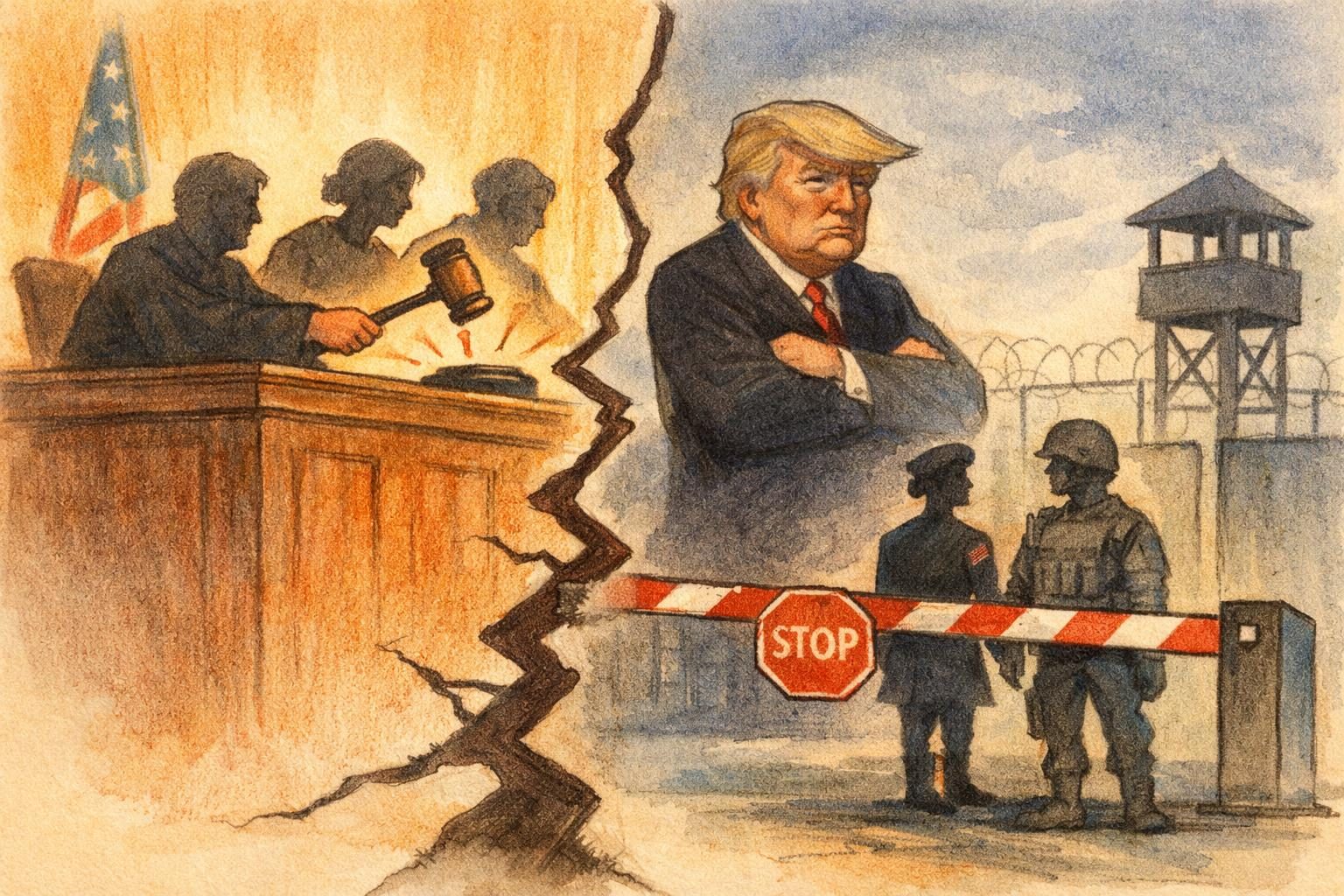
A federal appeals court on June 1, 2026 said the Trump administration’s transgender military policy is likely unconstitutional, but it did not block the policy in full. The panel left protections in place for current service members while allowing the restriction on new enlistments to remain unresolved during further review.
The ruling came from a 2-1 panel of the U.S. Court of Appeals for the D.C. Circuit in Talbott v. United States. Judge Robert Wilkins wrote for the majority that, at this preliminary stage, the government had not offered a factual basis for the policy’s treatment of transgender people and that the record showed the policy was aimed at targeting a politically unpopular group. The opinion said that amounted to a likely violation of equal protection. ([cases.justia.com](https://cases.justia.com/federal/appellate-courts/cadc/25-5087/25-5087-2026-06-01.pdf?ts=1780333464))
The court drew a sharp line between two groups. It affirmed the injunction for service members already in uniform, meaning the government cannot move ahead with removing those plaintiffs while the case keeps going. But the panel vacated the injunction as to people seeking to join the military, leaving the enlistment side of the policy in place for now. ([cases.justia.com](https://cases.justia.com/federal/appellate-courts/cadc/25-5087/25-5087-2026-06-01.pdf?ts=1780333464))
The opinion framed that split as a difference in hardship. For troops already serving, the court said being forced out of a military career poses a greater injury than delaying an entry into service for would-be recruits. The panel also stressed that this was a preliminary injunction ruling, not a final merits decision after full trial, so the constitutional fight is not over. ([cases.justia.com](https://cases.justia.com/federal/appellate-courts/cadc/25-5087/25-5087-2026-06-01.pdf?ts=1780333464))
In the majority’s view, the administration’s policy departed from the earlier Trump-era approach and was driven by animus rather than neutral military judgment. The decision said the government had not defended the broad character attacks baked into the policy and that the record supported the conclusion that the policy singled out transgender people for exclusion. ([cases.justia.com](https://cases.justia.com/federal/appellate-courts/cadc/25-5087/25-5087-2026-06-01.pdf?ts=1780333464))
So the bottom line is narrower than a clean win or loss. Current service members remain protected by the injunction, prospective recruits do not get that same relief, and the administration can keep pressing for further review. The court has already said the policy likely fails constitutional scrutiny in the context of active-duty plaintiffs, but it stopped short of giving every plaintiff the same remedy. ([cases.justia.com](https://cases.justia.com/federal/appellate-courts/cadc/25-5087/25-5087-2026-06-01.pdf?ts=1780333464))
Comments
Threaded replies, voting, and reports are live. New users still go through screening on their first approved comments.
Log in to comment
No comments yet. Be the first reasonably on-topic person here.