
Trump’s AI Agenda Lands Beside an Anthropic Dispute
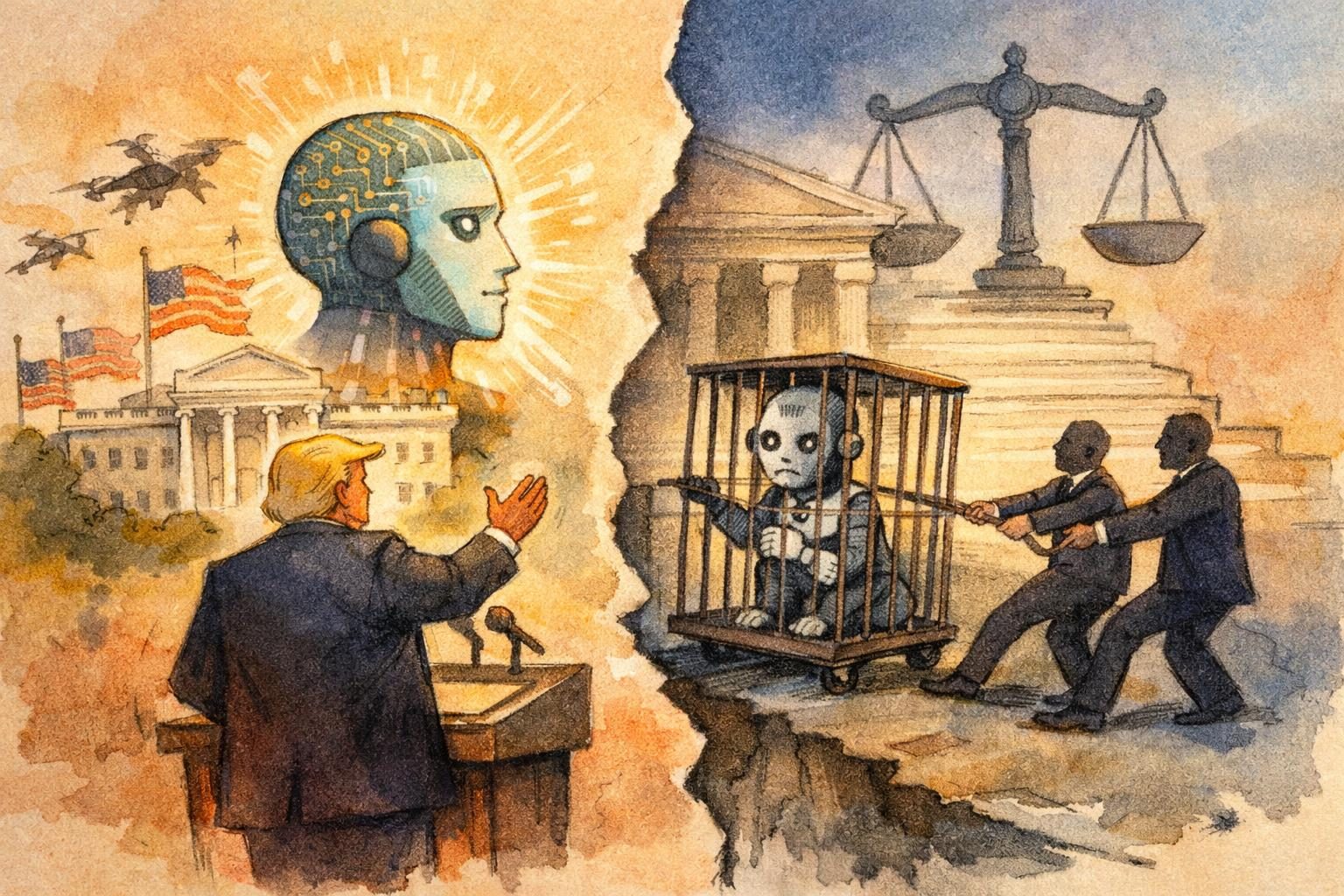
President Donald Trump spent early June making artificial intelligence look like a federal priority, not a science-fair side project. On June 2, the White House said he signed an executive order aimed at advancing American AI innovation, with a focus on cybersecurity, critical infrastructure and faster deployment across government. On June 5, he signed a national security memorandum telling agencies to speed AI adoption for military and intelligence use and to put more advanced systems in the hands of warfighters and intelligence professionals. The two documents together show an administration trying to normalize AI as infrastructure: something to be bought, deployed and scaled, not just debated. ([whitehouse.gov](https://www.whitehouse.gov/fact-sheets/2026/06/fact-sheet-president-donald-j-trump-promotes-advanced-artificial-intelligence-innovation-and-security/))
That push is unfolding alongside a separate fight with Anthropic that started months earlier. In late February, the company said it would not accept Pentagon demands to drop safeguards around its Claude model, including limits tied to mass surveillance and fully autonomous weapons. In March, Anthropic sued after the government designated it a supply-chain risk and moved to block or restrict its products for federal use, saying the actions were unlawful and retaliatory. ([investing.com](https://www.investing.com/news/stock-market-news/anthropic-rejects-pentagons-requests-in-ai-safeguards-dispute-ceo-says-4530115?utm_source=openai))
The latest turn came on June 8, when the Trump administration denied unlawfully retaliating against Anthropic in a court filing, while defending agency actions taken after the company refused Pentagon demands. Reuters reported that the filing said the government had acted lawfully, even as it acknowledged the dispute followed Anthropic’s resistance to military-use terms for Claude. The case remains active. ([investing.com](https://www.investing.com/news/world-news/trump-administration-denies-unlawful-retaliation-in-anthropic-ai-blacklisting-4731935?utm_source=openai))
Taken together, the two tracks point to the same basic tension in Trump’s AI policy. The White House wants faster adoption and fewer barriers. But the Anthropic case shows that federal agencies are still willing to use procurement leverage, security designations and litigation to shape how frontier AI systems are built and used. The result is a policy posture that invites industry partners in, then makes clear that the government intends to set hard limits once national security is involved. ([whitehouse.gov](https://www.whitehouse.gov/fact-sheets/2026/06/fact-sheet-president-donald-j-trump-promotes-advanced-artificial-intelligence-innovation-and-security/))
Comments
Threaded replies, voting, and reports are live. New users still go through screening on their first approved comments.
Log in to comment
No comments yet. Be the first reasonably on-topic person here.