
Trump’s AI order sells speed, then orders a security framework
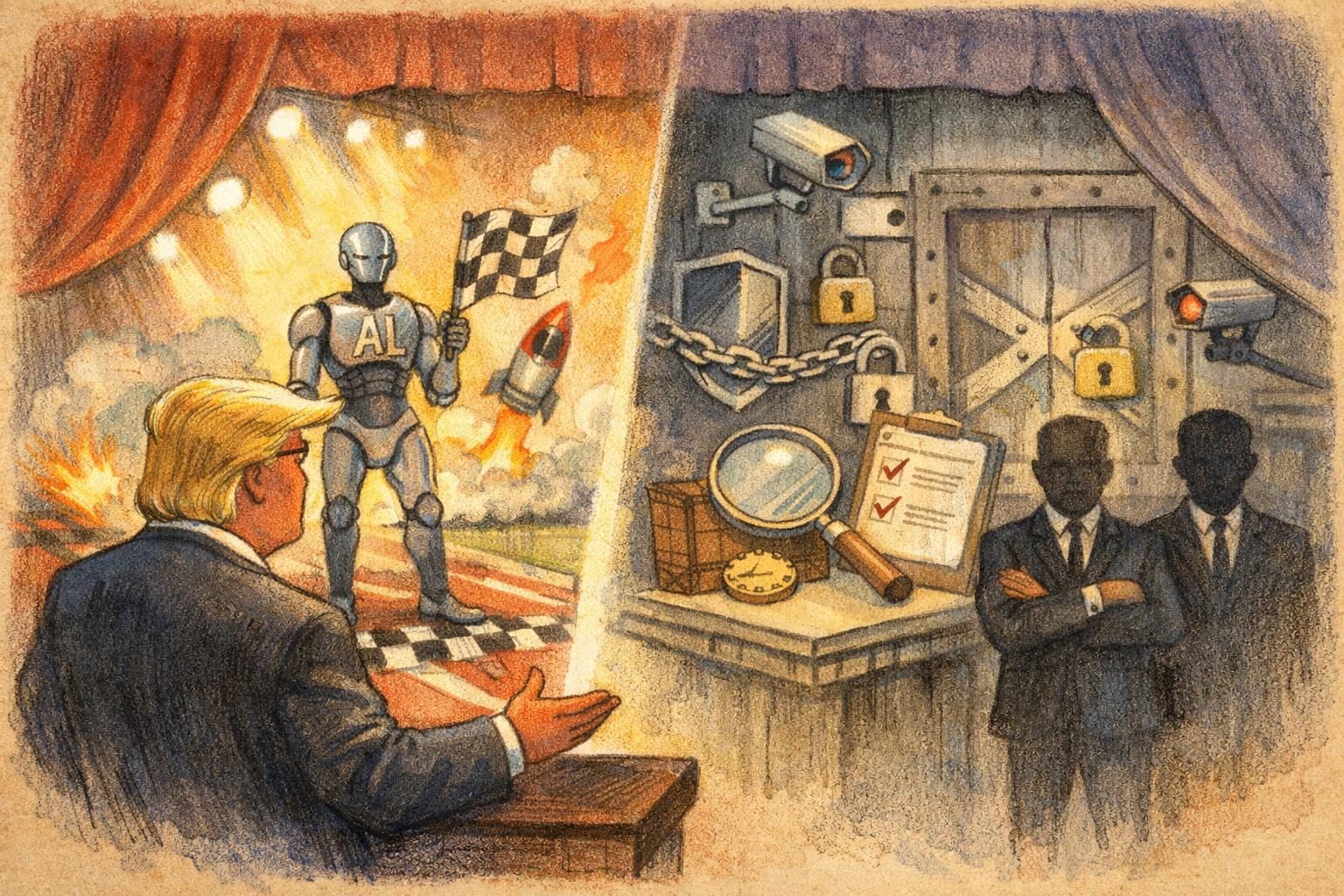
On June 2, 2026, the White House signed an executive order on artificial intelligence that tries to do two things at once: speed up AI deployment and force the federal government to get more serious about the security risks that come with it. The order says the United States should avoid overly burdensome regulation, but the instructions inside it are heavy on deadlines, coordination, and defensive work across the national security and civilian bureaucracy. It is less a clean break from process than a move to control the process more tightly. citeturn0search0turn0search1
The most concrete directives focus on cyber defense. Within 30 days, the order tells the Committee on National Security Systems to prioritize protection of national security systems, directs the Secretary of War to do the same for department information systems, and tells DHS to issue binding operational directives and other guidance to speed civilian federal cyber defense. It also tells DHS to expand cybersecurity services and make AI-enabled defensive tools more available to agencies, state and local authorities, and critical infrastructure operators. That is not symbolic. It is an instruction to use the federal apparatus more aggressively against AI-related security problems. citeturn0search0turn0search1
The order also creates an AI cybersecurity clearinghouse within 30 days, led by Treasury in consultation with the National Cyber Director, the War Department, and DHS, and designed to work with industry on a voluntary basis. Its job is to coordinate vulnerability scanning, validate findings, and help distribute patches. In practice, the administration is building a formal channel for spotting and fixing AI-related weaknesses before they become bigger problems. The White House is pitching that as innovation support, but the mechanism itself is a security workflow. citeturn0search0turn0search1
The more revealing section covers frontier models. Within 60 days, Treasury, the War Department, and DHS are supposed to build a classified benchmarking process to judge advanced cyber capabilities in AI models and decide when a system qualifies as a covered frontier model. The same section tells those agencies to design a voluntary framework that would let developers ask the government whether a model qualifies, share access to a model for up to 30 days before release, and work with officials to choose trusted partners for early access. That is a real policy architecture, but it is still an architecture in progress. The order directs agencies to build the framework; it does not finish it itself. citeturn0search0turn0search1
The order is also explicit about what it does not do. It says it does not authorize mandatory licensing, preclearance, or permitting for new AI models, including frontier systems. That keeps the administration’s anti-red-tape posture intact even as it opens the door to voluntary federal review and early access for the most powerful models. The result is a familiar Trump trade: a public promise to move faster, paired with a government-heavy security setup that still needs agency work before it becomes usable. citeturn0search0
The timeline matters too. On May 21, 2026, the White House postponed a planned AI signing ceremony before issuing the order on June 2. The delay makes the June rollout look less like a spontaneous breakthrough than a reset with cleaner messaging. That does not make the order trivial. It does make the sales pitch look a lot more aggressive than the machinery behind it. The rhetoric says unleash AI. The text says build the guardrails, set the deadlines, and coordinate the cleanup. citeturn0search2turn0search3
Comments
Threaded replies, voting, and reports are live. New users still go through screening on their first approved comments.
Log in to comment
No comments yet. Be the first reasonably on-topic person here.