
Trump’s AI Rollout Looks More Rushed Than Settled
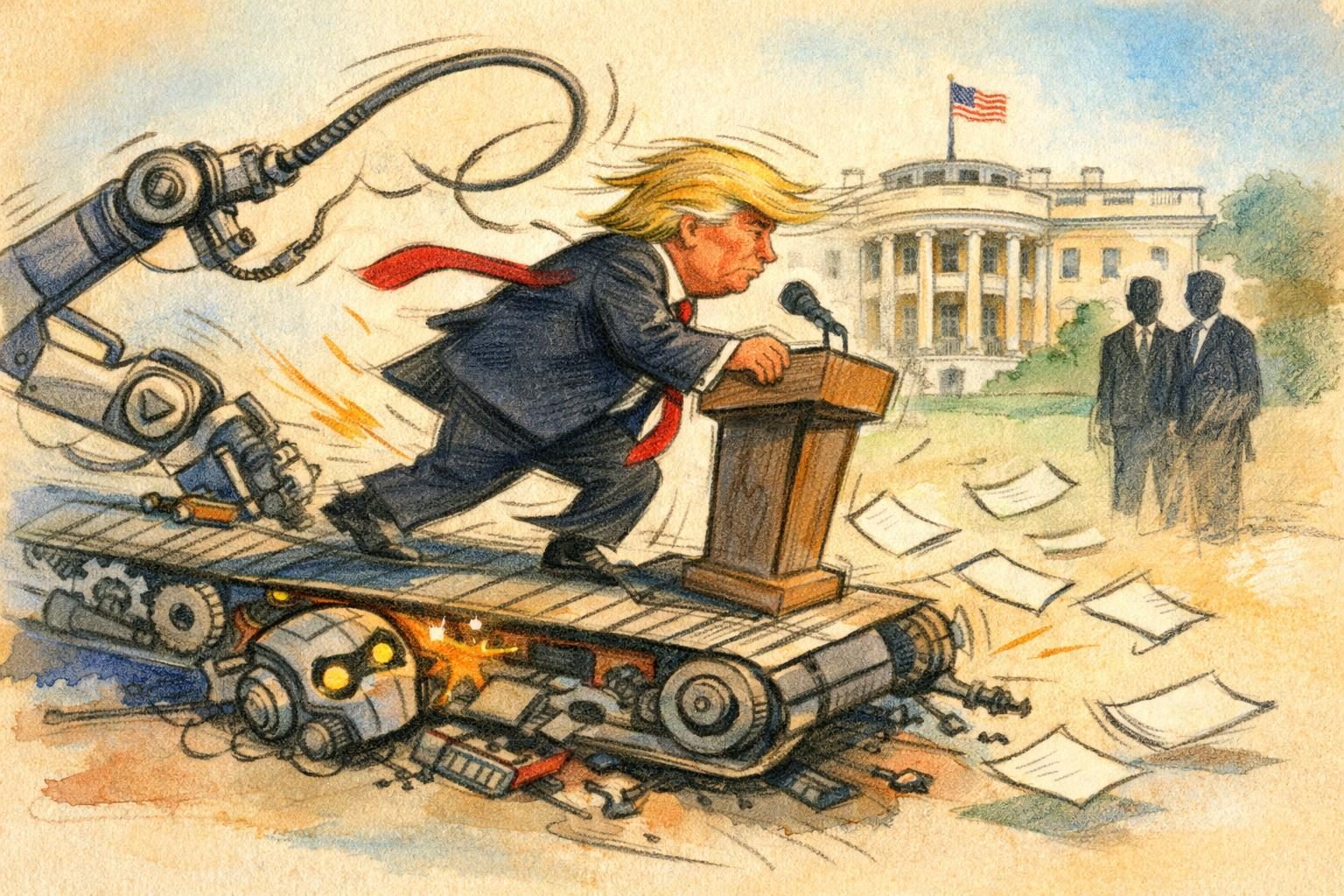
The White House is pitching its June AI push as a coordinated national strategy. The documents show something narrower: an executive order on June 2 and, three days later, a separate national-security memorandum on June 5. That sequence matters because the administration is building the policy in pieces, with a lot of the real work pushed into later deadlines and agency guidance. ([whitehouse.gov](https://www.whitehouse.gov/presidential-actions/2026/06/promoting-advanced-artificial-intelligence-innovation-and-security/))
The June 2 executive order, EO 14409, says the government will work with the private sector to modernize federal systems, harden them against outside threats, protect intellectual property, and accelerate responsible AI adoption across government and industry. It also orders multiple agencies to move on a 30-day and 60-day timetable, including cyber-defense steps, guidance for civilian systems, and a voluntary AI cybersecurity clearinghouse. The order also calls for a voluntary framework under which developers could give the federal government access to covered frontier models for up to 30 days before they plan to release those models to other trusted partners. ([whitehouse.gov](https://www.whitehouse.gov/presidential-actions/2026/06/promoting-advanced-artificial-intelligence-innovation-and-security/))
That last part is important because the order is not a mandatory handoff. It expressly says the framework is voluntary and that it does not create a licensing, preclearance, or permitting requirement for AI models. In other words, the administration is pushing for early visibility into frontier systems without turning that push into a formal approval regime. ([whitehouse.gov](https://www.whitehouse.gov/presidential-actions/2026/06/promoting-advanced-artificial-intelligence-innovation-and-security/))
The June 5 memorandum, NSPM-11, goes deeper into the national-security side. It directs the Secretary of War to issue an update to DOD Directive 3000.09 on autonomy in weapon systems within 90 days, and says that update must be reviewed annually as AI changes. The memo also calls for tighter procurement processes, faster onboarding of advanced models, and a reserve of non-government AI talent to support federal work. ([whitehouse.gov](https://www.whitehouse.gov/presidential-actions/2026/06/national-security-presidential-memorandum-nspm-11/))
The administration’s own descriptions frame both actions as a hard pivot toward speed, security, and adoption. But the documents also show how much is still unfinished. Agencies are being told to produce guidance, build frameworks, and set up new processes before the policy becomes anything like a complete operating system. ([whitehouse.gov](https://www.whitehouse.gov/fact-sheets/2026/06/fact-sheet-president-donald-j-trump-promotes-advanced-artificial-intelligence-innovation-and-security/))
There is a political story here, but the official record does not prove the more sweeping claims about internal drama or rollout chaos. What it does prove is simpler: the White House moved in two steps, left key implementation details to later action, and put a heavy share of the burden on agencies and contractors to make the policy real. For now, that makes the June AI rollout look less like a finished blueprint than a fast-moving draft. ([whitehouse.gov](https://www.whitehouse.gov/presidential-actions/2026/06/promoting-advanced-artificial-intelligence-innovation-and-security/))
Comments
Threaded replies, voting, and reports are live. New users still go through screening on their first approved comments.
Log in to comment
No comments yet. Be the first reasonably on-topic person here.