
Trump’s shiny AI order may have more ambition than guardrails
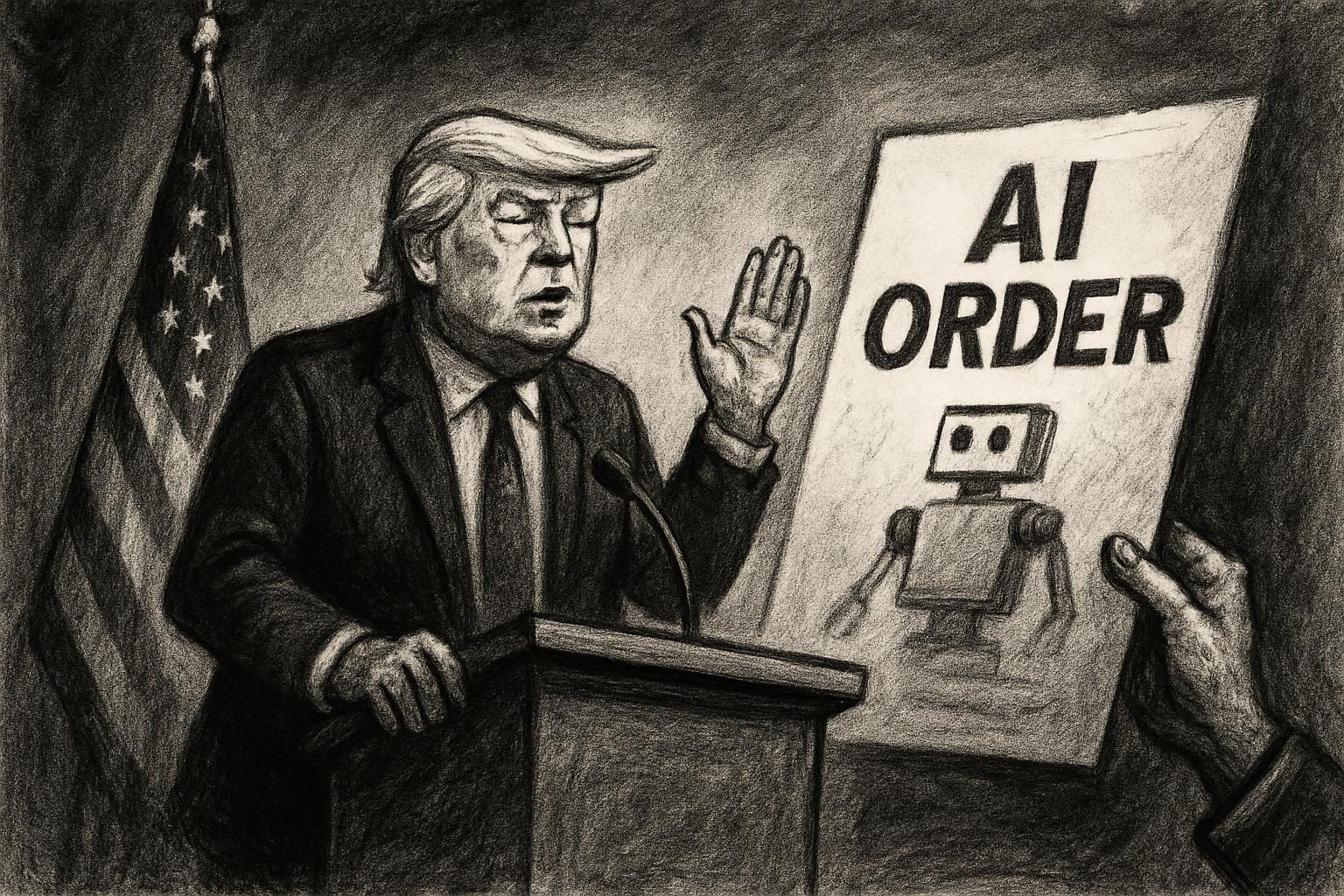
Donald Trump spent June 2 trying to wrap an old-school style of governing in very new packaging: a sweeping executive order on advanced artificial intelligence innovation and security. The White House says the order is meant to accelerate AI development while strengthening cybersecurity, protecting critical infrastructure, and helping the United States keep pace globally. It also tells agencies to coordinate more closely on AI use in federal systems and in national-security settings, which gives the document a more muscular tone than many White House tech statements that came before it. In that sense, the order is classic Trump: big on momentum, big on branding, and determined to project command over a technology that many people inside government still struggle to define in practice. But once the language about speed and strength is stripped away, the policy structure looks thinner than the pitch. The administration is promising motion, yet the hardest questions still sit beyond the reach of a single presidential directive.
The order does include concrete tasks, and that matters. It directs the government to expand the use of AI for cyber defense and to improve access to AI-enabled tools across both national security and civilian federal networks. It also assigns coordination responsibilities to a web of offices and officials that includes the Committee on National Security Systems, the Office of Management and Budget, the National Security Council staff, and the National Cyber Director. The White House’s own framing says the president wants to advance American AI without burdening innovators with unnecessary regulation, a familiar Trump argument that treats delay as the main enemy and process as an obstacle. That may be politically useful, especially in a Washington that often moves too slowly for its own good. But speed is not a substitute for governance, and adoption is not the same thing as accountability. An executive order can change agency priorities and set a direction of travel, but it cannot by itself resolve the deeper fights over transparency, liability, oversight, procurement standards, audit requirements, or how much discretion the president should be allowed to concentrate over a technology this powerful. Those are not cosmetic details. They are the basic infrastructure of trust, and this order mostly gestures at them rather than building them.
That gap matters because artificial intelligence is not a niche policy issue that can be handled with one memo and a few agency deadlines. It cuts across national security, privacy, labor, civil liberties, critical infrastructure, and the market power of the large companies that already dominate the digital economy. If the government wants to use more AI in its own systems, it has to say who checks those systems, what standards apply, what data can be used, who can challenge a decision that goes wrong, and how the public is supposed to know whether a tool is safe or merely fast. None of those questions become less important just because the White House wants to move quickly. In fact, the faster the government pushes AI into sensitive settings, the more urgent those questions become. The administration’s public case mostly says that it trusts agencies to work it out, and that the president is personally driving the project. That may be an effective way to generate headlines. It is a much less convincing way to establish durable rules. Trump’s broader governing style only sharpens the concern. He tends to centralize power, improvise around institutions, and keep other actors off balance. That can create the appearance of control, but it does not create the checks that make control legitimate.
The likely reaction is easy to predict, and not just from partisan opponents. Civil-liberties advocates are likely to worry about surveillance creep and mission creep, especially if AI tools spread further into federal networks without clear public standards for audit or appeal. Technology-policy experts will probably argue that an executive order is no substitute for a durable statute or a regulatory framework that can survive beyond one president’s timetable or temper. Congressional skeptics may point out that the administration is pushing the most difficult questions down to agencies, contractors, and the courts, where disputes can drag on and accountability can become blurry. Trump’s allies, by contrast, will almost certainly frame the order as proof that he understands the strategic importance of AI and is willing to act while others talk. Both views can be true in part. The government can be right to move faster on a consequential technology and wrong about the quality of the guardrails it is building around it. That tension is the real story here. The administration wants to be seen as advancing American AI security without smothering innovation, but the order still leaves a lot of discretion at the top and a lot of unresolved detail below. If it becomes a vehicle for more federal leverage without clearer limits, the result will not be a neat narrative about leadership. It will be a familiar Washington bargain: more power, fewer guardrails, and a promise that someone else will clean up the consequences later.
Comments
Threaded replies, voting, and reports are live. New users still go through screening on their first approved comments.
Log in to comment
No comments yet. Be the first reasonably on-topic person here.