
Trump’s campus crackdown keeps widening, and the legal theory is still doing all the work
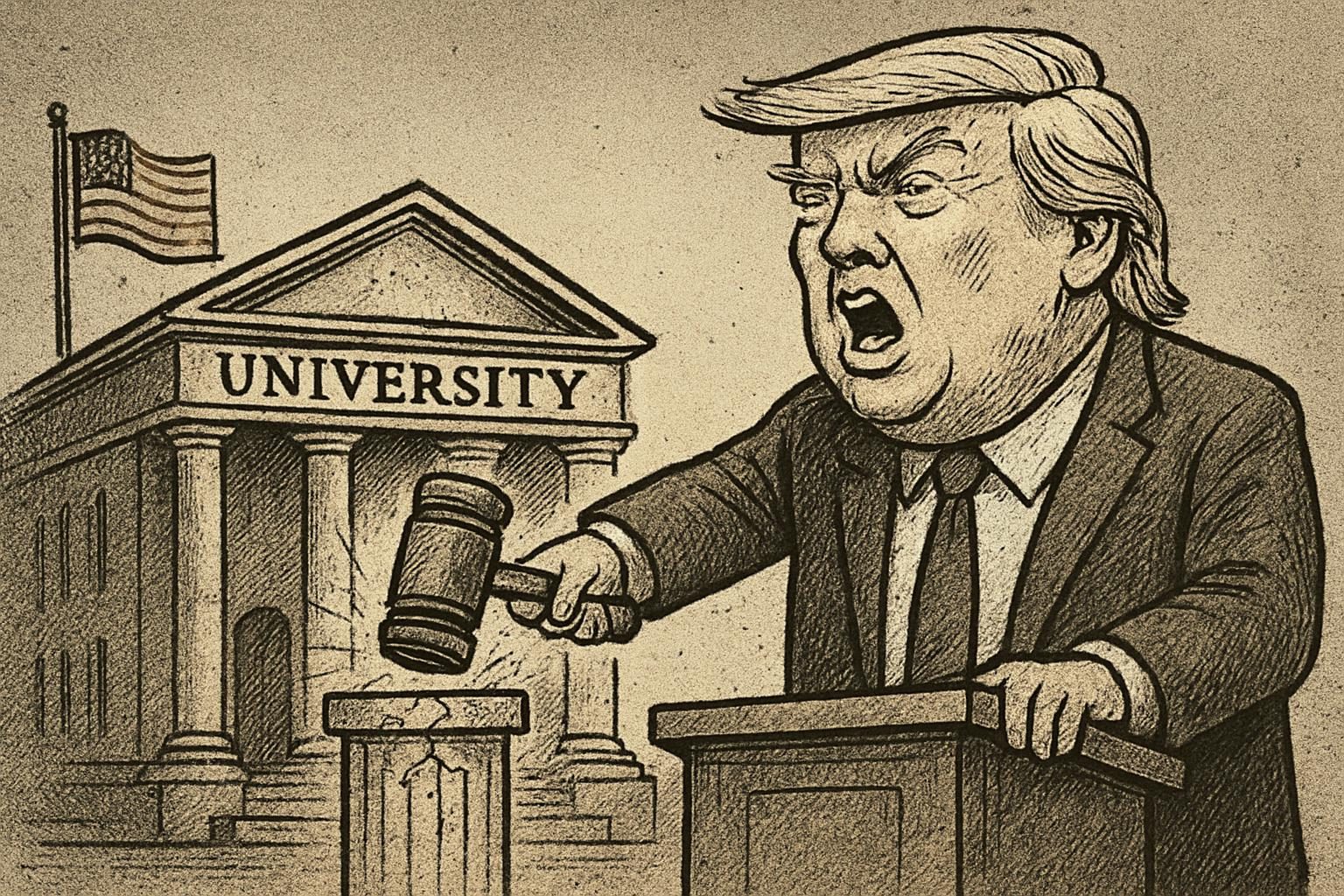
The Trump administration’s campus fight is no longer looking like a handful of disconnected civil-rights inquiries. It is starting to resemble a wider pressure campaign aimed at the way universities recruit, admit, fund, and support students. The Justice Department’s recent expansion of medical-school admissions investigations, along with a separate Title VI probe into Arizona State University, shows how quickly the federal government is widening the target set. On paper, each move is framed as a standard enforcement step. In practice, the pattern sends a much broader message to higher education: anything that looks like race-conscious decision-making, even in the form of recruiting language, scholarships, tutoring, or pipeline programs, can become a federal problem. That is what makes the campaign politically potent and institutionally unsettling. It does not need a final court ruling to change behavior, because the process itself is already shaping how schools act.
Universities are not treating these actions as isolated corrections to specific misconduct. They are reading them as a signal that the federal government wants a much narrower version of campus diversity work, one that strips away anything that can be described as preferential or targeted. That has immediate consequences inside admissions offices, legal departments, and administrative offices that have spent years building programs around inclusion and access. Schools preserve records more aggressively, scrub language from websites and brochures, and ask lawyers to review initiatives that might once have seemed routine. Some programs are likely to be rewritten simply because the risk of becoming a test case now looks too high. That chilling effect is often the real outcome of an enforcement campaign like this one. Even before a case is resolved, the mere existence of the probe can function as punishment. Supporters of the administration will argue that this is exactly how civil-rights law is supposed to work if institutions are making decisions on the basis of race. Critics will say the administration is using the prestige of federal enforcement to cast suspicion over broad categories of diversity work that have never been fully settled by the courts. Those two views are not mutually exclusive in the abstract, but they point to a real political tension: the more the White House treats every complaint as proof, the more its campaign starts to look like ideological sorting with a federal badge attached.
That distinction between investigation and proof is doing most of the legal work here, and it matters more as the campaign widens. A federal probe is not the same thing as a finding of wrongdoing, and universities know the difference even if the public often does not. The administration, however, is relying on the authority and symbolism of civil-rights enforcement to produce a larger effect than any single case can deliver. It is betting that institutions will change first and litigate later, or change now to avoid litigating at all. That may be efficient from the White House’s perspective, but it also creates exposure if the government cannot keep turning suspicion into durable legal wins. Universities are among the most capable institutions in the country when it comes to slowing down enforcement through procedural fights, discovery disputes, and years of litigation. If the administration keeps expanding the net without producing clear findings in the cases it opens, it risks making the whole effort look less like neutral enforcement and more like a political crusade dressed up as legal administration. That would be a dangerous place for a president whose public image depends on control, force, and the appearance of competence. It is one thing to threaten a large system; it is another to prove that the system has been violating the law in the first place.
For now, though, the administration appears content to let the pressure do the work. The practical fallout is already visible in how universities are adjusting. Admissions staff are becoming more cautious about how they describe selection criteria. Diversity offices are becoming more defensive about the structure of their programs. Faculty and administrators are likely to assume that a wide range of race-conscious initiatives will now attract federal scrutiny, even if the underlying legal picture remains unsettled. That is a significant policy result in itself. It means the White House can claim it is enforcing civil-rights law without waiting for every case to wind through the courts, while universities respond by retreating into caution. The risk for the administration is that this strategy depends on fear remaining more persuasive than scrutiny. If a court rejects a case, if a settlement looks too weak to support the broader rhetoric, or if evidence does not match the force of the public claims, the entire campaign could begin to look overbuilt. Still, that may be a risk the Trump team is willing to take. For now, the larger effect is unmistakable: higher education is being asked to live under a cloud, and the White House is betting that the cloud itself is enough of a victory.
Comments
Threaded replies, voting, and reports are live. New users still go through screening on their first approved comments.
Log in to comment
No comments yet. Be the first reasonably on-topic person here.