
Trump’s customs crackdown looks built to raise the cost of noncompliance
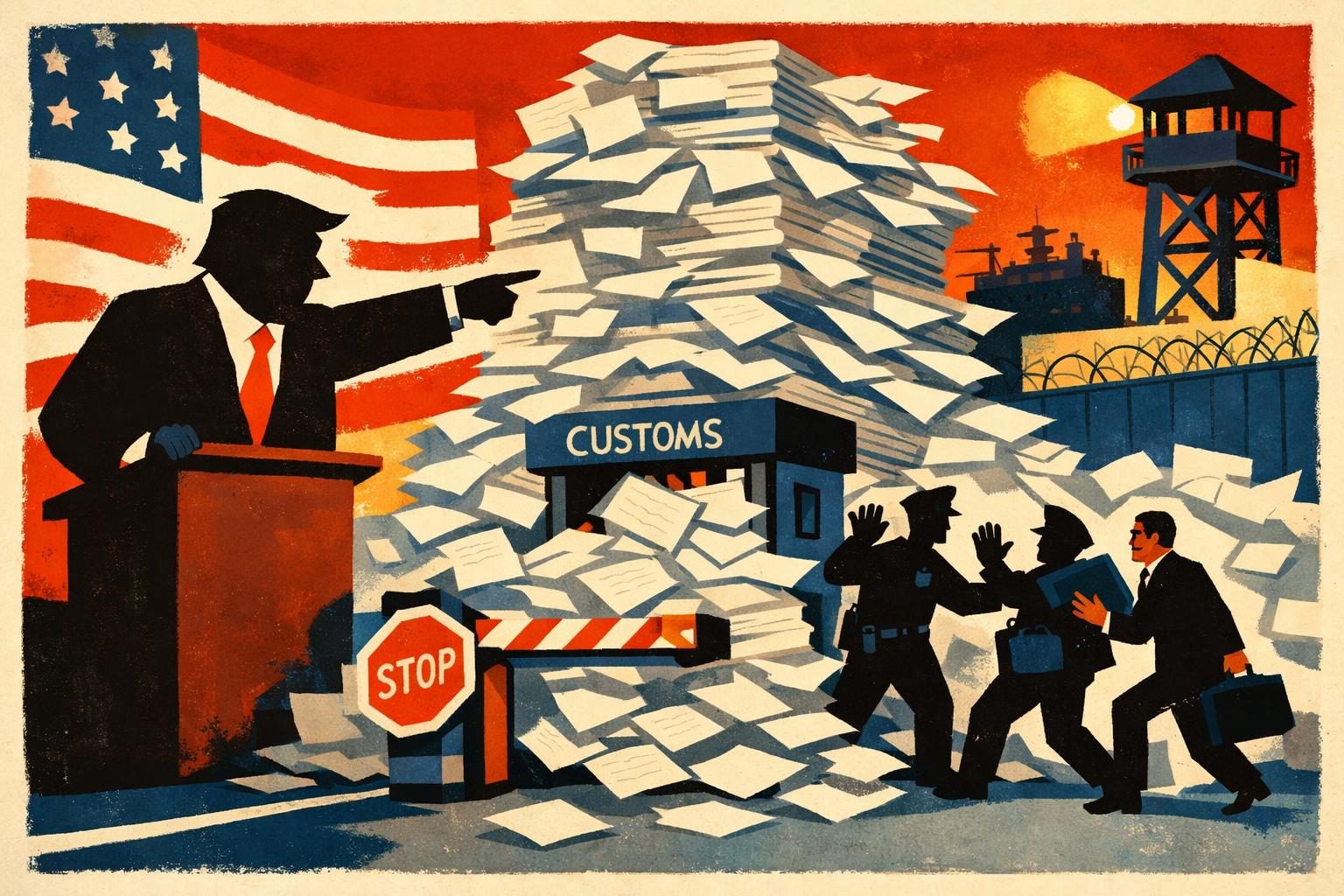
President Donald Trump’s June 3 customs order is aimed at making import fraud more expensive and harder to hide. But the White House’s own materials make clear that most of the machinery will not flip on all at once. The order directs the Department of Homeland Security and Customs and Border Protection to write or revise rules, policies, and guidance before most of the changes take effect. ([whitehouse.gov](https://www.whitehouse.gov/presidential-actions/2026/06/strengthening-customs-enforcement/?utm_source=openai))
The order does include some hard-edged directives. It tells DHS and CBP to strengthen importer-of-record requirements, increase bonding and vetting, impose disclosure and certification requirements, and tighten enforcement of existing customs laws. It also directs the agencies to establish a minimum penalty floor of not less than 50 percent of the assessed penalty, with limited exceptions, and to build a minimum liquidated-damages floor. But that penalty floor is something the agencies are told to establish; it is not described in the White House materials as an already effective new rule. ([whitehouse.gov](https://www.whitehouse.gov/presidential-actions/2026/06/strengthening-customs-enforcement/?utm_source=openai))
That distinction matters. The order is real, and the policy direction is clear. But the White House says the reforms “will not take effect immediately” and that DHS and CBP will generally work through the standard rulemaking process, which gives affected parties time to adjust. So the immediate change is the instruction to move forward, not a sudden rewrite of day-to-day customs practice. ([whitehouse.gov](https://www.whitehouse.gov/fact-sheets/2026/06/fact-sheet-president-donald-j-trump-strengthens-customs-enforcement/?utm_source=openai))
The broader goal is straightforward: make it harder for importers to dodge duties, obscure ownership, or slip goods into the country through weak points in the system. The White House says the order is intended to improve accountability, modernize customs processes, and reduce opportunities for evasion. It also directs DHS to expand transparency and to propose legislation that would further strengthen customs enforcement. ([whitehouse.gov](https://www.whitehouse.gov/fact-sheets/2026/06/fact-sheet-president-donald-j-trump-strengthens-customs-enforcement/?utm_source=openai))
The practical burden will depend on how the agencies write the follow-up rules. If they keep the requirements tightly targeted, the new system could land mainly on the importers most likely to be gaming it. If they write broader rules, legitimate businesses will spend more time documenting ownership, assets, affiliations, and compliance status to keep shipments moving. That is the tradeoff built into the order: tougher enforcement now in principle, heavier paperwork later in practice. ([whitehouse.gov](https://www.whitehouse.gov/fact-sheets/2026/06/fact-sheet-president-donald-j-trump-strengthens-customs-enforcement/?utm_source=openai))
So the story is not that customs changed overnight on June 3. It is that the administration set a stronger enforcement agenda and told DHS and CBP to turn it into a working system. The 50 percent penalty floor is part of that agenda, but it still has to be built into actual rules before it becomes the new baseline. ([whitehouse.gov](https://www.whitehouse.gov/fact-sheets/2026/06/fact-sheet-president-donald-j-trump-strengthens-customs-enforcement/?utm_source=openai))
Comments
Threaded replies, voting, and reports are live. New users still go through screening on their first approved comments.
Log in to comment
No comments yet. Be the first reasonably on-topic person here.