
Trump pushes AI deeper into national security, and the blind spots are obvious
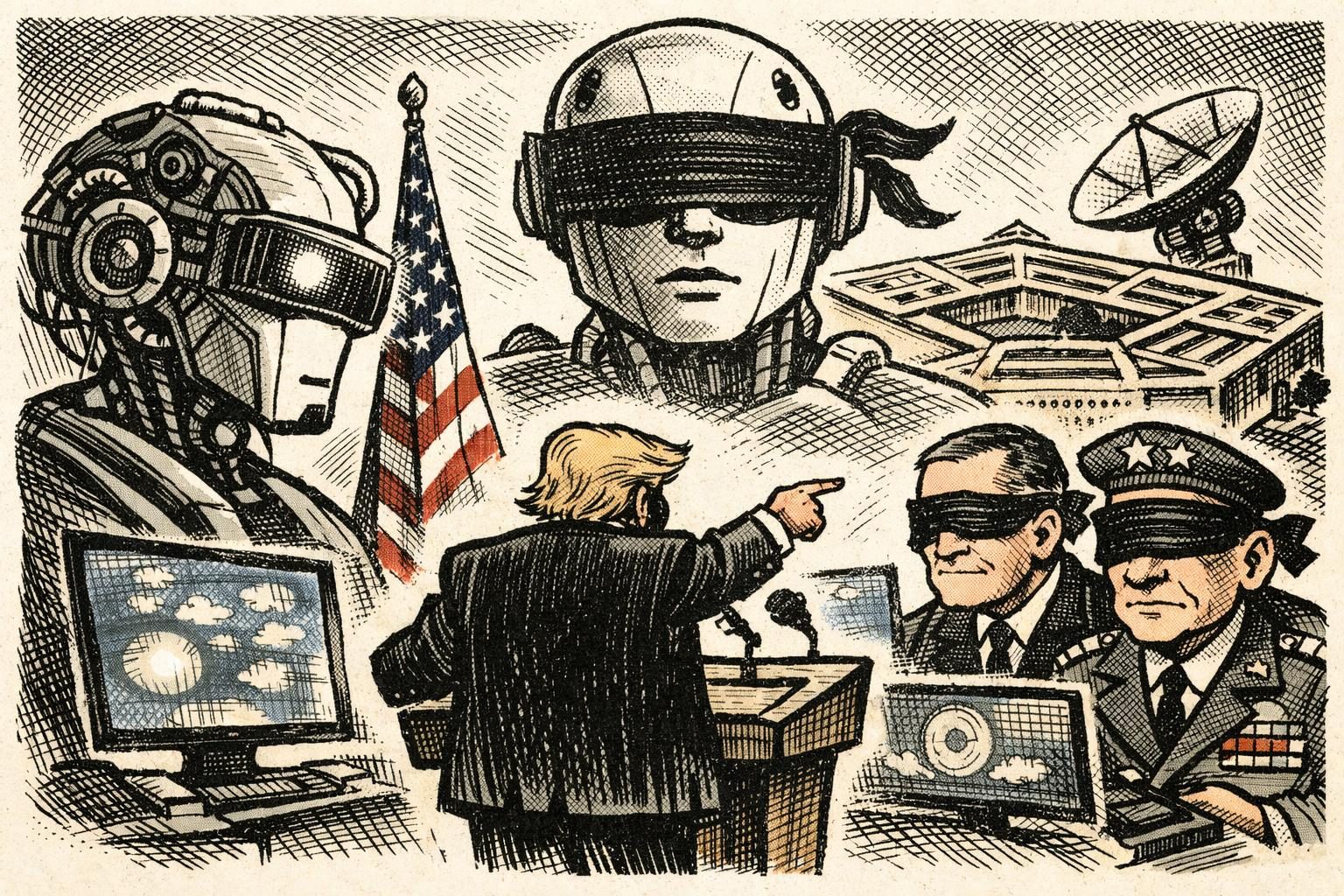
President Donald Trump’s June 5 memorandum on artificial intelligence in the national security enterprise marks a major push to make AI a routine part of defense and intelligence work. The White House says the point is to get advanced, secure, and reliable systems into the hands of warfighters and intelligence professionals while preserving the constitutional chain of command. On paper, the directive is broad and ambitious. It tells agencies to speed up AI adoption, adapt commercial and open-source technologies for mission use, and expand the government’s access to high-security computing capacity. It also creates an AI National Security Strategic Reserve, a pool of outside experts who can be called in when needed. Taken together, those moves show an administration that is not treating AI as a side experiment, but as something that should be folded into the operational bloodstream of the national-security state.
That ambition is easy to understand, but the memo’s biggest weakness is also easy to spot: it assumes speed can outrun complexity. The document repeatedly promises systems that are robust, steerable, and controllable, yet it leaves many of the hardest technical and administrative questions unresolved. What happens when a classified model begins to drift after deployment? What happens when a vendor updates software in ways that change outputs or introduce new failure modes? What happens when an agency becomes dependent on a commercial tool it cannot fully inspect, independently test, or replace without disruption? The White House says outside entities should not be able to disable or alter systems used by military personnel without prior approval, which is a sensible safeguard in the abstract. But modern AI does not behave like fixed hardware or a simple database. It evolves through patches, retraining, data changes, dependency chains, and opaque internal behavior that can be difficult even for specialists to predict. The more deeply the government embeds those tools, the less convincing it is to suggest that a memo alone can guarantee control.
The memo’s confidence also rests on a kind of internal trust architecture that may be too thin for the stakes involved. It says the framework will preserve clear accountability under the constitutional chain of command, and that matters in a military and intelligence setting where the question of who is responsible can never be treated casually. But accountability inside the system is not the same thing as meaningful public oversight of the system. The document does not lay out a detailed public audit regime, a standard for transparent testing, or a clear process by which outsiders could evaluate whether safeguards are actually working. That leaves a basic problem untouched: the public is being asked to trust a set of tools that will mostly operate out of sight. In national security, the danger is not only that a system can fail. It is that failures can remain hidden until they have already affected intelligence analysis, logistics planning, or operational decisions. If the administration’s theory is that internal controls and trusted vendors will catch mistakes before they matter, that is a big bet in any bureaucracy. It is an especially big bet in one as sprawling, classified, and hard to inspect as the national-security apparatus.
The broader policy picture makes that bet look even larger. The memorandum lands alongside a June 2 executive order on AI innovation and cybersecurity, which widens the administration’s effort to accelerate AI use across government and critical infrastructure. Read together, the two actions show a White House eager to normalize AI quickly while insisting that existing guardrails will somehow keep pace. Maybe they will. It is possible that a faster, more coordinated push will produce real gains in analysis, efficiency, and security. It is also possible that the government will discover that the hardest part of AI adoption is not building access to the tools, but proving that the tools remain reliable once they are embedded in sensitive workflows. The administration’s pitch is straightforward: America must move quickly to stay ahead. The less comforting interpretation is that it is treating a still-maturing technology as if it were settled infrastructure, then relying on faith in internal controls, vendor assurances, and command authority to close the gaps. That is not a serious substitute for rigorous oversight. It is speed with the blindfold pulled down just far enough to pretend the road is clear.
Comments
Threaded replies, voting, and reports are live. New users still go through screening on their first approved comments.
Log in to comment
No comments yet. Be the first reasonably on-topic person here.