
Trump’s AI Push Into National Security Comes With Big Promises and Bigger Blind Spots
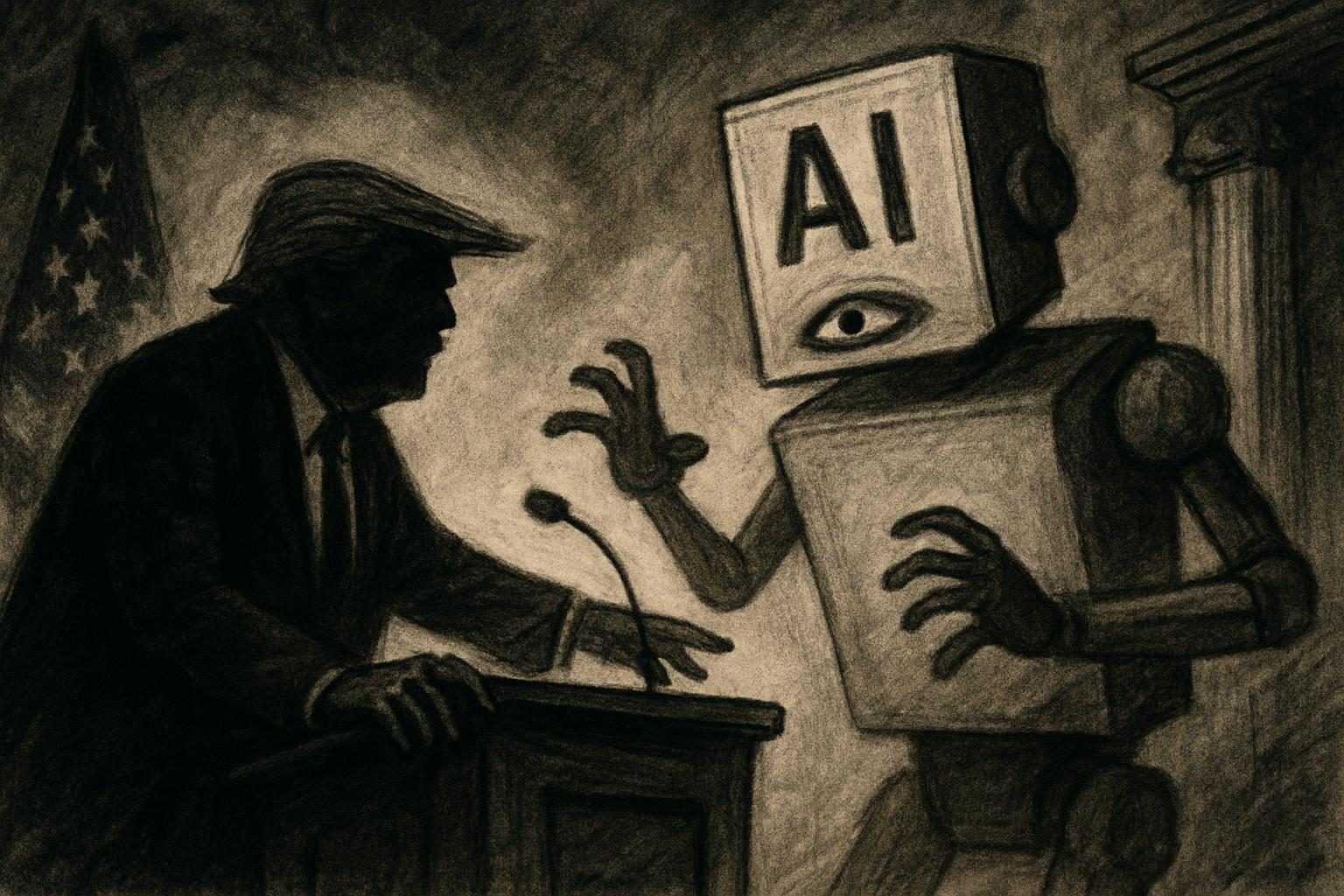
President Donald Trump’s June 5 memorandum on artificial intelligence in the national security enterprise is a clear signal that the administration wants the Pentagon, the intelligence community, and the broader federal security bureaucracy to move faster. The document frames AI not as a novelty or a side project, but as infrastructure that should be built into how the government plans, analyzes, secures, and carries out sensitive work. The White House says the goal is to put secure, reliable, and advanced systems into the hands of warfighters and intelligence professionals without weakening the constitutional chain of command. To get there, the memo directs agencies to accelerate the use of commercial and open-source models, expand access to high-security computing power, and build what the administration calls an AI National Security Strategic Reserve of outside experts who can be tapped when needed. The message is unmistakable: Washington is not supposed to tiptoe around AI anymore. It is supposed to treat it as something the national-security state should absorb quickly, broadly, and with less hesitation than before.
That ambition is politically appealing, and in some ways strategically understandable, but it also comes with a problem the memo never fully escapes: the harder the government pushes AI into operational use, the more it has to trust systems and vendors it cannot fully control. The document says outside entities should not be able to disable or alter systems that military users depend on without prior approval, which sounds like a sensible safeguard until you remember how modern software actually works. Updates, patches, model refreshes, platform dependencies, and security fixes are not optional in the real world; they are part of the machinery. Once an AI system is embedded inside intelligence analysis, logistics, targeting support, cyber defense, or command workflows, a technical failure stops being merely technical. It becomes an operational issue, a management problem, and possibly a battlefield problem. The administration appears to believe that stronger central direction can keep pace with the complexity it is unleashing. That is a difficult proposition in any bureaucracy, and especially in one that already struggles to manage procurement, integration, and oversight cleanly even before classified AI tools enter the picture.
The memo’s biggest weakness is not that it endorses AI use. It is that it asks the public to accept a large amount of trust without offering much visible evidence that the safeguards are strong enough to justify it. The White House says the systems should be robust, steerable, and controllable, but the document is thin on the kinds of concrete assurances that would let outsiders judge whether those claims are realistic. There is no detailed public audit structure, no extensive description of testing thresholds, and no clear explanation of how performance, drift, or misuse will be tracked once the tools are folded into sensitive operations. That matters because the more deeply a system is classified, the easier it becomes for failures to stay buried until something goes wrong in a way that can no longer be ignored. Reliance on trusted vendors and internal command structures can work as a safeguard, but it can also create a blind spot when the system itself is opaque and the public has little ability to verify what is happening behind the curtain. In practice, the administration is betting that it can move quickly while still maintaining control. History suggests that in the national-security world, oversight often arrives only after a failure has already exposed the weakness.
Trump’s AI push should also be understood as part of a broader effort to normalize and accelerate AI adoption across the federal government. A separate June 2 executive order focuses on cybersecurity and critical infrastructure, including federal agencies as well as state, local, and essential operators such as hospitals, banks, and utilities. Taken together, the two actions amount to a one-two policy punch: expand AI use, then argue that the chain of command and internal controls will keep everything dependable. That may be persuasive in a briefing room. It is less persuasive when you start asking the harder questions that follow from real deployment. What happens when a model produces a false answer that sounds authoritative enough to be trusted? What happens when a system drifts over time, or a vendor changes terms, or a component is updated in a way that affects performance inside a classified workflow? What happens when an agency becomes dependent on a tool it cannot fully explain, fully inspect, or fully replace on short notice? The administration is presenting the memo as decisive modernization. A more cautious reading is that it is pushing a still-maturing technology deeper into the most sensitive corners of government and assuming process will solve the rest. But process is not a force field, and in national security the costs of discovering that truth are rarely abstract.
Comments
Threaded replies, voting, and reports are live. New users still go through screening on their first approved comments.
Log in to comment
No comments yet. Be the first reasonably on-topic person here.