
Trump’s AI memo pushes national security deeper into algorithm land
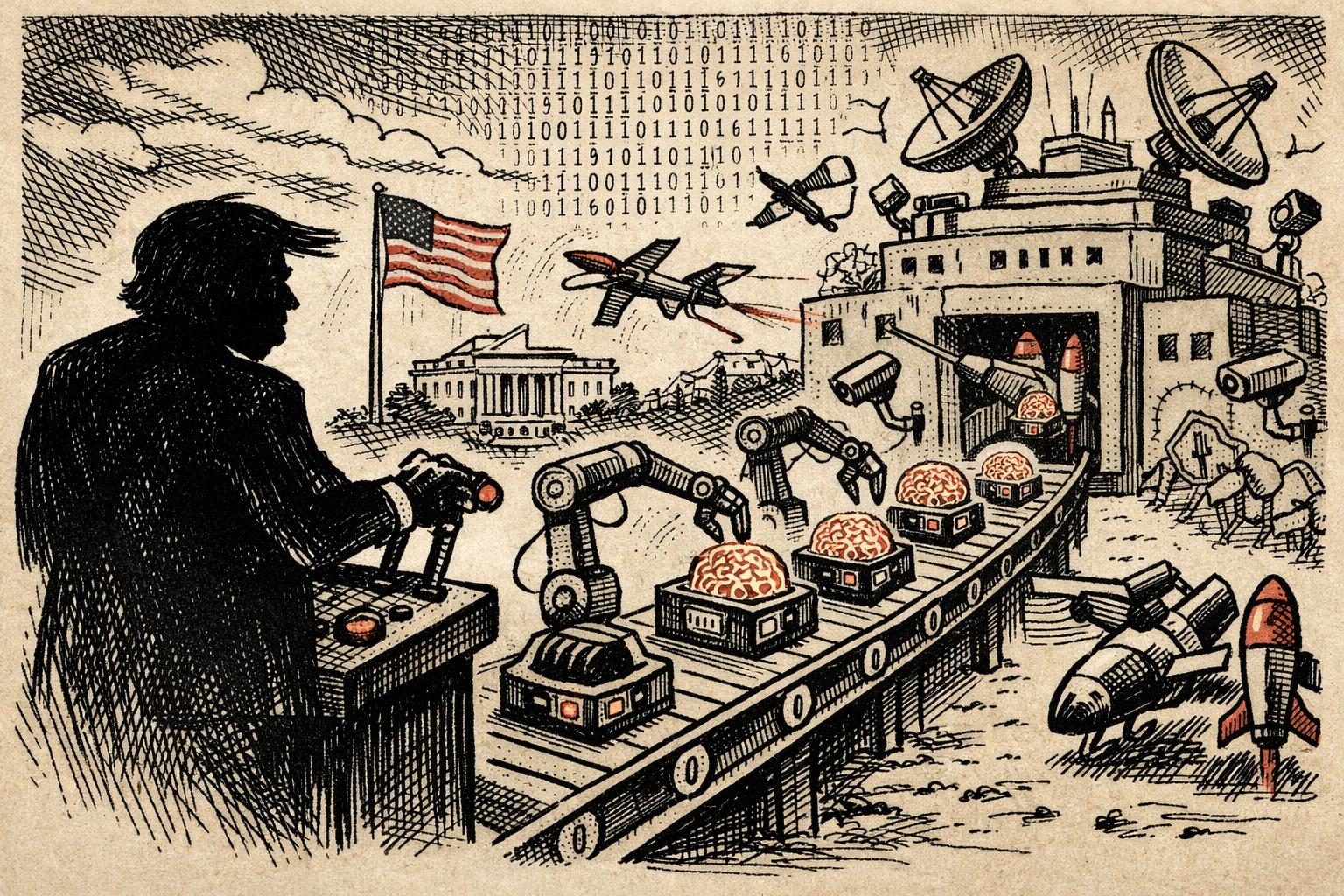
President Donald Trump’s latest artificial intelligence move is not a vague speech about the future or another campaign-stage flourish about American greatness. On June 5, 2026, he signed a National Security Presidential Memorandum that tries to fold AI more deeply into the national-security system, and the White House is selling it as a practical roadmap for accelerating adoption inside agencies that usually move at the speed of a filing cabinet on lease. The memo tells the national security enterprise to use commercial and open-source AI systems more aggressively, adapt those tools for government missions, and build the secure computing infrastructure needed for more advanced deployment later on. It also envisions an AI National Security Strategic Reserve, a roster of outside experts that could be tapped for government use, and it pushes for clearer lines of responsibility over how these systems are fielded and managed. That makes it a real policy move, not just another Trump-era declaration that the future has been officially summoned by executive order. But it also carries the familiar administration scent of declaring a breakthrough while quietly adding another layer of oversight, control, and administrative complexity around it.
The memo’s central tension is easy to spot and hard to resolve. Trump wants speed, adaptability, and the ability to say the United States is racing ahead of rivals in AI, but the document also leans heavily on security vetting, controllability, accountability, and managed access. Those are not trivial details, because in the national-security world the thing that slows a technology rollout is usually the same thing that keeps the rollout from becoming a security disaster. The White House says the point is to put powerful AI systems into the hands of warfighters, intelligence personnel, and national-security officials who need better tools now, not after years of interagency review. That argument has force, especially given how quickly commercial AI has advanced outside government. Yet the practical environment inside defense and intelligence agencies is notoriously hostile to fast software adoption, and every additional requirement for sourcing, validation, compartmentalization, or legal review can turn a “rapid deployment” plan into a long exercise in procurement theater. The memo may be ambitious, but ambition does not shorten compliance checklists. It does not make legacy systems interoperable. And it does not magically resolve the problem that government users often need tools that are both cutting-edge and locked down enough to avoid becoming a national-security leak in a new wrapper.
That is why the policy matters beyond the usual White House language about innovation. Trump has built much of his political identity around the idea that he can make the federal government more aggressive, more modern, and more decisive without giving up control to the experts, the regulators, or the institutional slowpokes who traditionally shape how federal technology gets adopted. This memo fits that pitch perfectly. It lets him claim that America will lead the world in AI while also keeping a tight hand on who gets access to the systems, how they are monitored, and which parts of the national-security machine are allowed to use them. Supporters will call that disciplined modernization, a way to make sure the government does not miss the AI race because it spent too long debating its own rules. Critics will see something more cynical: the same familiar Trump formula of promising disruption, then centralizing authority so the disruption can be managed from the top. Either way, the agencies now have to turn the memo into concrete decisions about hiring, procurement, data access, cybersecurity, and mission use. Those are exactly the areas where presidential optimism tends to run into federal reality and lose a few teeth on the way down.
The bigger question is whether this is a genuinely useful framework or another example of the Trump White House treating technological transformation as something that can be ordered into existence by memo. AI in the national-security sphere is not a toy policy area. It touches surveillance, battlefield decision-making, cyber operations, intelligence analysis, interagency coordination, and the basic chain of command around who gets to rely on machine-generated outputs in situations where mistakes can have real consequences. That makes implementation far more important than branding, no matter how much the administration wants to frame the move as proof that it is modern, tough, and in control at the same time. If the memo leads to better tools, stronger security, and clearer operational rules, it could matter a great deal. If it becomes one more bureaucratic structure with a dramatic title, then it will look a lot like a recurring Trump habit: announce a technological sprint, load it with control mechanisms, and assume momentum itself counts as management. The White House can sell that as confidence and call it strategic vision. The agencies doing the work will have to convert it into something much less glamorous and much more important: systems that actually function, people who can actually use them, and a process that does not collapse the moment it meets the messy, overregulated machinery of the federal government.
Comments
Threaded replies, voting, and reports are live. New users still go through screening on their first approved comments.
Log in to comment
No comments yet. Be the first reasonably on-topic person here.