
Trump’s AI and cryptography push looks bold, but the hard part is the slog
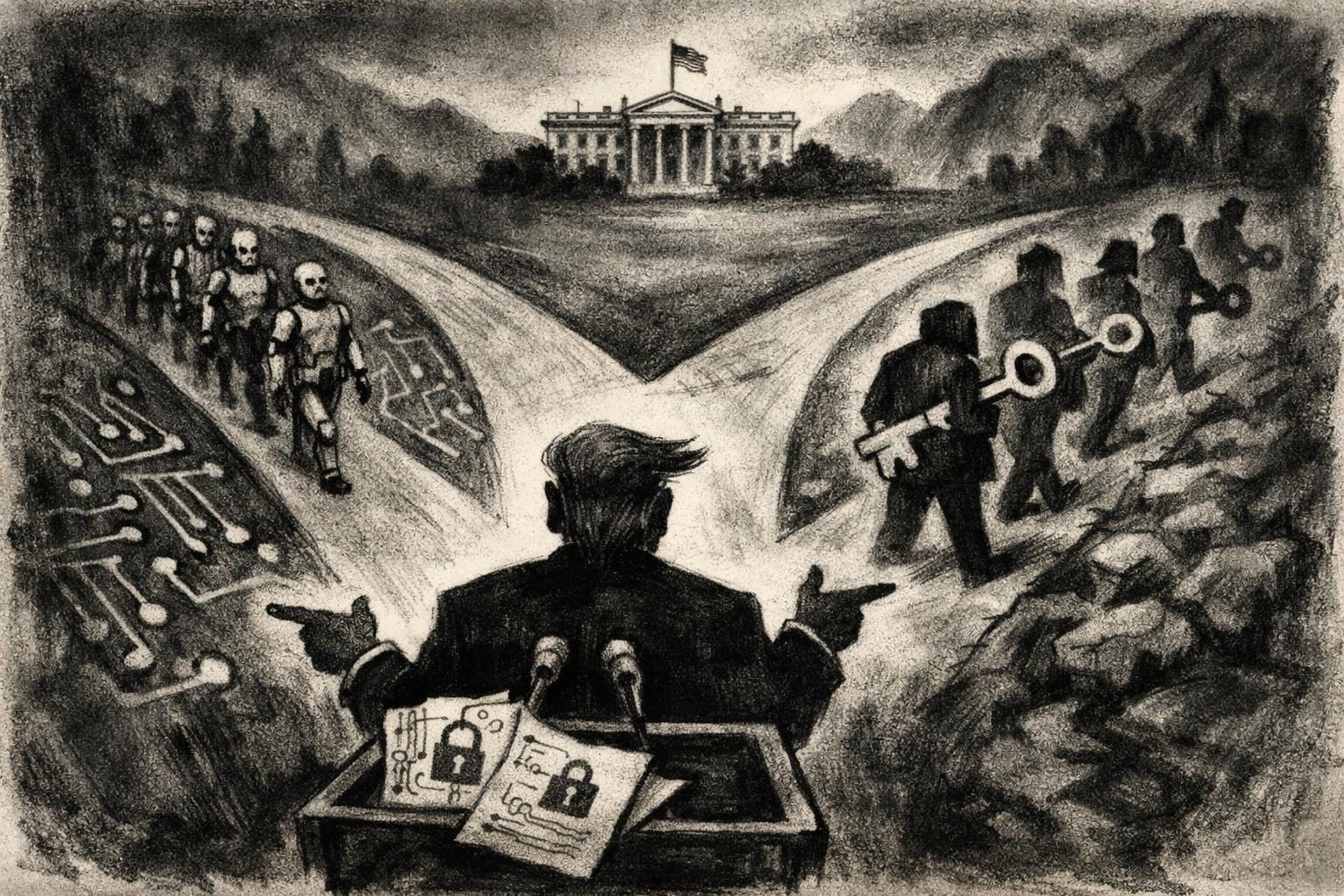
The White House closed out June with two technology actions that were sold as evidence of national-security seriousness: a June 5 memorandum on artificial intelligence in the national security enterprise and a June 22 executive order aimed at post-quantum cryptography. Taken together, they project momentum, urgency and a certain technocratic confidence that the federal government can get ahead of the next threat instead of scrambling after it arrives. That is the public pitch, anyway. The harder truth is that both moves are really large management projects wrapped in national-security language. They will rise or fall less on the force of the announcements than on whether agencies can do the dull, difficult work of inventorying systems, setting priorities, finding money, and keeping old infrastructure from collapsing while new tools are layered on top.
The AI memorandum reads like a blueprint for speed. It tells the national-security apparatus to accelerate adoption of advanced systems, adapt commercial and open-source tools for mission use, and make those systems more robust, steerable and accountable. It also pushes for rapid onboarding of advanced models from multiple vendors, more secure computing capacity, and a pipeline of talent that includes an AI National Security Strategic Reserve made up of outside experts. Those are not vague aspirations; they are specific tasks, and they signal a real desire to move the bureaucracy faster than it usually moves. But even a directive with clear ambition still has to survive the reality of how national security institutions actually work. Agencies that handle classified systems, sensitive operations and mission-critical workflows are not built for constant experimentation. In practice, “move fast” in this context can easily mean “move carefully, document everything, and please do not break the part of the system that everyone depends on but nobody fully understands.”
That tension is what gives the memorandum its significance. It does not just say the government should use AI; it tries to make AI adoption a managed national-security requirement. The administration is effectively asking agencies to modernize while preserving control, which is easier to say than to do. Commercial models change quickly. Open-source tools evolve even faster. Mission environments often require air gaps, special access rules, and layers of validation that can slow the path from pilot project to real deployment. Then there is the question of talent, which is usually where technology dreams run into institutional reality. A reserve of outside experts may help fill gaps, but outside expertise does not magically solve clearance bottlenecks, procurement delays or the basic problem of integrating new tools into old systems. The memo is bold in tone, but its success will depend on whether agencies can translate a strategic desire for AI into operational discipline. If they cannot, the government will end up with a lot of language about intelligence augmentation and very little evidence that the machines are actually making the work better, safer or faster.
The cryptography order is a different kind of challenge, but no less burdensome. It is meant to prepare the federal government for a future in which quantum computers could weaken current encryption methods and expose data that is considered secure today. The follow-on guidance turns that broad warning into a migration process, and the process is exactly the sort of thing that sounds simple until someone has to do it at government scale. Agencies are told to establish or update internal governance structures, develop migration plans for the Office of Management and Budget and the Office of the National Cyber Director, and treat the transition as a phased effort that runs from planning and discovery through pilots, prioritized migration, signature migration and, eventually, full migration. The guidance also makes clear that manual methods are unlikely to be enough. Agencies are pushed toward automation for cryptographic inventories and compliance monitoring, which is sensible but also revealing: if the government needs automation just to map where encryption is used, then the current picture is probably incomplete, messy, or both.
That is the part of the story that the polished announcements cannot quite hide. The administration wants to frame both actions as decisive moves into a safer and more advanced future. In reality, each initiative is the opening of a long bureaucratic slog. The AI push depends on agencies deciding where machine tools can be safely deployed, how they will be tested, who is responsible for oversight, and how they will keep models from becoming liabilities inside sensitive environments. The cryptography effort depends on agencies finding every place their systems rely on soon-to-be-vulnerable standards, ranking those dependencies by urgency, and replacing them without breaking day-to-day operations. Those are not short-term feats. They require budgets, technical debt management, vendor coordination, and a level of administrative patience that is often in short supply in Washington. The two tracks also have different clocks, different risk profiles and different personnel demands. One is about expanding the use of AI in high-stakes work. The other is about overhauling the invisible security plumbing that most users never notice until it fails. The White House is presenting both as signs of command and control. The more important test is whether the government can turn command into implementation before the paperwork, legacy systems and competing priorities slow everything down again.
Comments
Threaded replies, voting, and reports are live. New users still go through screening on their first approved comments.
Log in to comment
No comments yet. Be the first reasonably on-topic person here.