
Justice keeps using big language and bigger filings to sell immigration toughness
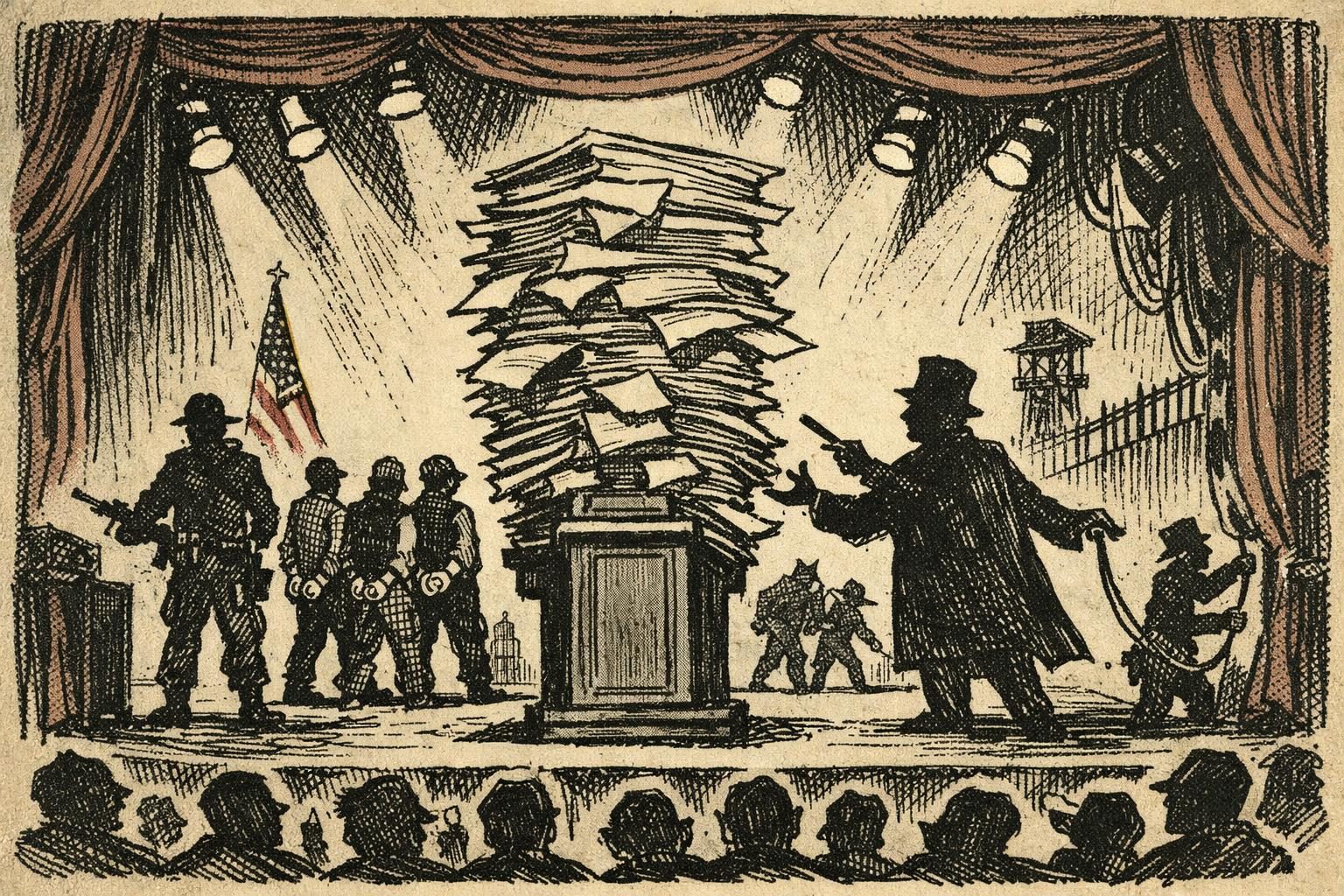
The Justice Department’s June 9 docket offered another example of how the Trump administration has learned to turn ordinary prosecutorial work into a louder political story about border control, public safety, and national toughness. Among the day’s releases was a racketeering indictment against 26 alleged Trinitarios members tied to five murders and multiple attempted murders, alongside other matters involving drug trafficking and forced labor. Those are serious allegations, and there is no reason to minimize them. Gang violence, organized crime, and labor exploitation are real problems that federal prosecutors are supposed to pursue when they have the evidence. But the way these cases are packaged matters just as much as the cases themselves, because the administration has made a habit of presenting each filing as if it were proof of a sweeping strategic victory rather than one piece of a much narrower criminal process.
That distinction is easy for the White House to blur and harder for the public to disentangle. A racketeering indictment is a legal instrument, not a total solution to gang activity. A forced-labor case is a serious allegation, but it is not the same thing as a transformation of the labor system that allowed abuse to occur. Drug-trafficking prosecutions may demonstrate investigative capacity, but they do not automatically show that the broader enforcement architecture is working better than before. The administration’s releases often rely on heavy language about relentlessness, resolve, and restoration, which helps convert casework into a narrative of control. That language may be politically effective, but it can also be misleading if it invites readers to conclude that a cluster of charges means the underlying social problem is shrinking. The government can be doing real work and still overselling what that work proves.
There is also a structural messaging problem in the way these announcements are framed. Immigration enforcement, criminal prosecution, labor law, and public-safety operations are different systems with different mandates, legal standards, and outcomes. The administration has repeatedly tried to collapse them into one story line in which arrests, indictments, and deportation-related activity all count as evidence of the same broad crackdown. That makes for a tidy political message, but it does not produce clear accounting. A federal case may be sound on its facts and still tell us very little about whether the country’s wider border policy is functioning as advertised. Likewise, a case involving people who are in or near immigration proceedings may be significant without proving that the administration has achieved some larger institutional breakthrough. The press release machinery encourages the opposite reading, treating activity itself as success. In practice, that means the White House can point to a rising stack of enforcement announcements and claim a decisive shift even when the deeper policy picture remains murky.
The June 9 docket also shows how much the administration depends on visibility. A public-facing legal announcement is not just a record of a case; it is a political asset, especially when it includes hard-edged crimes that can be narrated as proof of dangerousness and urgency. That is why the government’s language matters so much. When official materials lean on sweeping phrases about toughness and total defense, they are doing more than describing the work of prosecutors. They are asking the public to read every filing as evidence of a larger victory that may not yet exist, or may never arrive in the form being implied. Some of these cases will likely end in convictions, while others may not. Some will likely reflect competent law enforcement, and others may simply reflect the fact that the department has become better at staging its own seriousness. None of that means the underlying crimes should be ignored. It does mean the public should be careful about accepting the administration’s preferred interpretation of what a docket full of enforcement actions actually signifies.
This is the central trick of the current approach: take real prosecutions, attach maximalist rhetoric, and use the combination to sell the idea of comprehensive success. The effect is to shift attention away from whether the administration has actually changed conditions on the ground and toward whether it can keep producing a steady stream of tough-sounding announcements. That strategy works best when the cases themselves are vivid enough to absorb scrutiny, which is why allegations involving murder, gang activity, drug trafficking, and forced labor are such useful raw material for official messaging. But the presence of serious criminal charges does not answer the harder question of whether the broader policy regime is more effective, more coherent, or more just. It only proves that prosecutors are prosecuting and agents are investigating, which is what they are supposed to do. The difference between enforcement and theater is not that one involves real cases and the other does not. It is that one tells the truth about what the cases mean, while the other wraps them in a sales pitch and calls the result governance.
Comments
Threaded replies, voting, and reports are live. New users still go through screening on their first approved comments.
Log in to comment
No comments yet. Be the first reasonably on-topic person here.