
Trump’s DOJ keeps trying to shrink civil-rights enforcement from the inside
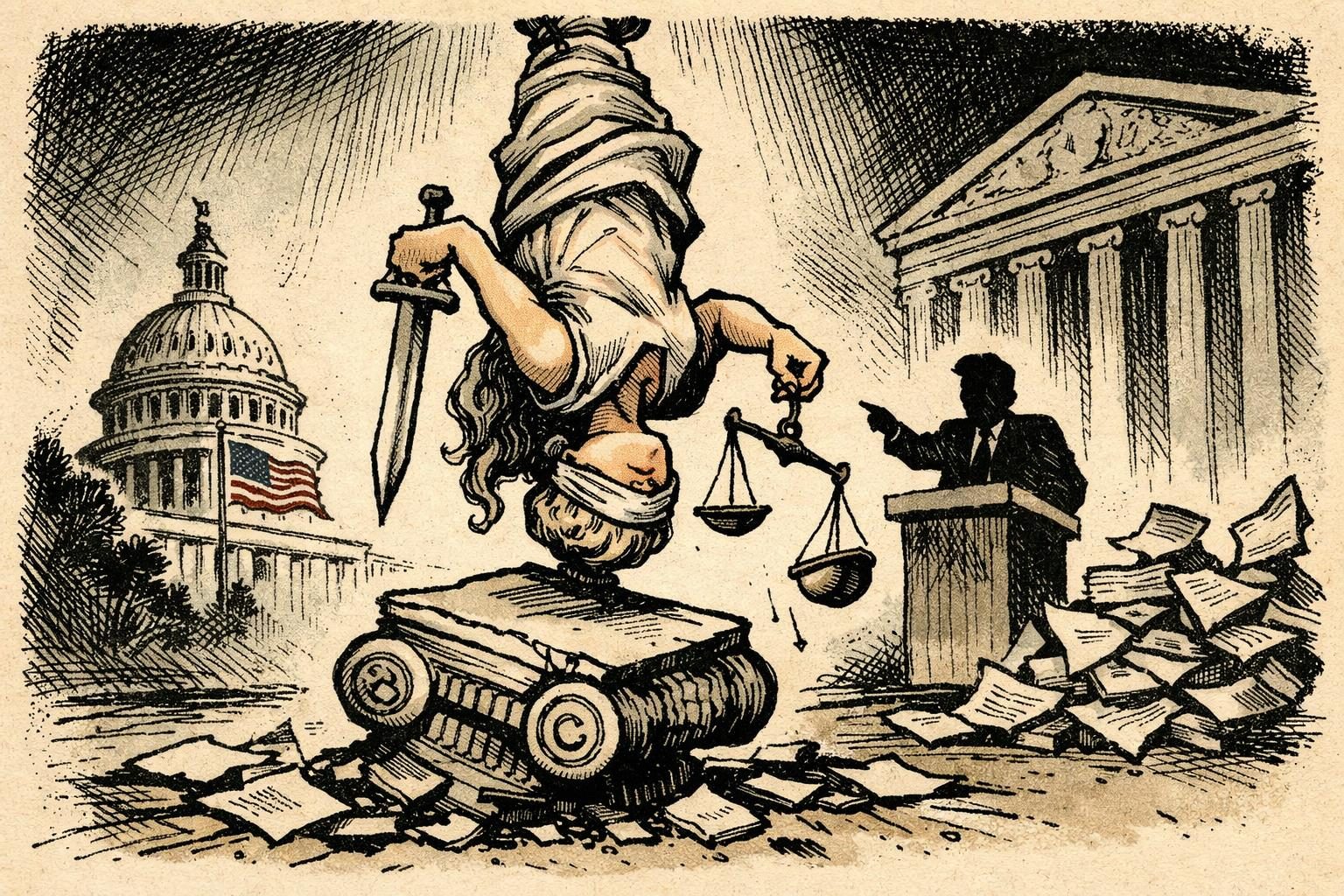
The Justice Department did not score a courtroom victory on June 9, but it did something almost as consequential for anyone watching federal civil-rights policy: it used the machinery of the executive branch to signal a major retreat from the way the government has long understood workplace discrimination. In a new opinion, the department’s Office of Legal Counsel concluded that Equal Employment Opportunity Commission guidance on disparate-impact liability under Title VII violates the Constitution. That does not change the statute, and it does not nullify the long line of precedent that has grown around it. But it does tell agencies, employers, and litigators that the administration wants to read civil-rights law far more narrowly than its predecessors did. In a system where internal legal opinions shape how the government behaves long before a judge ever weighs in, that is not a minor technical dispute. It is a policy move with real-world consequences.
That matters because OLC opinions are not decorative memos. They can steer agency enforcement priorities, influence how aggressively investigators pursue cases, and determine whether existing guidance gets defended or slowly starved of support. They also matter outside Washington, because companies, compliance officers, and defense lawyers read these signals closely and adjust accordingly. If the federal government is suddenly treating a long-standing EEOC theory as constitutionally suspect, employers facing statistical-disparity claims have every incentive to push back harder and demand more proof before settling. Civil-rights lawyers, meanwhile, have every reason to expect a more resistant federal posture on hiring tests, screening systems, and other employment practices that can produce discriminatory outcomes without announcing discriminatory intent. The administration can insist that this is merely an internal legal judgment, but internal legal judgments are how the executive branch tells itself what kind of government it intends to be. In that sense, the opinion is less a footnote than a blueprint.
The underlying fight is over disparate-impact doctrine, which has been central to civil-rights enforcement because discrimination rarely looks dramatic in the moment it happens. More often, it shows up in patterns: a screening tool that weeds out protected applicants at a higher rate, a background-check policy that sweeps too broadly, a test that appears neutral but consistently disadvantages one group, or an automated hiring system that reproduces old inequities under a fresh layer of software. The theory exists precisely because biased systems do not always come with a paper trail or a witness willing to confess. Plaintiffs and enforcers have used it to challenge practices that are formally evenhanded but practically exclusionary. The Justice Department’s new position suggests the administration believes the EEOC has stretched that framework beyond constitutional limits. That is not just a disagreement over legal wording. It is a disagreement over whether federal civil-rights law should be allowed to reach modern forms of discrimination that hide in data rather than in explicit slurs. If the government is willing to label the EEOC’s approach unconstitutional, it is also giving regulated employers a very loud hint that resistance is now the preferred posture.
This move also fits a broader pattern that has become hard to ignore. The administration has repeatedly taken aim at race-conscious policies in education and employment while simultaneously casting civil-rights enforcement itself as an overreach that needs to be cut down to size. To supporters, that may look like overdue constitutional discipline or a welcome check on what they see as bureaucratic excess. To critics, it looks more like a rebrand: the government is not openly declaring hostility to civil rights so much as draining the enforcement tools that make those rights usable in practice. The danger is that this kind of retreat can leave the public with the language of equal protection and the appearance of neutrality while quietly reducing the government’s ability to address discrimination that is statistical, structural, and difficult to prove in old-fashioned terms. That is why the opinion matters even though it is not yet a court ruling. It changes the incentives now. It shapes how agencies behave now. It tells employers now that the federal government is prepared to fight the next round on much friendlier terrain for defendants than for workers who have to prove discrimination through patterns instead of confessions. If the courts later reject the administration’s theory, the practical damage will not disappear. The guidance will already have shifted, the enforcement energy will already have been redirected, and the message to the public will already have been sent: civil-rights enforcement is being narrowed from the inside, one legal opinion at a time.
Comments
Threaded replies, voting, and reports are live. New users still go through screening on their first approved comments.
Log in to comment
No comments yet. Be the first reasonably on-topic person here.