
Justice Department’s Dakota Access settlement leans hard into law-and-order language
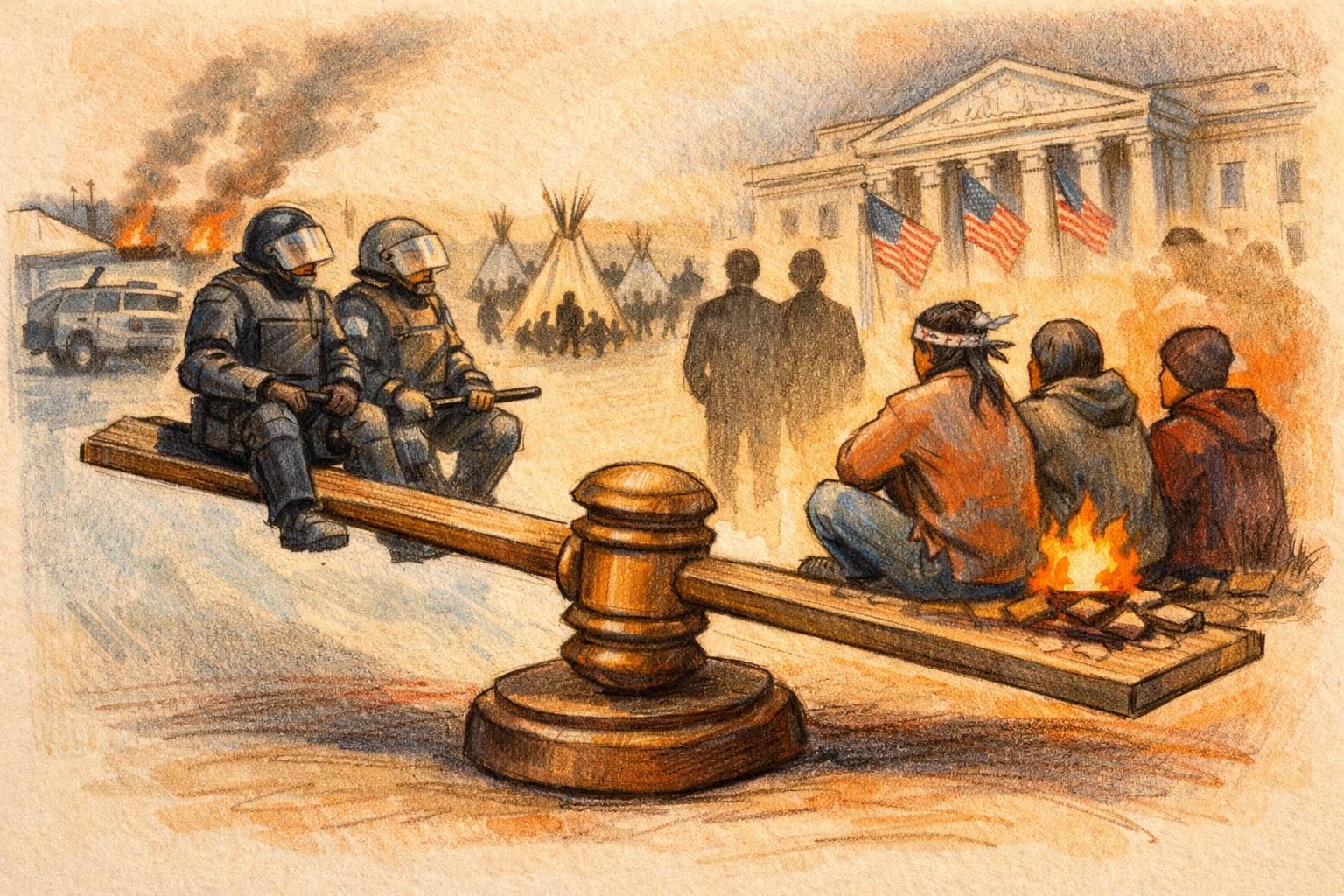
The Justice Department wrapped up North Dakota v. United States on June 11, 2026, with a settlement that pays the state more than $27.8 million for law-enforcement and other costs tied to the Dakota Access Pipeline protests. The department said the deal resolves the federal government’s litigation with North Dakota and gives the parties a chance to move forward with some measure of closure.
The release does not read like neutral legal housekeeping. It says the United States disputes the district court’s legal analysis, but acknowledges that, under the Obama administration, the federal government could have done more to reduce the impacts of the protests. It also says some of the conduct during the height of the demonstrations was unlawful and that the federal government chose not to forcibly remove protesters from federal property to avoid further escalation.
The state’s account is even sharper. North Dakota Gov. Kelly Armstrong called the settlement long overdue and said it helps make the state whole after years of protest-related costs. Attorney General Drew Wrigley described the announcement as the final settlement in the case. In both versions, the core fact is the same: the state sued over what it spent responding to the protests, and the federal government agreed to pay.
What the settlement does not do is settle the history behind the protests themselves. The Dakota Access fight included tribal sovereignty claims, environmental objections, massive encampments, arrests, road closures, and clashes with law enforcement. The new agreement closes the lawsuit, but it also reasserts a hard-edged federal view of the protest era: the government says it should have acted differently, and that some of what happened was not protected speech or peaceful assembly.
Comments
Threaded replies, voting, and reports are live. New users still go through screening on their first approved comments.
Log in to comment
No comments yet. Be the first reasonably on-topic person here.