
Justice Department settlement reopens the Dakota Access protest fight
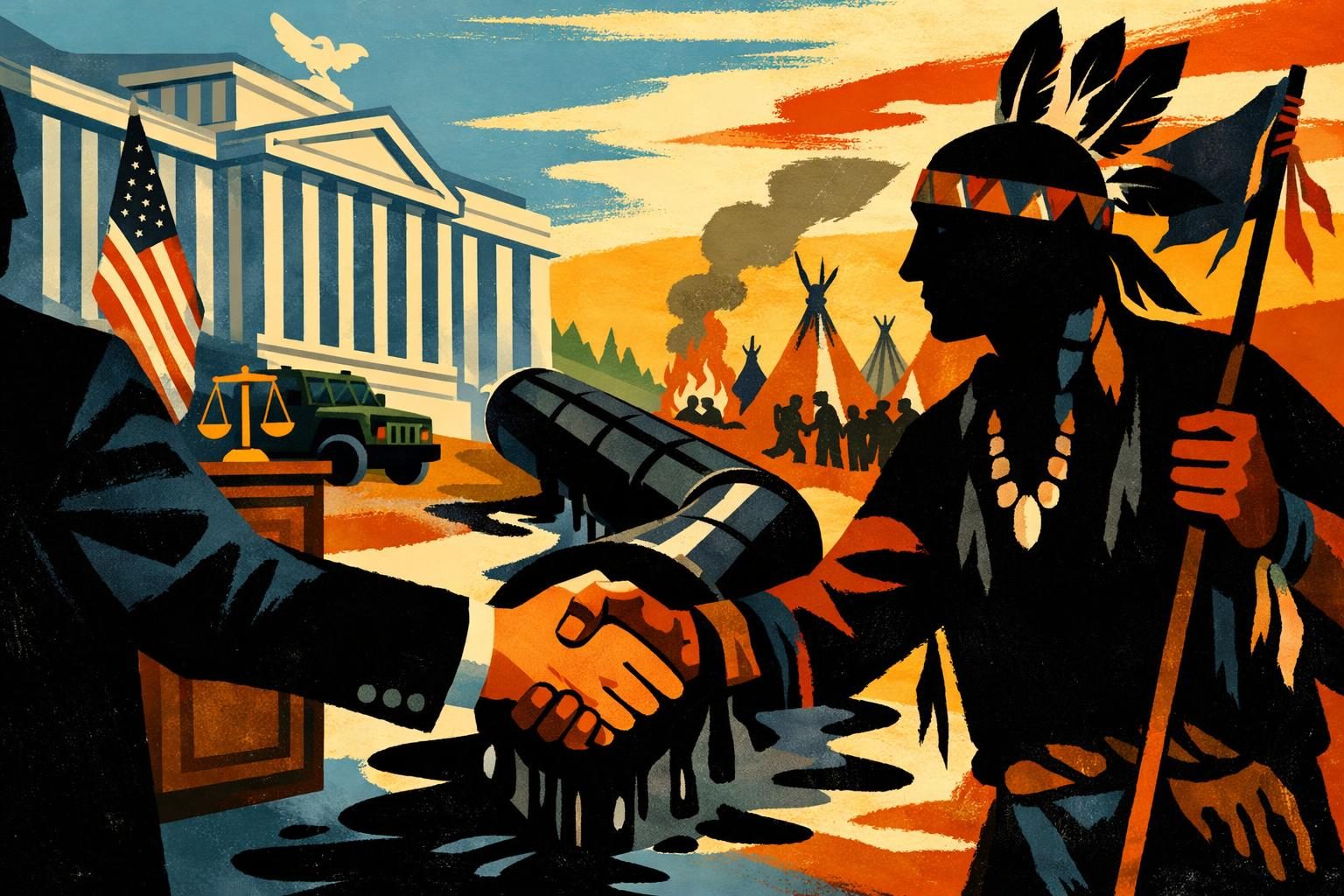
The Justice Department’s final settlement in North Dakota v. United States has done something that long-running protest disputes rarely do: it has taken an old conflict and made it newly useful again. On its face, the filing is a legal closure document, the kind of government action that is supposed to settle lingering claims and move everyone on. In practice, though, it keeps one of the Dakota Access Pipeline era’s sharpest fights alive by putting a formal federal acknowledgment on the record. The United States says it disputes the court’s legal reasoning, but it also concedes that, looking back, federal officials could have done more to lessen the impact of the protests on North Dakota residents. That combination matters because it is not a casual political statement or a stray comment from a former official; it is the government’s own settled position in a case that still carries emotional and legal weight.
What makes that language so consequential is the balance it tries to strike. The Justice Department is careful to preserve the principle that speech and assembly are core constitutional rights, while also saying that some conduct during the protests was unlawful. That kind of framing may satisfy the demands of a legal settlement, but it does not erase the larger argument that has shadowed the Dakota Access confrontation from the beginning: how far the government should go in protecting protest activity when public order, property damage, tribal sovereignty, and law enforcement all collide. The protests around the pipeline became a national symbol because they brought those tensions into the open, and the settlement ensures they do not disappear into old court files. Instead, the government’s own wording now gives both supporters and critics of the response a new reference point. To one side, it looks like an overdue recognition that federal agencies failed to manage the situation responsibly. To the other, it is an attempt to acknowledge the costs of the episode without accepting the full legal or moral case that North Dakota advanced.
That is why the settlement has significance beyond the technical outcome of a single lawsuit. Official legal documents shape institutional memory, and institutional memory shapes what agencies do the next time a protest escalates into a serious federal-state dispute. A statement that the government “could have done more” may be narrow in legal terms, but it carries broader political implications because it suggests the federal response was not as careful or effective as it should have been. That creates an opening for state officials and their allies to argue that Washington was too passive, too slow, or too willing to tolerate the spillover effects of a high-profile protest campaign. At the same time, it gives federal agencies a reason to revisit how they communicate risk, coordinate with state authorities, and assess possible civil liability when demonstrations become prolonged or disruptive. In that sense, the settlement is less a period than a comma. It does not end the argument over what went wrong, and it may actually harden the arguments already in circulation by giving them the authority of an official government filing.
The political afterlife of the Dakota Access protests has always been bigger than the immediate courtroom battle, and this settlement pushes that afterlife back into the foreground. Indigenous activists are likely to read the document through the lens of a broader struggle over land, sovereignty, and the right to resist infrastructure projects they view as dangerous or imposed without adequate respect. North Dakota officials, meanwhile, have every incentive to treat the filing as fresh support for their longstanding claim that the federal government mishandled the situation and left the state to absorb the consequences. Neither reading is likely to be satisfied by the settlement’s effort to occupy the middle ground. It is possible, of course, that the government intended the filing to reduce future exposure and quietly close a painful chapter. But a record that includes an acknowledgment of federal shortcomings has a way of surviving beyond its intended purpose. Even if the case is technically wrapped up, the paper trail now offers a new way to revisit the same old fight, and that is often enough to keep a political wound open far longer than the lawyers expected.
Comments
Threaded replies, voting, and reports are live. New users still go through screening on their first approved comments.
Log in to comment
No comments yet. Be the first reasonably on-topic person here.