
Trump’s AI push makes a lot of noise, and the fine print still matters
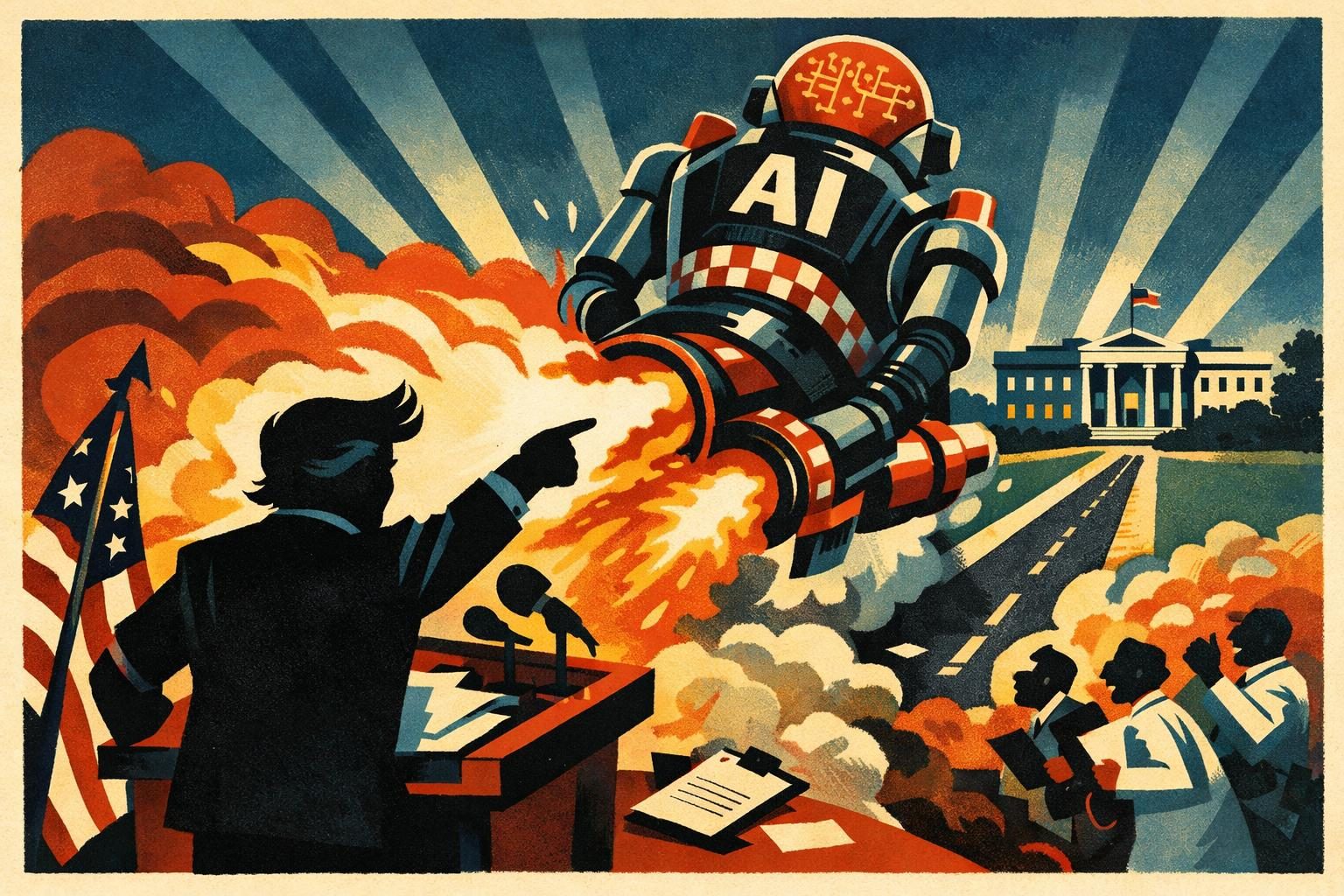
The White House spent the first week of June trying to do two things at once: speed up artificial intelligence adoption and persuade the public that the government can keep it under control. On June 2, the president signed an executive order on advancing AI innovation and security. On June 5, the administration followed with a national security memorandum that pushed advanced AI deeper into the national security enterprise. The two actions are part of the same rollout, not separate policy universes. Together, they show an administration treating AI as a strategic asset that should be deployed quickly, broadly, and with more confidence than most federal technology initiatives usually get.
The June 2 order sets the tone. It directs agencies to prioritize cyber defense across national security systems, Defense information systems, and civilian federal systems, while also steering the government toward wider use of AI-enabled cybersecurity tools. The order also lays out a process for evaluating certain frontier models and for gathering more information from developers, including through benchmarking and related review mechanisms. That is real policy, not just branding. But it is also a reminder that the White House is relying heavily on later implementation to turn broad directives into something agencies can actually use.
That matters because the order is ambitious without being self-executing. It sketches out a framework for using AI more aggressively inside government, but the hard questions still fall to agencies: how to compare tools, how to weigh risks against performance, how to handle classified or sensitive systems, and how to decide when a model is ready for operational use. The document points toward oversight, testing, and review, but it does not magically resolve the practical problem of making those guardrails work under pressure. In other words, the administration has defined the direction of travel more clearly than it has defined the day-to-day mechanics.
The June 5 memorandum moves from broad adoption into national security operations. It says advanced AI is among the most transformative technologies for national security and tells the enterprise to accelerate adoption, adapt commercial and open-source tools for mission use, and keep deployed systems robust, steerable, controllable, and accountable within the constitutional chain of command. It also bars the use of AI to censor protected speech, embed ideological bias, or carry out unauthorized or unlawful surveillance. Those are meaningful limits. They suggest the White House understands that speed without boundaries would be politically and operationally dangerous.
But the memorandum also shows how much the administration is asking the system to absorb at once. It calls for more testing, evaluation, validation, and verification, and it assigns responsibility to commanders, directors, and agency heads. That is the right language for a high-stakes rollout, but it is still only language until it is matched by enforcement and real-world discipline. A memo can tell the national security apparatus what it wants. It cannot guarantee that complex systems will behave predictably once they are fed into intelligence, cyber, logistics, and other sensitive workflows.
That is the gap at the center of the White House’s AI push. The administration is framing itself as the side willing to move faster than the bureaucracy usually does, and there is a political appeal in that. AI policy in Washington has often been stuck between alarmism and delay, so a forceful directive will sound, to supporters, like overdue seriousness. But the documents also make clear that acceleration is not the same thing as readiness. They promise more use, more testing, and more control, yet the success of the whole project depends on the details that come after the signing ceremony: who evaluates the systems, who approves them, who watches for failure, and who is accountable when a model does exactly what the government said it wanted — and still gets it wrong.
Comments
Threaded replies, voting, and reports are live. New users still go through screening on their first approved comments.
Log in to comment
No comments yet. Be the first reasonably on-topic person here.