
The White House UFC showcase turns the presidency into a brand extension
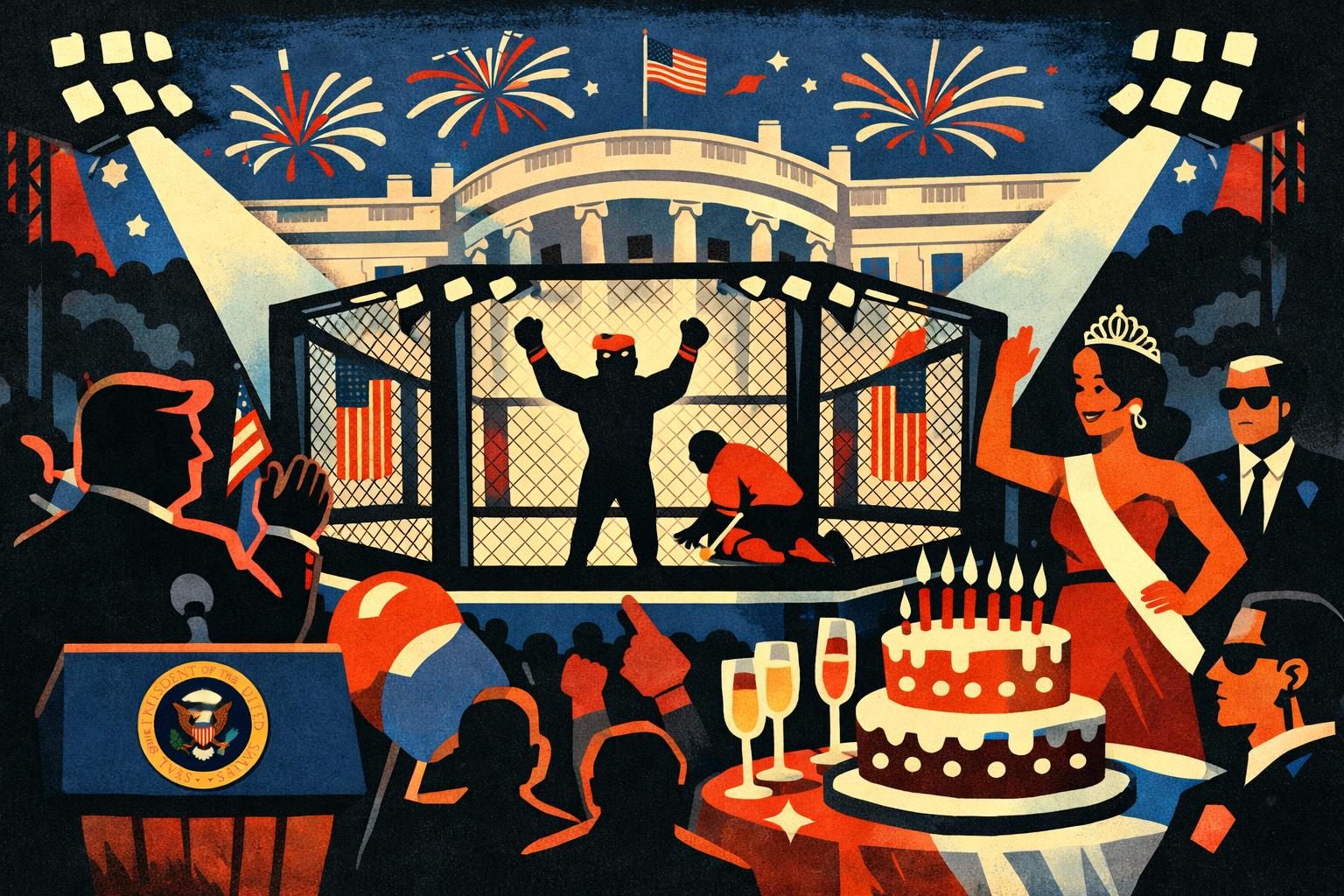
Donald Trump’s UFC showcase on the White House South Lawn was not just a birthday-weekend stunt with good lighting. It was a condensed demonstration of how he has long approached the presidency: as a stage, a logo, and a content machine all at once. The setting fused official power with cage-fight theater so completely that the usual line between statecraft and entertainment seemed to vanish on purpose. Senior officials, political allies, and a crowd arranged around a branded combat event created a scene that was strange even by the standards of modern political spectacle. But the strangeness is not really the point. The point is that the event revealed what this White House wants power to look like, who it wants to speak to, and how it wants that power to feel to the people watching it.
The visual language was impossible to miss. Trump got the kind of aesthetic he has always seemed to prefer: combative, masculine, noisy, theatrical, and built for applause rather than reflection. The event played into a world of winners and losers, domination and humiliation, where the boss is meant to stand at the center and command the room. That kind of pageantry can be dismissed as shallow, but pageantry is not a side effect here; it is the product. When the presidency is treated less like a civic institution than a performance platform, the appearance of strength becomes part of the message itself. Supporters can interpret that as energy, authenticity, and a refusal to be cold or ceremonial. Critics see something more corrosive: a normalization of civic life as spectacle, where the office is used less to embody continuity than to sustain a personal brand. The UFC event fit neatly into that pattern because it offered a setting that could be clipped, replayed, and turned into a visual proof of dominance. In other words, it was not only about being seen; it was about being seen in a way that reinforces the mythology.
That matters because the spectacle is no longer separate from the work of governing. Trump and his allies can float policy announcements, gestures, or symbolic moves and still fold them into a larger atmosphere of showmanship, as if the republic were just another production calendar. That does not mean the policy side disappears, and it does not mean every event is meaningless. It does mean the emotional frame often swallows the civic one. The White House is supposed to function as a symbol of continuity and seriousness, a place where the country can recognize itself as something larger than any one personality. When it is repeatedly turned into a venue for a personal media cycle, that symbolic function starts to weaken. The office remains the office, but it begins to feel less like a public trust than an asset being actively rebranded. Even the presence of official architecture and institutional trappings can start to read as set dressing when they are repeatedly used to amplify one man’s preferred image of himself. That is why the UFC night feels larger than a single evening. It is another example of the presidency being used to validate the performance instead of restrain it.
The consequences of that shift are not always immediate, which is part of what makes it easy to underestimate. Reputational damage can sound abstract until it lands on the presidency, an institution that depends on shared symbols, restraint, and public confidence. Each event like this reinforces the idea that Trump is less interested in preserving the dignity of the office than in demonstrating that he can bend it to his tastes. For his base, that can look like strength or candor, a rejection of the polished manners that often make politics feel detached and fake. For everyone else, it can feel like a steady shrinking of the symbolic space around the White House, one more reminder that the line between governing and performing is being intentionally blurred. The result is not merely a weird photo op or a one-off cultural flourish. It is a White House that looks less like the seat of democratic authority and more like a premium venue inside the same political fight it is supposed to rise above. That may be exactly the appeal. The presidency, in this model, is not meant to stand apart from the spectacle. It is meant to host it, brand it, and let the boss be seen as the one person who can make even the highest office feel like part of the show.
There is also a broader political logic embedded in the choice of venue. A cage-fight event on the South Lawn turns power into something physical, immediate, and deliberately unserious in style even when the institution behind it is anything but. It invites viewers to experience authority as atmosphere rather than argument, as vibe rather than process. That is a useful way to govern a public that is exhausted by complexity and more easily mobilized by identity, image, and conflict. The White House backdrop adds a layer of legitimacy to the performance, while the combat spectacle makes the legitimacy feel muscular and contemporary. It is an efficient fusion of symbols: the country’s most important address becomes a prop for a narrative about dominance, loyalty, and instinct. Whether that narrative persuades people depends on where they already stand. But its effect on the presidency is easier to see. The institution becomes harder to separate from the personality occupying it, and the personality becomes the only thing that seems to explain the institution’s behavior. That is not a minor aesthetic choice. It is a political style that remakes public office in the image of the celebrity brand, and it does so in a way that makes the transformation look not accidental but intentional.
Comments
Threaded replies, voting, and reports are live. New users still go through screening on their first approved comments.
Log in to comment
No comments yet. Be the first reasonably on-topic person here.